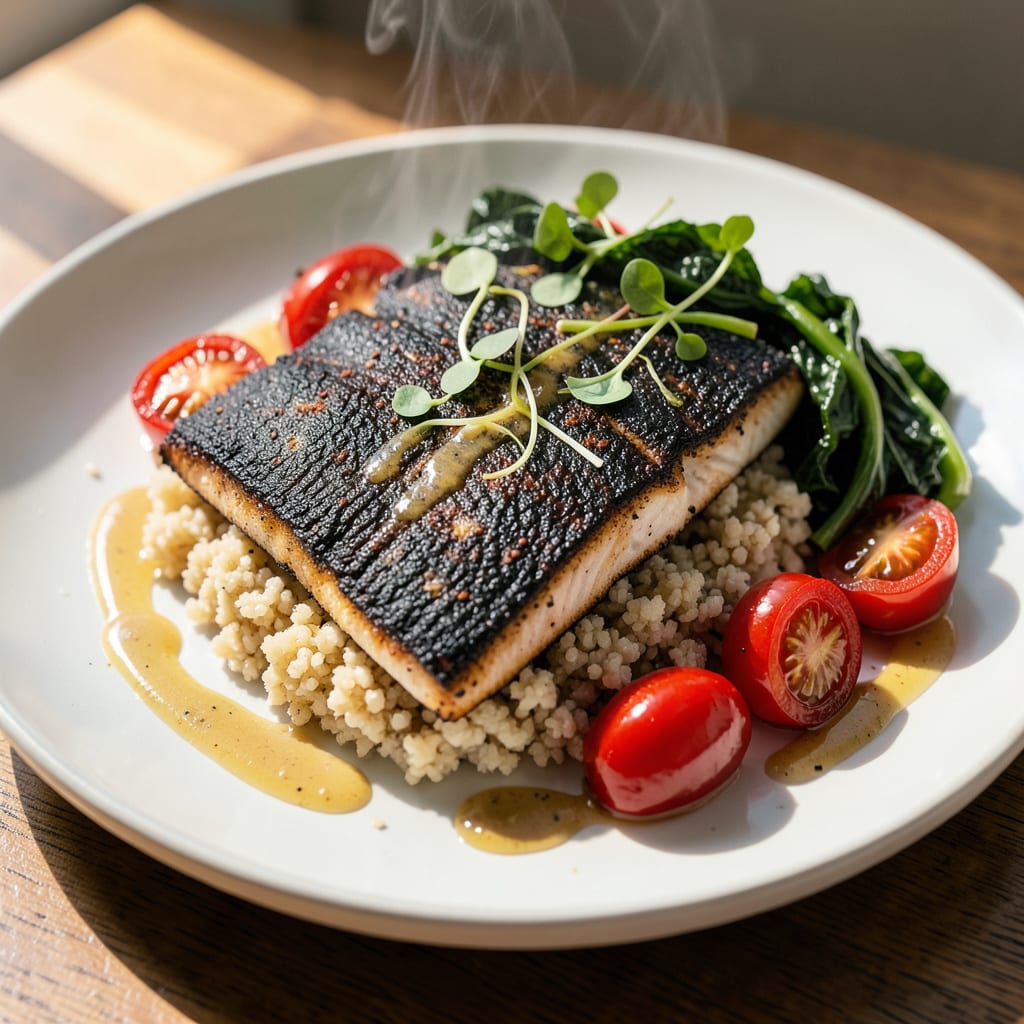
Catfish has a mild, slightly sweet flavor that’s far less fishy than many other species. Its firm texture and clean taste make it appealing even to those who typically avoid seafood. Proper preparation eliminates any residual fishiness.
What sets catfish apart is its freshwater habitat and diet of plants, insects, and small fish—unlike saltwater species that develop stronger oceanic flavors. 🔥 I’ve noticed that farm-raised catfish, in particular, tends to be even milder because their controlled diet minimizes the compounds that create fishy notes. The key to its crowd-pleasing appeal lies in its neutral base, which soaks up seasonings beautifully while never overpowering a dish.
💡 In This Article
- Why Catfish Has a Milder Flavor Than Other Fish
- How to Cook Catfish to Minimize Any Fishy Taste
Why Catfish Has a Milder Flavor Than Other Fish
Catfish’s subtle taste starts with its freshwater environment. Unlike saltwater species that absorb oceanic compounds like trimethylamine oxide (TMAO)—which breaks down into fishy-smelling trimethylamine (TMA)—catfish thrive in rivers and ponds. Their diet of algae, insects, and small fish produces fewer volatile organic compounds that create strong flavors.
🔥 This freshwater advantage means their flesh naturally contains about 30-50% less TMA than species like mackerel or herring.
The fat composition plays a crucial role too. Catfish store most of their fat just beneath the skin rather than throughout the muscle, resulting in leaner fillets with cleaner flavor. Farm-raised varieties, which account for about 60% of U.S. catfish production, are fed controlled diets of soybean meal and corn that further reduce fishy compounds.
Wild-caught catfish may have slightly more pronounced flavor due to varied diets, but both remain milder than most saltwater fish.
What you’re tasting is also influenced by the fish’s metabolism. Catfish process nutrients differently than cold-water species, producing fewer omega-3 fatty acids that can oxidize and create strong aromas. Their muscle structure contains more collagen, giving that signature firm yet tender texture without the oiliness that often carries fishy notes.
This biological difference explains why catfish can be served simply with lemon and herbs while still satisfying picky eaters.
Temperature matters when comparing flavors. Saltwater fish like salmon or tuna develop more intense flavors because their bodies must regulate salt concentrations, creating compounds that contribute to “fishiness.” Catfish, living in stable freshwater environments, don’t need these adaptations. The result?
A protein that acts like a blank canvas—ready to absorb smoky BBQ rubs, crispy cornmeal breading, or delicate wine sauces without competition from overpowering natural flavors.
Even the cooking process reveals catfish’s unique properties. When heated, its muscle fibers contract less aggressively than those of saltwater fish, releasing fewer juices that can concentrate fishy compounds. This means you can grill catfish at 375-400°F without the same risk of developing strong aromas that you’d get with, say, sardines or anchovies.
The flesh stays moist and mild, making it ideal for everything from blackened preparations to delicate ceviche.
Here’s a telling comparison: While Atlantic cod contains about 0.3% TMA when fresh (rising to 1.2% after a few days), catfish typically measures below 0.1% even after storage. That’s why properly handled catfish can sit in your fridge for 2-3 days without developing off-flavors that would make other fish unappetizing.
✨ The science confirms what many Southern cooks have known for generations—catfish offers seafood flavor without the fishy baggage.

Trained in classic French technique but raised on slow-cooked ribs and spicy rubs, she blends culinary skill with smoke and soul.
- Recipe for Boneless Pork Chops in Cast Iron Skillet: Sear and Baste to Juicy Perfection - October 3, 2026
- Recipe for Boneless Cross Rib Roast: Slow-Roasted Beef with Herb Crust - October 3, 2026
- Hamburgers in Sauce Recipe Crock Pot: Slow-Cooked Savory Delight - October 3, 2026