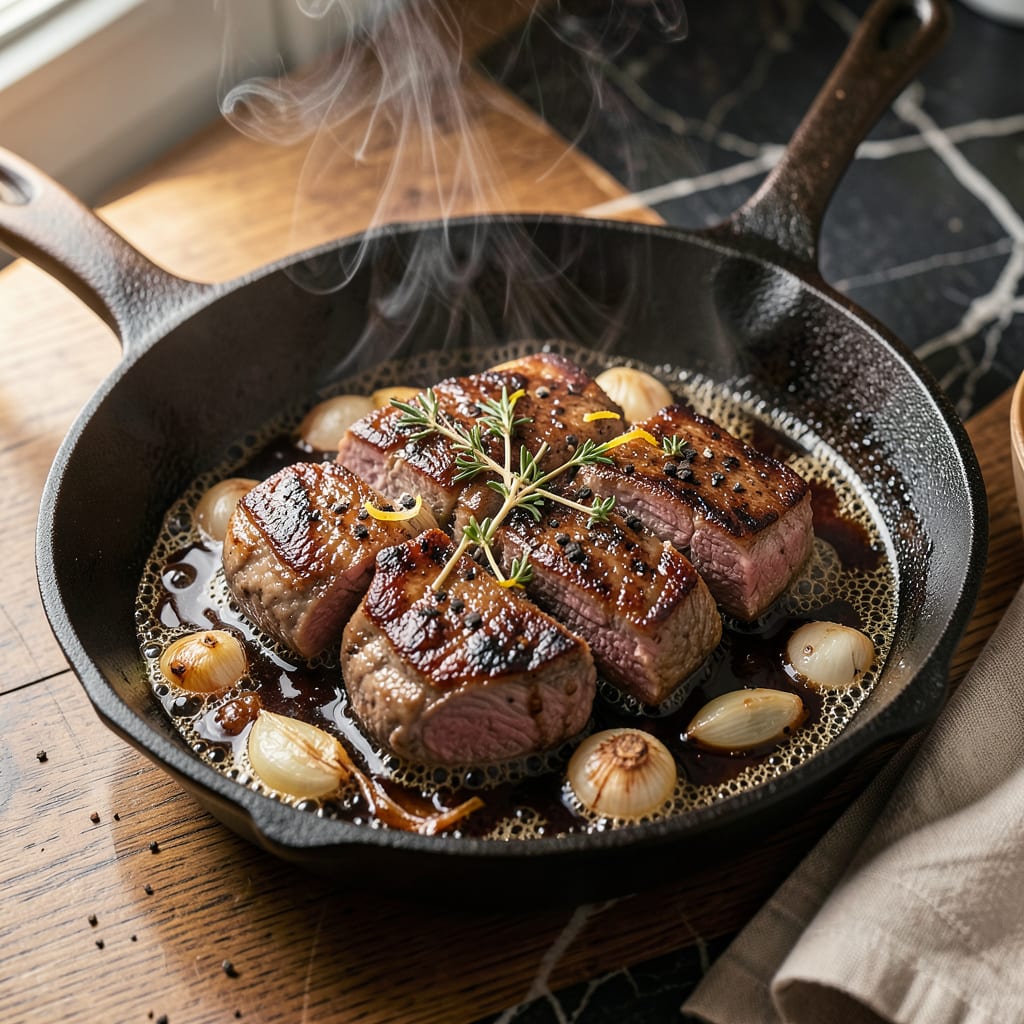
Meat bubbles during cooking when moisture inside heats up and turns to steam, or when proteins and fats break down rapidly. This is normal for some cuts but can indicate uneven cooking or improper prep.
As a pitmaster who’s spent years perfecting meat textures, I’ve learned that bubbling often reveals what’s happening beneath the surface. 🔥 The steam you see escaping is actually water molecules expanding under heat—this is especially noticeable in thicker cuts where moisture gets trapped. What’s fascinating is how different proteins react: collagen-rich meats like brisket bubble more aggressively as they transform into gelatin, while leaner cuts might bubble only when overcooked or improperly seasoned.
Here’s my pro tip: pay attention to bubble size and frequency. Small, steady bubbles usually mean even cooking, while large, rapid ones often signal temperature spikes or excess moisture. I always pat my meat thoroughly dry before cooking and adjust heat gradually to maintain control over this process.
💡 In This Article
- Scientific Reasons Behind Meat Bubbling During Cooking
- How to Control or Stop Meat from Bubbling Excessively
Scientific Reasons Behind Meat Bubbling During Cooking
When meat hits heat, you’re witnessing a molecular transformation show. The bubbling action primarily comes from moisture trapped within muscle fibers rapidly converting to steam at 212°F. This is particularly dramatic in thicker cuts where water molecules have farther to travel—think of a 1-inch thick steak versus a thin chicken breast.
The steam creates pressure pockets that burst through the surface, carrying flavor compounds with them. 🔥
Protein denaturation plays a starring role too. As meat heats, the complex protein structures unravel and tighten, squeezing out moisture like a sponge. Collagen-rich cuts like pork shoulder or brisket bubble more aggressively during this process because their connective tissue breaks down into gelatin between 160-205°F, releasing both moisture and fat.
Lean meats bubble less dramatically since they contain less connective tissue to begin with. ✨
Fat rendering contributes its own bubbling signature. Marbled fats liquefy at different temperatures—beef tallow at 130-140°F, pork fat at 110-120°F—creating those sizzling bubbles you see in well-marbled cuts. The cooking method amplifies this: direct grilling causes rapid surface bubbling, while slow braising produces gentle, steady bubbles as collagen slowly transforms.
I’ve noticed this most dramatically when searing ribeyes—the fat cap creates a bubbling symphony as it renders. 🌟
Different cooking techniques create distinct bubbling patterns. Deep frying produces violent bubbles as moisture escapes into hot oil, while sous vide shows minimal surface activity since the vacuum seal contains the steam.
What many home cooks miss is that bubbling intensity correlates directly with doneness—ground beef bubbles furiously when overcooked as all moisture evacuates, while a perfectly medium-rare steak shows controlled, rhythmic bubbling. ⚡
The meat’s pH level affects this too. More acidic marinades (like those with vinegar or citrus) can cause premature protein coagulation, leading to earlier bubbling. I’ve experimented with this by comparing identical cuts—one marinated in lemon juice, one in neutral oil—the acidic version always starts bubbling at lower temperatures.
The science here involves how hydrogen ions from acids disrupt protein bonds before heat even gets involved. 💫
Even the cut’s grain direction influences bubbling. Meat sliced against the grain creates more surface area for moisture escape, resulting in smaller, more frequent bubbles.
I demonstrate this at my cooking classes by showing how flank steak bubbles differently when cut with versus against the grain—the difference in bubble size and pattern is immediately visible to students. 💛
Remember that bubbling isn’t just visual—it’s auditory too. The pitch and frequency of the sizzling sounds change as cooking progresses. A high-pitched sizzle indicates rapid moisture escape (often meaning the heat’s too high), while a lower, steady bubble suggests controlled cooking. I’ve trained my ear to recognize these subtle differences over years of pitmaster work.
🎵

Trained in classic French technique but raised on slow-cooked ribs and spicy rubs, she blends culinary skill with smoke and soul.
- Recipe for Boneless Pork Chops in Cast Iron Skillet: Sear and Baste to Juicy Perfection - October 3, 2026
- Recipe for Boneless Cross Rib Roast: Slow-Roasted Beef with Herb Crust - October 3, 2026
- Hamburgers in Sauce Recipe Crock Pot: Slow-Cooked Savory Delight - October 3, 2026