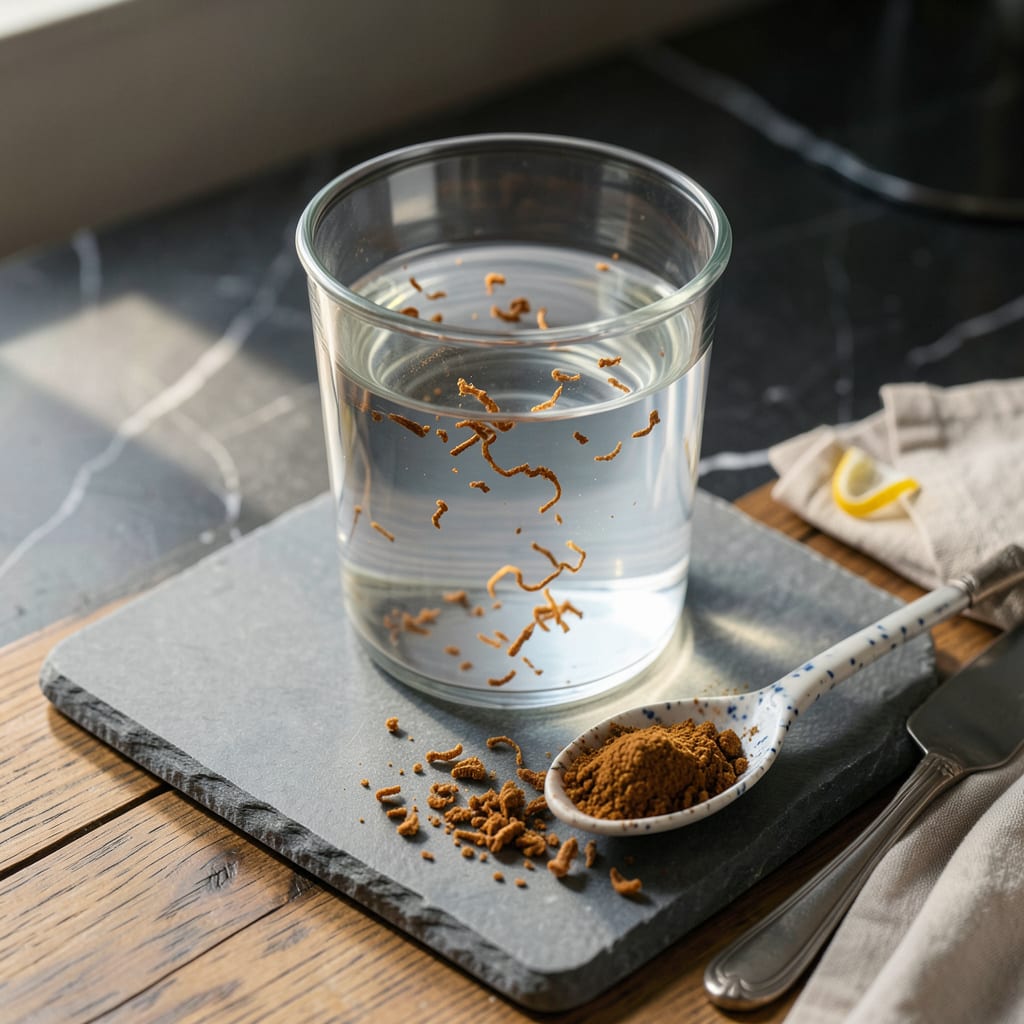
Ground cinnamon does not fully dissolve in water because its key compounds—like cinnamaldehyde—are oil-based and hydrophobic. It creates a murky suspension instead of a clear solution, though some water-soluble components may partially disperse.
This happens because cinnamon’s essential oils and cellulose fibers naturally repel water molecules. 🔥 When you stir it in, you’re essentially creating a temporary mixture where tiny particles float rather than truly blending. I’ve noticed this most when making cinnamon-infused drinks—you’ll always see those fine specks settling at the bottom unless you use a special technique to help disperse them.
What’s fascinating is how this property actually benefits certain cooking methods. The undissolved particles contribute to that rich, textured flavor we love in cinnamon-heavy dishes, while the partial dispersion still infuses enough aroma to transform a recipe. It’s why cinnamon works so well in both liquids and dry mixes—its versatility comes from this exact behavior. ✨
💡 In This Article
- Why Cinnamon Resists Dissolving in Water (The Science)
- How to Properly Mix Cinnamon in Water-Based Recipes
Why Cinnamon Resists Dissolving in Water (The Science)
When you sprinkle cinnamon into water, you’re witnessing a fascinating chemical standoff. The spice contains 75-90% cinnamaldehyde—an oily compound that gives cinnamon its signature aroma and flavor. These oil molecules are hydrophobic, meaning they actively repel water molecules like magnets with reversed poles. The result?
Tiny cinnamon particles remain suspended rather than breaking down into a true solution.
The structure of ground cinnamon adds another layer of complexity. Each particle contains microscopic cellulose fibers from the bark, wrapped around essential oils. When stirred, these fibers absorb minimal water but remain intact—like tiny sponges that won’t collapse. 🔥 Compare this to sugar, which has water-soluble crystal structures that completely disintegrate when stirred.
Cinnamon’s oil content (about 1-2% by volume) creates visible separation, forming that characteristic cloudy layer.
What actually happens in your glass is a colloidal suspension. The cinnamon particles (typically 50-150 microns in size) float temporarily but eventually settle due to gravity. Some water-soluble components like eugenol do disperse slightly, giving a faint cinnamon aroma to the water.
However, the majority of flavor compounds remain trapped in those undissolved oil droplets—this is why cinnamon tea made from powder tastes weaker than stick-infused versions.
The temperature plays a surprising role too. Hot water (180°F+) can extract more aromatic compounds from the cellulose fibers, creating a stronger infusion. Yet even then, you’ll notice a silky film on the surface—that’s the released oils floating upward.
Cold water barely interacts with cinnamon’s structure, which is why overnight cold brews with cinnamon often taste disappointingly mild compared to their hot counterparts.
This behavior isn’t unique to cinnamon—it shares properties with other oil-rich spices like nutmeg and cloves. The key difference lies in cinnamon’s higher cellulose content, which makes its suspension more visible.
💫 Next time you make cinnamon water, observe how the particles dance before settling; that movement reveals the ongoing battle between oil and water at a microscopic level.
Fun fact: The “cinnamon challenge” (attempting to swallow dry cinnamon) exploits this exact property. The spice’s hydrophobic oils coat your mouth, refusing to mix with saliva, which triggers that infamous coughing reaction. Even in liquid form, cinnamon maintains its stubborn chemical identity—something to appreciate in both cooking and science! ✨

Trained in classic French technique but raised on slow-cooked ribs and spicy rubs, she blends culinary skill with smoke and soul.
- Recipe for Boneless Pork Chops in Cast Iron Skillet: Sear and Baste to Juicy Perfection - October 3, 2026
- Recipe for Boneless Cross Rib Roast: Slow-Roasted Beef with Herb Crust - October 3, 2026
- Hamburgers in Sauce Recipe Crock Pot: Slow-Cooked Savory Delight - October 3, 2026