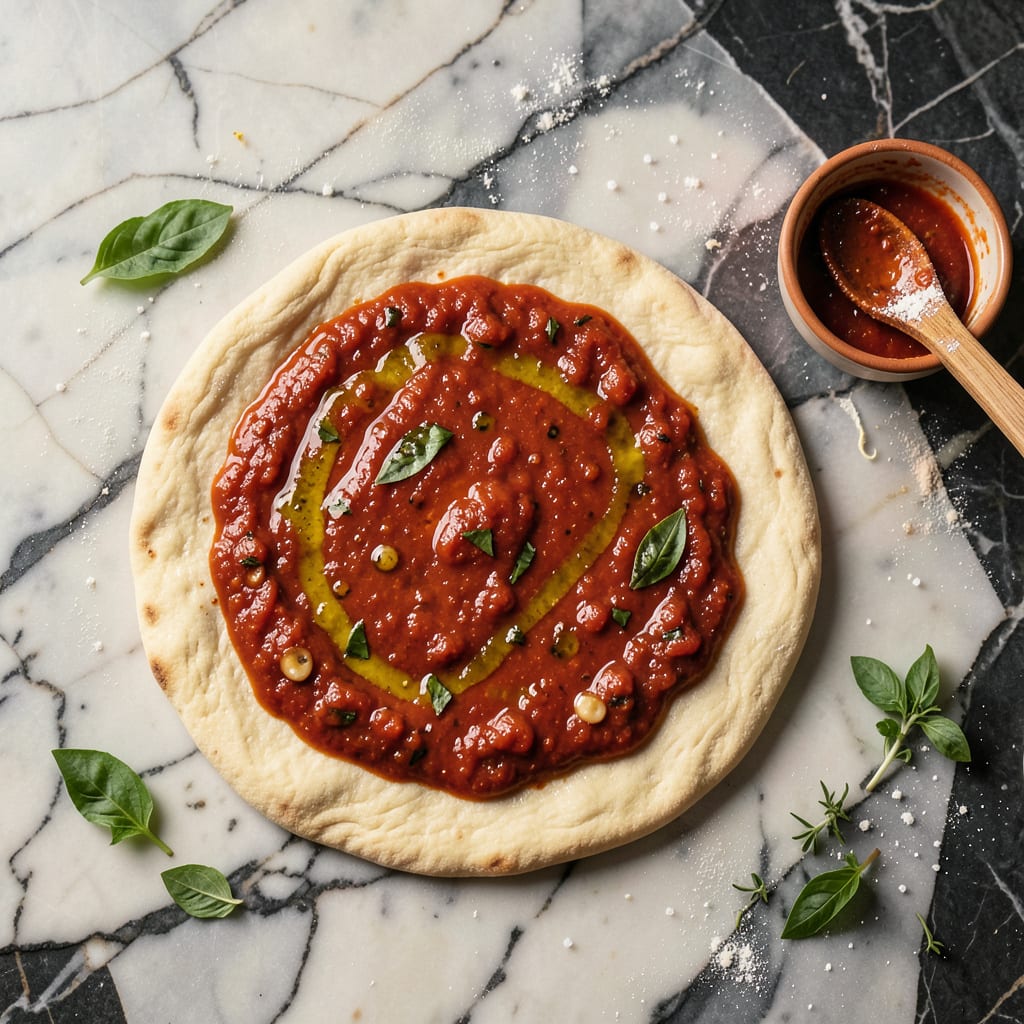
Start with a thin layer of sauce spread evenly over the dough, leaving a small border for the crust. This prevents a soggy base and ensures proper cooking of the toppings above.
I always think of sauce as the foundation of flavor architecture. 🔥 The moisture content needs to interact with the dough just enough to create steam during baking—this is what gives you that perfect crispy-yet-chewy texture. Too much sauce and you’ll end up with a gummy center; too little and your toppings won’t have the moisture they need to cook evenly. What’s fascinating is how professional pizzerias use different sauce viscosities depending on their oven temperatures—thinner sauces for wood-fired ovens, slightly thicker for conventional ones.
💡 In This Article
- Why Sauce Comes First in Traditional Pizza Layering
- Common Pizza Layering Mistakes and How to Avoid Them
Why Sauce Comes First in Traditional Pizza Layering
The moisture content in tomato sauce creates a controlled steam environment during baking. When applied directly to raw dough, the sauce’s water content (typically 85-90% in fresh tomatoes) interacts with the gluten structure. At 450-500°F oven temperatures, this moisture turns to steam, causing the dough to rise slightly while preventing it from drying out completely.
The result is that perfect balance between crispy exterior and airy interior that defines great pizza crust. ✨
Heat distribution plays a crucial role in this process. Sauce acts as a thermal conductor, transferring heat more evenly across the pizza base than cheese or toppings would. In Neapolitan-style pizzas baked at 900°F for 60-90 seconds, this thin sauce layer ensures the dough cooks through before the toppings burn.
New York-style pizzas, baked at lower temperatures (500-550°F), rely on this same principle but with slightly thicker sauce to accommodate the longer 12-15 minute bake time. 🔥
Cheese placement above the sauce serves multiple functions. The fats in mozzarella (about 20-25% in whole-milk varieties) create a protective barrier that prevents toppings from steaming the dough directly. This is why you’ll notice professional pizzerias always apply sauce first—it allows the cheese to melt evenly while maintaining that crucial moisture balance.
The proteins in cheese also begin to brown at 300°F, creating those desirable golden spots without burning the sauce underneath. 🌟
What most home cooks don’t realize is that sauce viscosity matters. Commercial pizzerias often use crushed tomatoes with a 12-15% solids content—thick enough to stay put but thin enough to spread easily. For comparison, standard tomato paste has about 24-30% solids, which can create a dense layer that inhibits proper crust development.
The ideal sauce consistency should allow you to see the dough through it when spread thinly, about 1/8 inch thick or 3-4 tablespoons for a 12-inch pizza. ⚡
Regional variations demonstrate this principle beautifully. In Naples, the birthplace of pizza, sauces are made from San Marzano tomatoes with minimal cooking to preserve their 5.5-6.5 pH level. This slight acidity helps break down gluten strands during baking, contributing to the characteristic soft yet structured crust.
American styles often add sugar to counterbalance acidity, which can affect how the sauce interacts with the dough during baking. 💫
The border you leave sauce-free isn’t just for aesthetics—it’s functional. That 1/2 to 3/4 inch bare dough edge creates what bakers call a “heat dam.” As the outer crust cooks faster than the center, this un-sauced ring forms the structural support that prevents the entire pizza from becoming floppy.
In wood-fired ovens, this border also protects against direct flame contact that could char the sauce before the center cooks through. 💛
Next time you’re assembling a pizza, try this test: spread your sauce, then gently lift the dough. If you can see the sauce wanting to slide off, it’s too thin. If it sticks firmly without pooling, you’ve got the perfect consistency for that ideal steam-and-crisp balance during baking.
This simple check can transform your homemade pizzas from good to restaurant-quality. ✨

Trained in classic French technique but raised on slow-cooked ribs and spicy rubs, she blends culinary skill with smoke and soul.
- Recipe for Boneless Pork Chops in Cast Iron Skillet: Sear and Baste to Juicy Perfection - October 3, 2026
- Recipe for Boneless Cross Rib Roast: Slow-Roasted Beef with Herb Crust - October 3, 2026
- Hamburgers in Sauce Recipe Crock Pot: Slow-Cooked Savory Delight - October 3, 2026