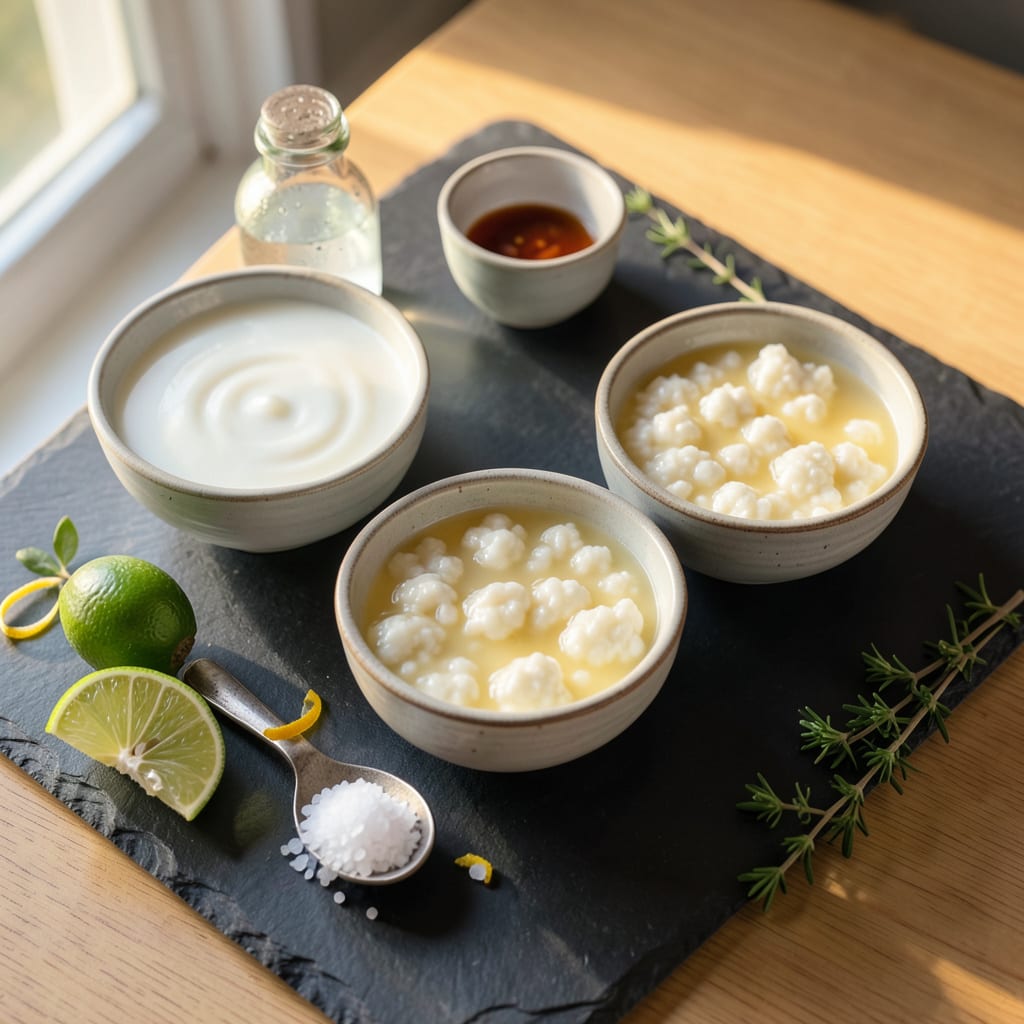
Yes, coconut milk can curdle when exposed to high heat, acidic ingredients, or rapid temperature changes. Unlike dairy, its separation is often reversible with proper blending or temperature adjustment.
I’ve seen this happen most often when coconut milk meets citrus juice or vinegar in recipes. The natural emulsifiers in coconut milk break down under these conditions, causing that unappealing separated texture. 🔥 What’s fascinating is that unlike dairy curdling (which is permanent), you can often salvage coconut milk by gently reheating it or using an immersion blender. This makes it more forgiving in the kitchen, though prevention is always better than fixing.
💡 In This Article
- Why Coconut Milk Curdles in Cooking and Baking
- How to Fix and Prevent Coconut Milk Curdling
Why Coconut Milk Curdles in Cooking and Baking
Coconut milk’s structure relies on natural emulsifiers that keep fat and water suspended together. When exposed to temperatures above 140°F, these emulsifiers (primarily proteins and phospholipids) begin breaking down. The fat globules separate from the watery liquid, creating that grainy, split appearance.
This reaction happens faster than with dairy because coconut milk lacks casein—the protein that gives dairy its heat stability. 🔥
The pH factor plays a huge role too. Coconut milk maintains stability in neutral environments (pH 6-7), but acids like lemon juice (pH 2) or vinegar (pH 2.5) immediately disrupt its balance. I’ve watched this happen in seconds when adding lime to coconut curry—the milk transforms from creamy to chunky right before your eyes.
Canned coconut milk (typically 60% fat) handles acid better than carton versions (usually 10-15% fat) because higher fat content provides more structural integrity.
What’s happening at the molecular level is fascinating. The acid molecules neutralize the negative charges on the emulsifier particles, causing them to clump together through a process called coagulation. This is similar to how tofu forms when soy milk coagulates, though coconut milk’s separation is less permanent. The good news?
Unlike dairy curdling (which creates solid curds), coconut milk’s separation often remains reversible with proper technique. ✨
Temperature shocks create another common problem. Pouring cold coconut milk directly into a boiling pot causes the fat to solidify instantly, creating those unsightly oil slicks. I learned this the hard way making coconut rice pudding—adding chilled milk to hot rice created a greasy mess. The solution?
Tempering by gradually warming the milk to match your cooking temperature prevents this separation. This simple step maintains that luxurious, creamy texture we all love in coconut-based dishes.
Different brands behave differently too. Thai kitchen brands often contain guar gum as a stabilizer, while organic versions may skip additives. I’ve found the stabilizer-free versions separate more easily but offer cleaner flavor.
For high-heat applications like frying, I always reach for full-fat canned milk with added gums—it maintains its structure up to 180°F before showing signs of breaking. 💫
Here’s a pro tip from my test kitchen: The curdling point varies by recipe. In soups, coconut milk can handle gentle simmering (160°F), but in acidic ceviche marinades, it may separate within minutes.
Understanding these thresholds lets you adjust cooking methods—like adding coconut milk at the very end of cooking or using it in room-temperature applications where it shines without risk of separation.

Trained in classic French technique but raised on slow-cooked ribs and spicy rubs, she blends culinary skill with smoke and soul.
- Recipe for Boneless Pork Chops in Cast Iron Skillet: Sear and Baste to Juicy Perfection - October 3, 2026
- Recipe for Boneless Cross Rib Roast: Slow-Roasted Beef with Herb Crust - October 3, 2026
- Hamburgers in Sauce Recipe Crock Pot: Slow-Cooked Savory Delight - October 3, 2026