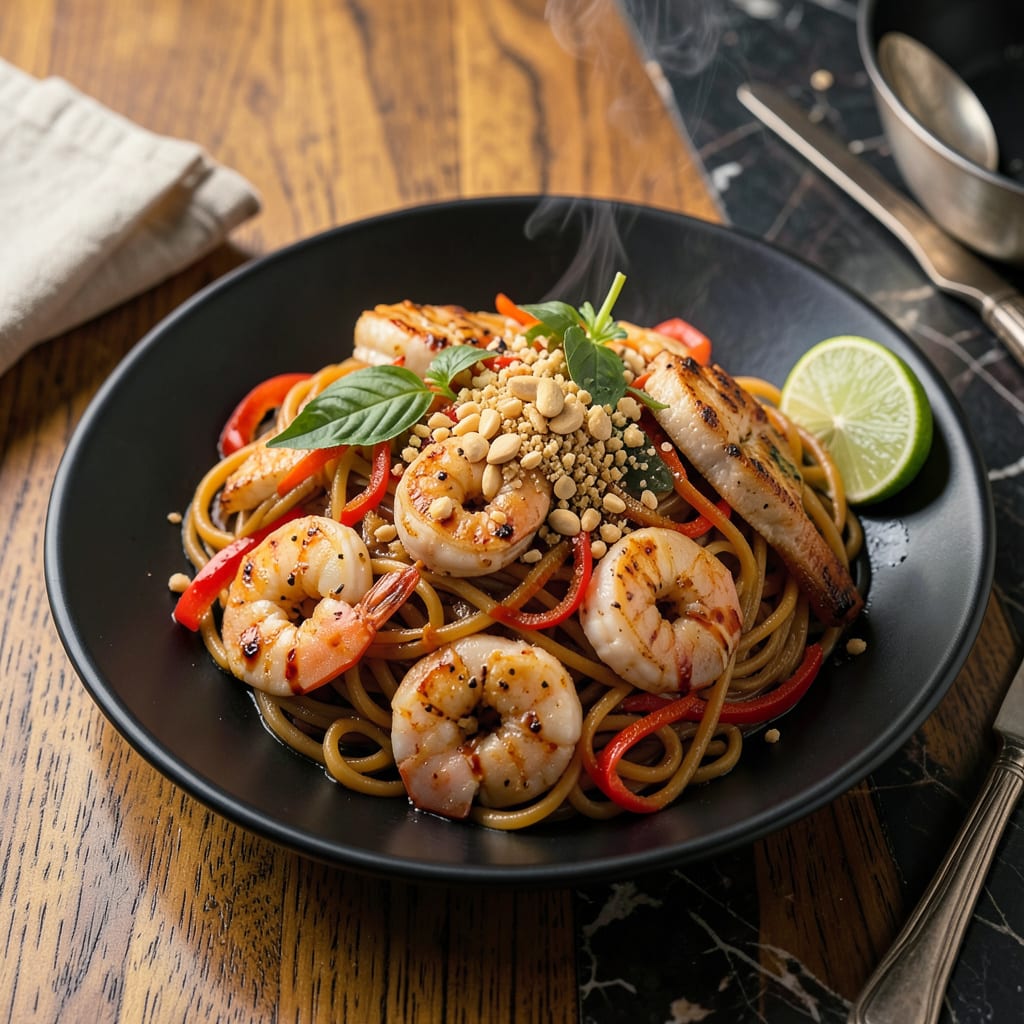
Traditional drunken noodles (Pad Kee Mao) don’t always include peanuts, but many Thai restaurants and recipes add crushed peanuts as a garnish or ingredient. Peanut allergies require verification, as variations exist between kitchens and regions.
This dish’s adaptability is what makes it so fascinating. 🔥 In Thailand, street vendors often customize ingredients based on local preferences—some regions prioritize fresh herbs and chili heat, while urban spots might lean into the crunchy contrast peanuts provide. I’ve noticed that American Thai restaurants frequently include peanuts to cater to Western palates, but that’s not a hard rule. The key is understanding that Pad Kee Mao is more about technique (wide rice noodles stir-fried at high heat) than a rigid ingredient list, so you’ll find endless creative takes.
💡 In This Article
- Authentic Drunken Noodles Ingredients and Peanut Usage
- Ordering Drunken Noodles Safely with a Peanut Allergy
Authentic Drunken Noodles Ingredients and Peanut Usage
The foundation of Pad Kee Mao starts with wide rice noodles stir-fried at high heat (400-450°F) with garlic, Thai basil, chili, and protein (often chicken, pork, or seafood). The dish’s signature comes from its sauce—a balance of soy sauce, oyster sauce, and dark soy sauce that creates a deep umami flavor.
🔥 Peanuts aren’t part of the traditional recipe from Central Thailand, where the focus is on the noodles’ chewy texture and the aromatic basil.
Peanuts enter the picture in two key ways: as a garnish and as a textural element. When used, they’re typically dry-roasted and crushed to about 1/4-inch pieces, adding a satisfying crunch against the soft noodles.
The fat content in peanuts (about 48% oil) also helps carry the dish’s flavors, similar to how sesame oil works in Chinese cuisine. I’ve noticed Bangkok street vendors often add peanuts to appeal to tourists, while rural areas stick to the simpler herb-focused version.
The regional variations are fascinating. In Northern Thailand, you might find versions with fermented soybean paste instead of peanuts, while Southern recipes sometimes incorporate cashews for a milder nutty flavor. The peanuts in American Thai restaurants are usually added during the final toss, heated just enough to warm through (30-60 seconds) without losing their crunch.
This adaptation caters to Western preferences for textural contrast in stir-fries.
For those curious about the peanut preparation process: quality kitchens will blanch raw peanuts in boiling water for 2-3 minutes, then dry-roast them at 350°F for 10-12 minutes until golden. This double-cooking method removes the raw bitterness while enhancing the nutty aroma.
The peanuts are added last to preserve their texture—unlike ingredients like garlic that cook throughout the stir-fry process.
What’s interesting is how the peanut addition affects the dish’s flavor profile. The natural sweetness of peanuts (about 4% sugar content) provides a counterpoint to the dish’s spicy and salty elements.
This is why some chefs prefer to lightly salt the peanuts before adding them—it creates a more complex flavor bridge between the rich sauce and fresh basil notes.
The protein choice often determines whether peanuts are included. Seafood versions rarely feature peanuts (to avoid overpowering delicate flavors), while chicken or pork versions more commonly include them. Vegetarian adaptations might use peanuts as a protein substitute, increasing the quantity to about 1/4 cup per serving for satisfaction.
Remember that authentic Thai cooking prioritizes balance—the famous “yin-yang” principle. Peanuts, when used, serve to balance the dish’s heat, saltiness, and umami with their earthy sweetness and crunch. ✨ This is why you’ll never find overwhelming amounts; typically just 1-2 tablespoons per plate is enough to achieve the desired effect.

Trained in classic French technique but raised on slow-cooked ribs and spicy rubs, she blends culinary skill with smoke and soul.
- Recipe for Boneless Pork Chops in Cast Iron Skillet: Sear and Baste to Juicy Perfection - October 3, 2026
- Recipe for Boneless Cross Rib Roast: Slow-Roasted Beef with Herb Crust - October 3, 2026
- Hamburgers in Sauce Recipe Crock Pot: Slow-Cooked Savory Delight - October 3, 2026