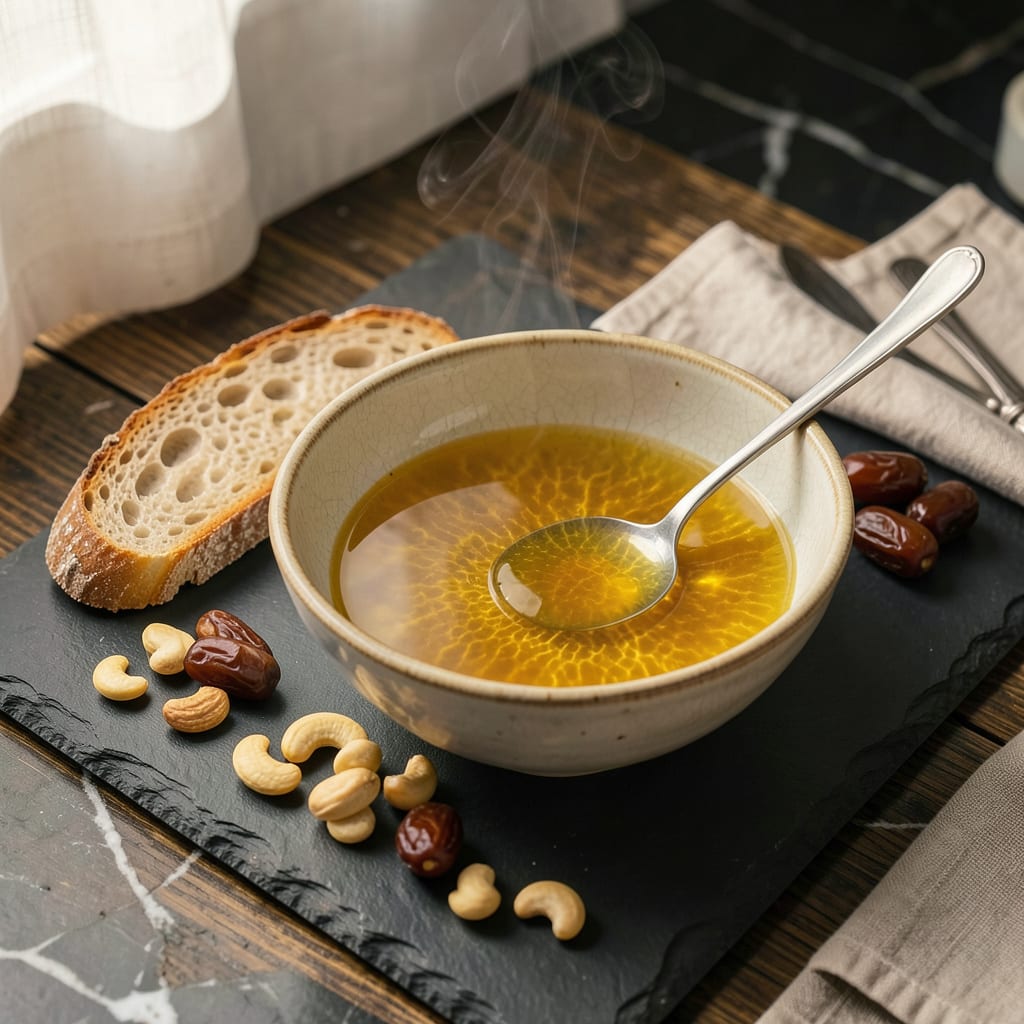
Ghee has a rich, nutty, caramel-like flavor that’s deeper and more aromatic than butter. Its toasty notes and smooth texture make it highly appealing in both savory and sweet dishes, though taste preferences vary by individual and quality.
As a chef who’s worked with both clarified butter and traditional dairy, I can tell you ghee’s magic lies in its concentration. 🔥 The process of simmering butter to remove milk solids creates a golden liquid that develops complex layers—think brown butter taken to the next level. When I first tasted high-quality ghee, I noticed how it enhances dishes without overpowering them, adding warmth to everything from morning toast to spiced curries. The key is using it mindfully, as its intensity means a little goes a long way.
💡 In This Article
- Why Ghee’s Flavor Stands Out from Regular Butter
- Best Ways to Use Ghee for Maximum Flavor Impact
Why Ghee’s Flavor Stands Out from Regular Butter
The transformation from butter to ghee is all about concentration and chemistry. When butter simmers at 250-300°F, the water evaporates and milk solids separate, leaving behind pure butterfat. But here’s where the magic happens: those milk solids caramelize through the Maillard reaction, creating the deep, nutty aroma that makes ghee so distinctive.
🔥 Unlike regular butter, which contains about 15-20% water and 3-4% milk solids, ghee is 99% pure fat—meaning every drop packs intense flavor.
The cooking time dramatically alters the final taste. Short simmers (about 15-20 minutes) produce a lighter, more buttery ghee, while longer cooking (up to 45 minutes) develops richer caramel notes and a darker golden hue.
I’ve noticed homemade batches often taste brighter than store-bought versions because commercial ghee sometimes uses higher heat for efficiency, which can mute subtle flavors. The best artisanal ghee I’ve tried had layers of toasted marshmallow and roasted hazelnut—complexity you won’t find in standard butter.
What really sets ghee apart is its smoke point. At 485°F (versus butter’s 350°F), it handles high-heat cooking without burning, which means those beautiful browned flavors stay pure. ✨ When I sear steaks in ghee, the crust develops faster and tastes cleaner than with butter, which can scorch.
The fat’s stability also means it retains its nutty character even after prolonged heating—a game-changer for stir-fries and deep-frying.
The texture plays a huge role in the experience too. At room temperature, ghee has a silky, almost liquid consistency that coats the tongue differently than butter’s firmer spread. This mouthfeel enhancement makes it particularly luxurious in sauces and drizzles.
I love how a tiny spoonful of ghee melted over hot rice or soups creates a glossy sheen and releases its aroma gradually, unlike butter which can congeal quickly.
Quality makes all the difference in taste perception. Grass-fed ghee contains more conjugated linoleic acid (CLA) and beta-carotene, giving it a slightly sweeter, more vibrant flavor compared to conventional versions. 🌟 The cows’ diet translates directly to the ghee’s character—just like with wine or olive oil.
When I blind-tested different brands, the grass-fed samples consistently had a cleaner finish and more pronounced caramel notes.
For those sensitive to dairy, the clarification process removes most lactose and casein, making ghee often tolerable for lactose-intolerant individuals. This purity also means the flavor stays consistent over time—unlike butter, which can absorb fridge odors. The shelf stability comes from the absence of water, which would otherwise allow bacterial growth.
Properly stored ghee can maintain its peak flavor for 6-12 months at room temperature, while butter typically lasts just 1-3 months in the fridge.
The cultural preparation methods add another layer of complexity. Indian ghee often includes a final step of adding curry leaves or fenugreek seeds during clarification, infusing subtle herbal notes. Middle Eastern versions might incorporate a touch of salt or spices during simmering.
These regional variations prove how versatile ghee’s base flavor can be as a canvas for other tastes—something regular butter can’t match in its unaltered form.

Trained in classic French technique but raised on slow-cooked ribs and spicy rubs, she blends culinary skill with smoke and soul.
- Recipe for Boneless Leg of Lamb Roast in the Oven: Herb-Crusted and Rosy Pink Inside - October 3, 2026
- Meat Loaf Recipe With Beef And Pork: Homestyle Blend With Rich Gravy - October 3, 2026
- Hamburger Patty Recipe No Egg: Juicy Bind With Breadcrumbs and Milk - October 3, 2026