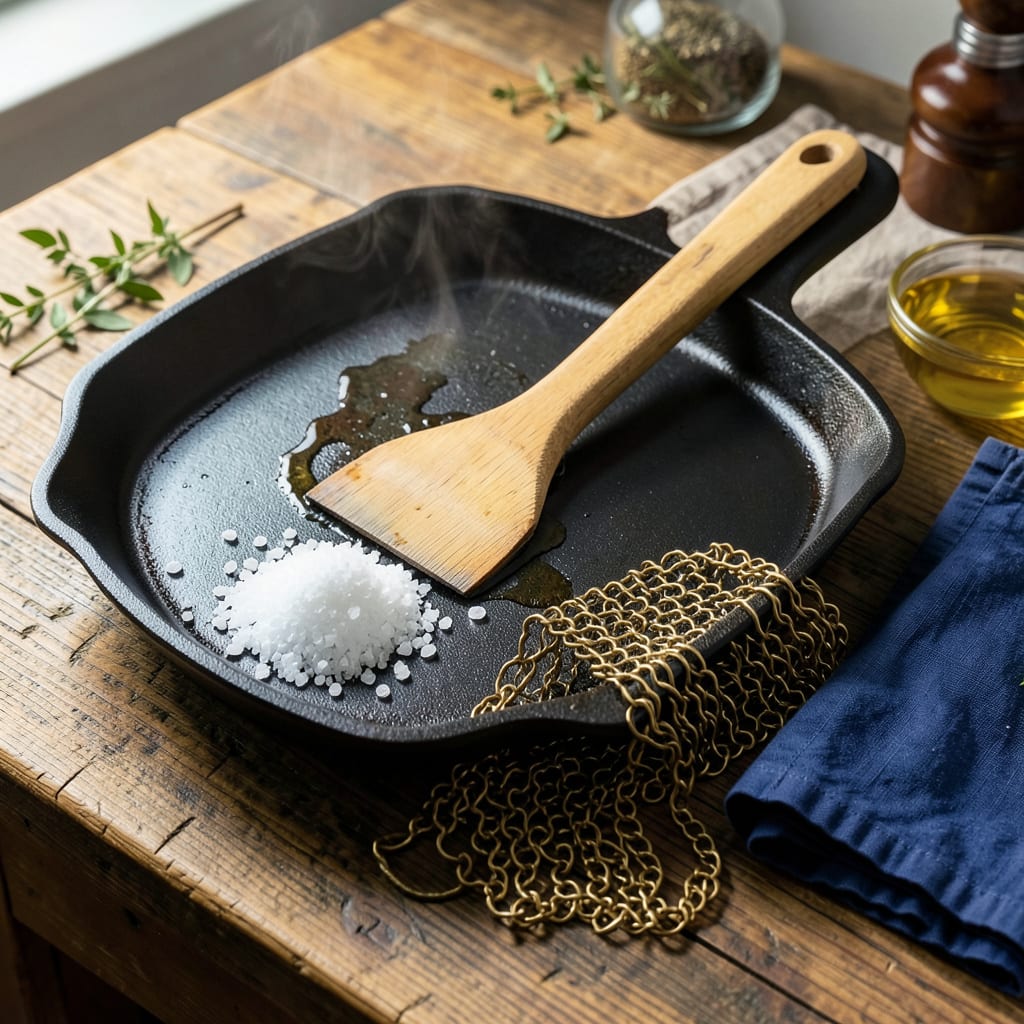
Clean a cast iron griddle while warm using a stiff brush or scraper to remove food debris, rinse with hot water (no soap), then dry thoroughly on the stove. Apply a thin layer of oil to prevent rust and maintain seasoning.
I’ve spent years perfecting my cast iron routine, and here’s what I’ve learned: timing is everything. 🔥 The warmth keeps food particles from hardening, making them easier to dislodge without damaging the seasoned surface. That thin oil layer you apply isn’t just for shine—it creates a protective barrier that actually improves with each use. Think of it like seasoning a wok; every cleaning session builds flavor and durability for your next cookout.
What most people overlook is how moisture becomes the enemy. Even a single drop left behind can trigger rust within hours. That’s why I always heat my griddle for 5-10 minutes after washing—it ensures every crevice is bone-dry before I add that crucial oil coating. ✨
💡 In This Article
- Why Proper Cast Iron Griddle Cleaning Preserves Seasoning
- Essential Tools and Oils for Cast Iron Griddle Maintenance
Why Proper Cast Iron Griddle Cleaning Preserves Seasoning
The magic of cast iron lies in its seasoning—a hard, glossy layer formed when oils polymerize under heat. This isn’t just a coating; it’s a chemical transformation where fatty acids break down and rebond as a plastic-like surface. When you clean while warm, you’re working with this layer at its most pliable state.
🔥 The heat keeps the polymerized oil slightly fluid, allowing you to remove food particles without stripping the protective barrier.
Water alone won’t damage seasoning, but the combination of water, oxygen, and time creates rust. The iron in your griddle reacts with oxygen in water through oxidation, forming iron oxide (rust) at a rate that accelerates with moisture. That’s why I always use hot water—it evaporates faster, reducing exposure time.
Soap breaks down oils, which is why we avoid it; even “mild” detergents contain surfactants that can penetrate and weaken your seasoning over time.
Here’s what happens when you dry properly: heating the griddle to 200-300°F for 5-10 minutes doesn’t just remove visible water. It drives moisture from microscopic pores in the iron and completes the evaporation process. This step is crucial because residual moisture in these pores creates the perfect environment for rust to form overnight.
✨ I can always tell when someone skips this step—their griddle develops those telltale orange spots within days.
The oil application isn’t just about preventing rust—it’s about rebuilding and reinforcing your seasoning. When you apply a thin layer of oil and heat it, you’re essentially spot-welding any areas where the seasoning might have worn thin during cooking.
Flaxseed oil works particularly well because its high concentration of linseed oil creates an especially durable polymerized layer. Over time, this process builds up a non-stick surface that actually improves with each use.
What most people don’t realize is that proper cleaning extends your griddle’s lifespan by preventing pitting. When rust forms and isn’t addressed, it eats into the iron surface, creating tiny craters that food can stick to.
A well-maintained griddle can last generations—my grandmother’s 1940s griddle still has its original smooth surface because of this exact cleaning method. 💫
The temperature sweet spot for cleaning is between 150-200°F—hot enough to keep food particles soft but not so hot it causes the oil to smoke. I test this by sprinkling a few drops of water; if they dance and evaporate immediately, the temperature is perfect.
This is also why I recommend cleaning immediately after cooking while the griddle retains residual heat, rather than letting it cool completely.
Long-term benefits show in your cooking. A properly maintained griddle develops a dark, almost glass-like surface that requires less oil for cooking and distributes heat more evenly. The seasoning layer actually becomes part of the cooking surface, creating that coveted “black iron” finish that professional chefs prize.
This isn’t just about maintenance—it’s about building a tool that gets better with every meal you cook on it. ⚡

Trained in classic French technique but raised on slow-cooked ribs and spicy rubs, she blends culinary skill with smoke and soul.
- Recipe for Boneless Pork Chops in Cast Iron Skillet: Sear and Baste to Juicy Perfection - October 3, 2026
- Recipe for Boneless Cross Rib Roast: Slow-Roasted Beef with Herb Crust - October 3, 2026
- Hamburgers in Sauce Recipe Crock Pot: Slow-Cooked Savory Delight - October 3, 2026