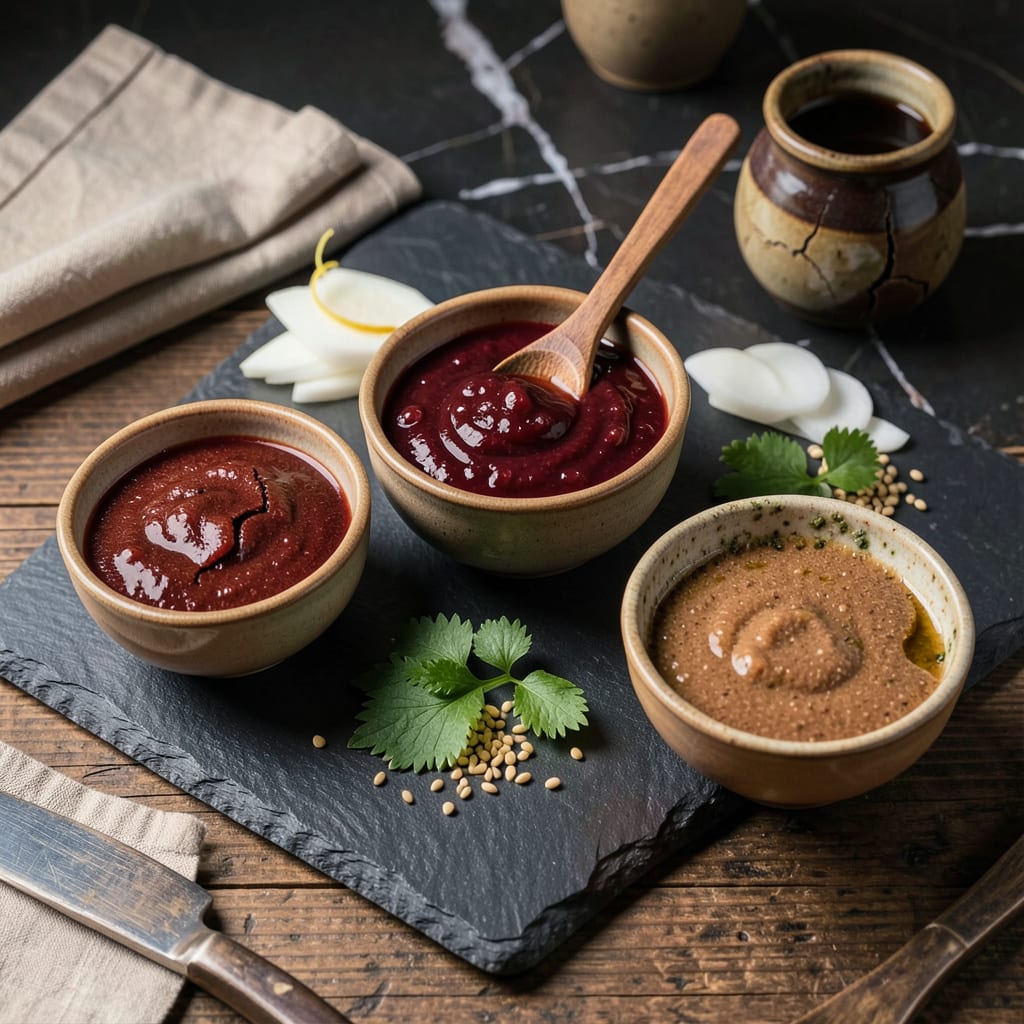
Gochujang can last 1-2 years unopened and 6-12 months refrigerated after opening. Its high salt and fermentation process preserve it, but mold, off smells, or texture changes mean it’s spoiled.
I’ve worked with fermented ingredients for years, and gochujang’s longevity always impresses me. The magic lies in its traditional fermentation process—lactic acid bacteria and high salt concentration create an environment where harmful microbes can’t survive. Think of it like natural preservation at work, similar to how kimchi or miso stay fresh for months. 🔥
What’s fascinating is how the paste actually evolves over time. Unopened, it develops deeper umami notes, while refrigerated gochujang maintains its vibrant heat. I always tell people to trust their senses: if it smells funky (beyond its usual fermented aroma) or grows fuzz, it’s time to toss it.
💡 In This Article
- How Fermentation Extends Gochujang’s Shelf Life
- Proper Gochujang Storage and Spoilage Warning Signs
How Fermentation Extends Gochujang’s Shelf Life
The secret to gochujang’s impressive longevity lies in its lactic acid fermentation process. When the paste ferments, beneficial bacteria (like Lactobacillus) convert sugars into lactic acid, creating an environment with a pH around 4.0-4.5. This acidity level is hostile to most spoilage microbes while allowing the good bacteria to thrive.
It’s the same principle that preserves sauerkraut or yogurt for months. 🔥
Salt plays a crucial role too—traditional gochujang contains 12-15% salt concentration, which acts as a natural preservative. The salt draws moisture out of potential contaminants through osmosis, making the environment inhospitable for bacteria and mold.
The chili peppers add another layer of protection with their natural antimicrobial compound capsaicin, which inhibits microbial growth at concentrations above 0.1%.
What’s fascinating is how the fermentation process actually creates natural antimicrobial peptides. As the paste ages, proteins break down into smaller compounds that have been shown in studies to inhibit pathogens like E. coli and Listeria. This is why properly fermented gochujang can last years unopened—it’s essentially a self-preserving system where multiple factors work together.
The aging process also enhances flavor while maintaining safety. Over 6-12 months, the paste develops deeper umami notes as proteins break down into amino acids. I’ve noticed that well-aged gochujang has a more complex, almost caramel-like sweetness that balances its heat.
The fermentation continues slowly even in the fridge, though at a much reduced rate compared to room temperature storage. ✨
Temperature control becomes crucial after opening because it affects the fermentation rate. At refrigerator temperatures (35-40°F), the beneficial bacteria remain dormant while spoilage microbes are kept in check. This is why opened gochujang lasts 6-12 months refrigerated—the cold slows all microbial activity while preserving the paste’s structure and flavor profile.
One thing I always check is the paste’s texture. Fresh gochujang should be smooth with a slight stickiness. Over time, you might notice some liquid separation—this is normal and just means the water content is migrating. A quick stir reincorporates everything.
True spoilage shows as dry, crumbly texture or slimy film, which indicates either moisture loss or unwanted bacterial growth. 💫
The salt content also means gochujang can handle brief temperature fluctuations better than many fermented products. I’ve accidentally left jars out overnight during camping trips, and as long as they went back in the fridge within 12 hours, the high salt concentration prevented any issues.
That said, consistent refrigeration is still the gold standard for maintaining both safety and quality after opening.

Trained in classic French technique but raised on slow-cooked ribs and spicy rubs, she blends culinary skill with smoke and soul.
- Recipe for Boneless Pork Chops in Cast Iron Skillet: Sear and Baste to Juicy Perfection - October 3, 2026
- Recipe for Boneless Cross Rib Roast: Slow-Roasted Beef with Herb Crust - October 3, 2026
- Hamburgers in Sauce Recipe Crock Pot: Slow-Cooked Savory Delight - October 3, 2026