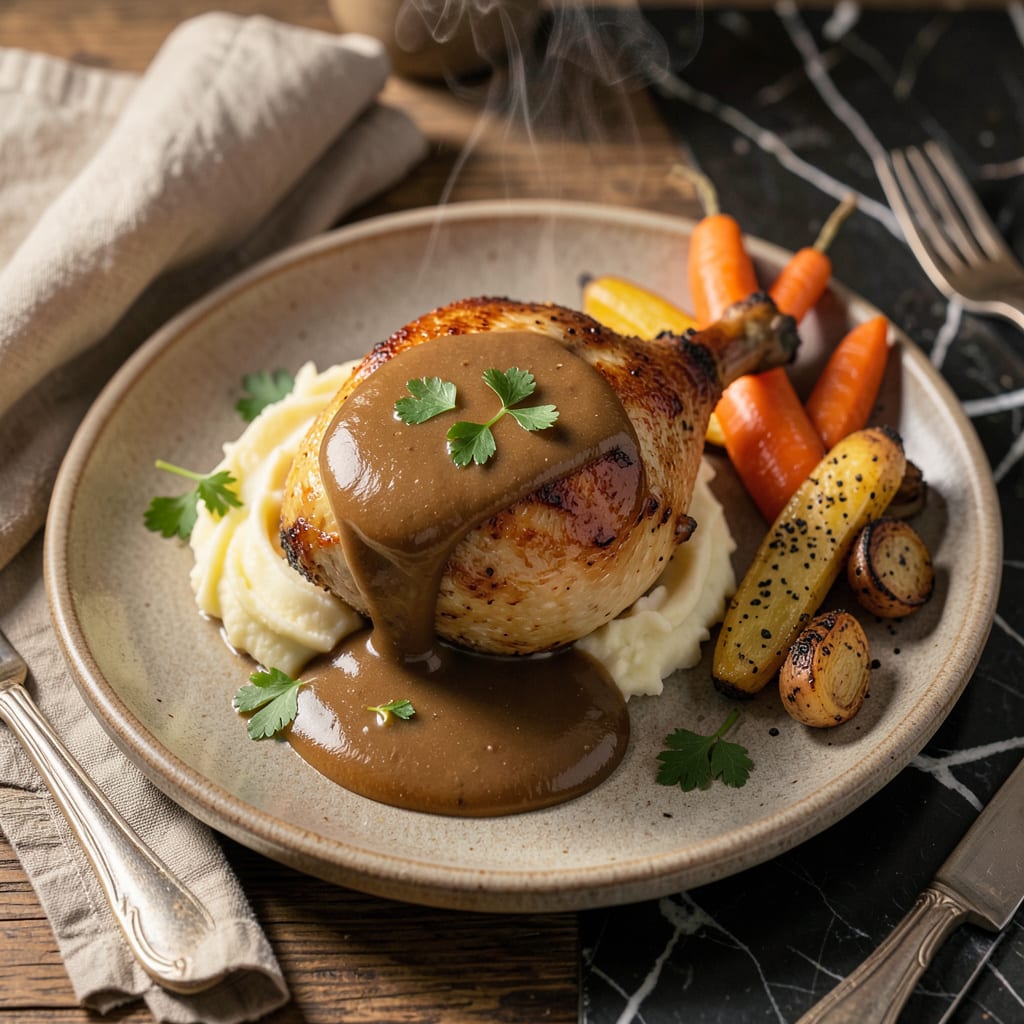
Traditional brown gravy often contains dairy in the form of butter or milk, but many recipes use beef drippings, flour, and broth as the base. Always check ingredients for hidden dairy sources like cream or cheese.
As a chef who’s worked with both classic and modern gravy techniques, I’ve noticed that dairy plays different roles depending on the recipe. The butter in a traditional roux creates that velvety texture, while milk or cream adds body and richness. However, I’ve had great success making equally luscious gravies using olive oil or vegetable broth as the base. The key is balancing fat content and seasoning carefully—especially when avoiding dairy. 💫
What often surprises people is how regional traditions affect dairy use. Southern-style gravies frequently rely on pan drippings alone, while some European versions might include a splash of cream for extra decadence. Always scan labels for terms like “whey” or “casein” if you’re avoiding dairy completely. 🔥
💡 In This Article
- Common Dairy Ingredients Found in Brown Gravy
- How to Make Dairy-Free Brown Gravy at Home
Common Dairy Ingredients Found in Brown Gravy
Classic brown gravy recipes often start with a roux made from equal parts butter and flour—typically 2 tablespoons each—to create that signature velvety base. The butter’s milk solids contribute a subtle richness that water or oil simply can’t replicate, while the fat helps carry flavors from the pan drippings.
I’ve found that butter-based roux develops a deeper, nuttier aroma when cooked to a golden brown at medium heat (325°F) for about 5-7 minutes. ✨
Beyond the roux, many recipes call for whole milk or heavy cream (about 1/2 to 1 cup) added during the final stages. This isn’t just for richness—dairy proteins help stabilize the emulsion, preventing the gravy from separating. The lactose also undergoes slight caramelization during simmering, adding subtle sweetness that balances savory beef notes.
Southern-style gravies often skip this step, relying solely on meat drippings for a cleaner flavor profile. 🔥
The texture difference is noticeable when comparing dairy vs non-dairy versions. Dairy-based gravies coat the back of a spoon more thickly and leave a glossier sheen on mashed potatoes. The fat content (about 8-12% in cream-based versions) creates that luxurious mouthfeel.
However, I’ve achieved similar results using full-fat coconut milk or cashew cream in dairy-free versions—though the flavor profile shifts slightly toward nuttiness. 💫
Hidden dairy sources often catch people by surprise. Many store-bought gravy mixes contain whey powder or sodium caseinate as stabilizers. Even some “beef-flavored” bouillon cubes include lactose as a filler. Always check for terms like “natural flavors” which may derive from dairy components.
Restaurant gravies frequently incorporate cheese rinds or buttermilk for extra depth—another reason to ask about preparation methods. ⚡
Regional variations show fascinating dairy patterns. French jus lié typically avoids dairy entirely, using only reduced stock and butter for finishing. Meanwhile, Midwest American gravies often include evaporated milk for extra creaminess. British versions might use stout beer instead of dairy, creating a completely different flavor architecture while maintaining similar body. The common thread?
Fat is essential—whether from dairy or alternative sources. 🌟
For those avoiding dairy, the good news is that the fundamental chemistry can be replicated. The Maillard reaction (browning of proteins) that gives gravy its depth comes from the meat drippings, not the dairy. A well-reduced mushroom stock or caramelized onion base can provide umami richness that rivals traditional versions.
The key is patience—allowing flavors to develop through proper reduction and layering. 💛

Trained in classic French technique but raised on slow-cooked ribs and spicy rubs, she blends culinary skill with smoke and soul.
- Recipe for Boneless Pork Chops in Cast Iron Skillet: Sear and Baste to Juicy Perfection - October 3, 2026
- Recipe for Boneless Cross Rib Roast: Slow-Roasted Beef with Herb Crust - October 3, 2026
- Hamburgers in Sauce Recipe Crock Pot: Slow-Cooked Savory Delight - October 3, 2026