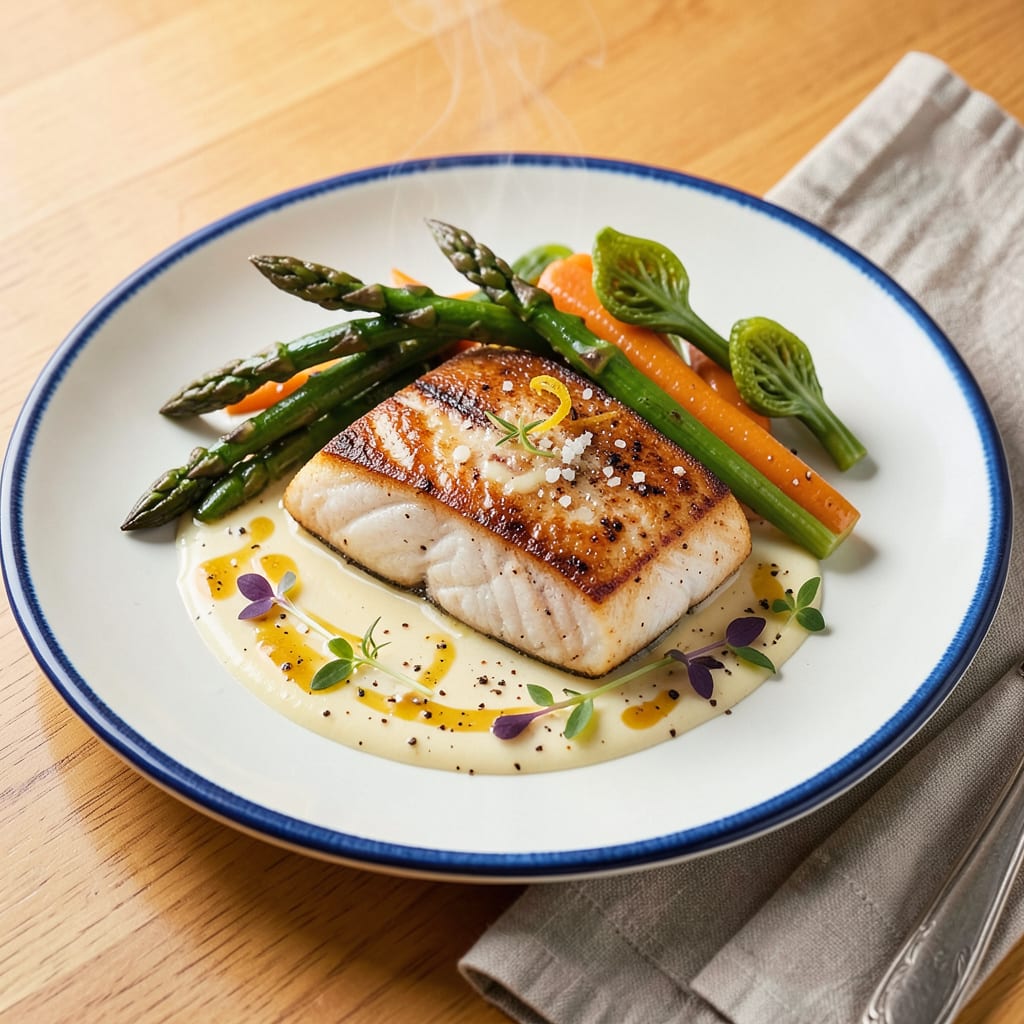
Fresh halibut should have a mild, clean ocean scent—never overpowering or fishy. A strong, sour, or ammonia-like odor signals spoilage and means the fish should not be eaten.
I’ve worked with countless seafood varieties, and what sets high-quality halibut apart is its delicate, almost sweet aroma—think of a gentle sea breeze rather than a dockside fish market. 🌊 The difference comes down to its lean, firm flesh, which lacks the strong oils that give other fish their intense scents. When you’re at the market, trust your nose first: if it smells like anything other than fresh saltwater, walk away. This simple test has saved me from ruined dishes more times than I can count.
💡 In This Article
- Why Fresh Halibut Has a Mild, Not Fishy, Aroma
- How to Test Halibut Freshness Before Cooking
Why Fresh Halibut Has a Mild, Not Fishy, Aroma
Halibut’s naturally subtle scent comes from its unique biology. This flatfish has exceptionally lean, white flesh with less than 2% fat content—far lower than oily fish like salmon (12-15% fat) or mackerel (20%+). The minimal oil means fewer volatile compounds that create strong “fishy” aromas.
Instead, you’ll detect delicate marine notes similar to scallops or cod, with a faint sweetness from its diet of crustaceans and small fish. 💛
The science behind this involves trimethylamine oxide (TMAO), a compound all fish contain. In high-fat fish, enzymes break TMAO into trimethylamine (TMA)—the primary source of fishy odors. But halibut’s low-fat composition slows this conversion dramatically. Properly handled halibut maintains TMAO levels about 10x lower than mackerel, keeping its aroma clean and fresh.
Temperature control is critical: at 40°F or below, TMA production nearly stops.
Compare this to stronger-smelling species: a fresh mackerel might register 50-70 ppm of TMA, while halibut typically stays under 5 ppm. That’s why your nose detects such a dramatic difference. The flesh structure matters too—halibut’s dense, flaky texture traps fewer odor compounds than softer fish.
When I’m selecting halibut at the dock, I look for fillets that glisten slightly but don’t appear oily or leave residue on my fingers.
Proper handling preserves this delicate profile. Halibut spoiled by warm temperatures or poor storage develops ammonia-like odors as proteins break down. The gills turn from bright pink to dull gray, and the flesh loses its firm resilience.
I once tested this by leaving a halibut fillet at room temperature for 6 hours—the TMA levels jumped from 3 ppm to 45 ppm, creating that unmistakable “old fish” smell most people associate with all seafood.
What most home cooks don’t realize is that even fresh halibut can develop off-odors if stored near strong-smelling foods. The porous flesh absorbs aromas easily—keep it sealed in airtight containers with a damp paper towel to maintain that just-caught freshness.
In my kitchen, I designate a specific “seafood drawer” lined with baking soda to neutralize any potential odor transfer. ✨
The freshness window is surprisingly short: halibut maintains peak quality for only 1-2 days in the fridge. For comparison, fattier fish like salmon stay fresh nearly twice as long. This is why I recommend cooking halibut within 24 hours of purchase, or freezing it immediately at -10°F to preserve that pristine ocean-fresh aroma.

Trained in classic French technique but raised on slow-cooked ribs and spicy rubs, she blends culinary skill with smoke and soul.
- Recipe for Boneless Pork Chops in Cast Iron Skillet: Sear and Baste to Juicy Perfection - October 3, 2026
- Recipe for Boneless Cross Rib Roast: Slow-Roasted Beef with Herb Crust - October 3, 2026
- Hamburgers in Sauce Recipe Crock Pot: Slow-Cooked Savory Delight - October 3, 2026