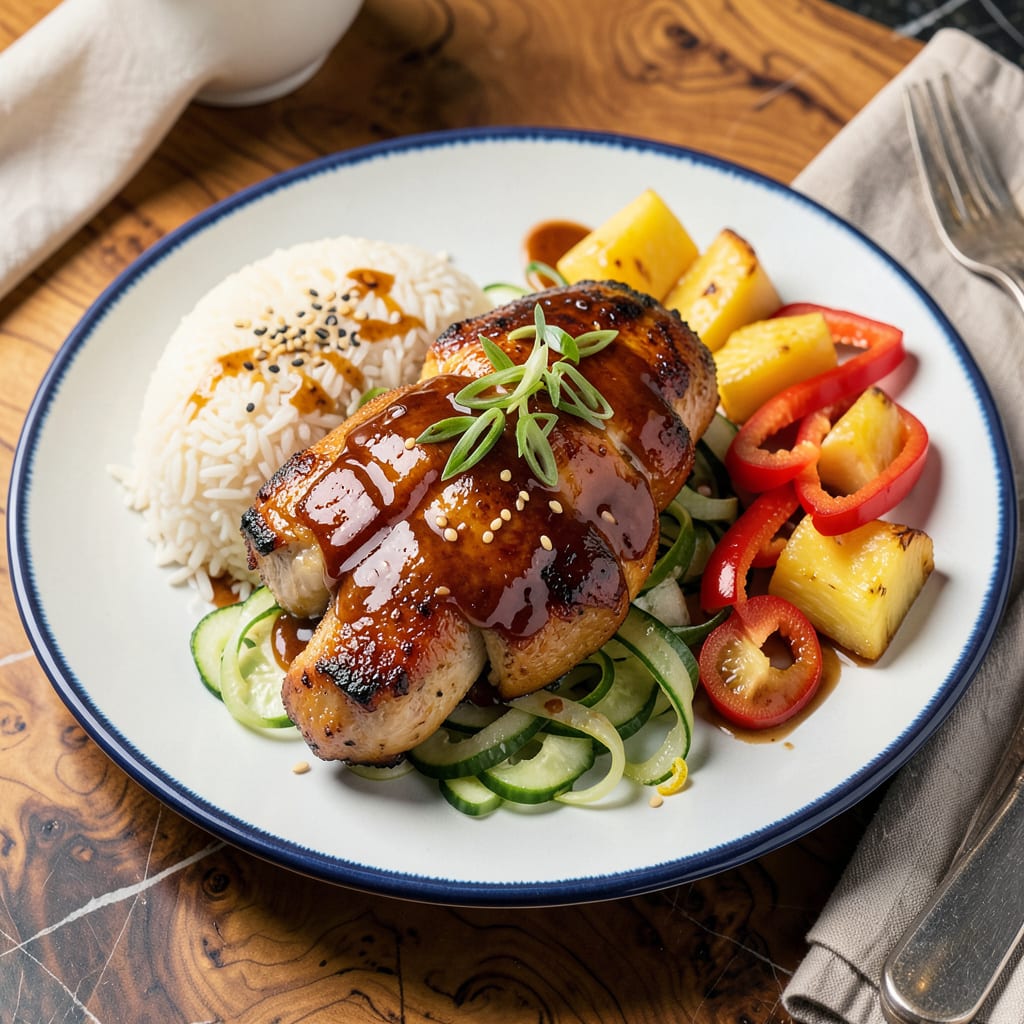
Traditional teriyaki sauce doesn’t include pineapple, but some modern or Hawaiian-style variations add pineapple juice or chunks for sweetness and tang. The classic version uses soy sauce, mirin, sugar, and sometimes ginger or garlic.
I’ve spent years studying how regional flavors transform classic sauces, and teriyaki is a perfect example of this evolution. 🔥 The pineapple addition you’re asking about actually stems from Pacific Island culinary traditions, where tropical fruits naturally complement savory dishes. In Hawaii, for instance, chefs often blend pineapple’s acidity with teriyaki’s richness to create a brighter, more complex glaze for grilled meats. This isn’t about authenticity—it’s about creative adaptation that honors the sauce’s Japanese roots while embracing local tastes.
What’s fascinating is how the pineapple’s enzymes interact with the sauce’s base ingredients. The natural sugars caramelize beautifully when cooked, while the acidity cuts through the soy’s saltiness. ✨ I always recommend using fresh pineapple juice rather than canned for these variations—it makes a noticeable difference in both flavor depth and texture.
💡 In This Article
- Classic Teriyaki Sauce Ingredients and Origins
- Pineapple in Teriyaki: Modern Twists and Recipe Ideas
Classic Teriyaki Sauce Ingredients and Origins
The foundation of authentic teriyaki sauce lies in its four core components: soy sauce, mirin, sake, and sugar. This combination creates that signature glossy finish and perfect balance of sweet, salty, and umami flavors. The soy sauce provides the deep, fermented base, while mirin (a sweet rice wine) adds complexity with its subtle caramel notes.
🔥 What many don’t realize is that traditional Japanese teriyaki was originally a cooking technique—grilling fish with this glaze—before becoming a standalone sauce.
The sugar content typically ranges from 1-2 tablespoons per cup of sauce, which is crucial for achieving that perfect caramelization when heated. When you cook traditional teriyaki, the sugars and amino acids in the soy sauce undergo the Maillard reaction at about 310°F, creating those rich, browned flavors.
The sauce reduces by about 30% during cooking, concentrating its flavors while maintaining a syrupy consistency that clings beautifully to proteins.
Regional adaptations began appearing as teriyaki traveled beyond Japan. In the 1960s, Seattle became an unexpected teriyaki hub where Japanese immigrants adapted the sauce to local tastes by increasing the sugar content and sometimes adding garlic. These versions still maintained the pineapple-free tradition, focusing instead on enhancing the existing flavor profile.
The key was always maintaining that delicate equilibrium where no single ingredient overpowers the others.
What makes classic teriyaki so versatile is its ability to complement rather than compete with the main ingredient. The sauce’s viscosity—about 1.5 times thicker than water when properly reduced—allows it to coat evenly without overwhelming.
When I teach cooking classes, I always emphasize how the sauce should enhance the natural flavors of the protein, whether it’s salmon, chicken, or tofu, rather than mask them.
The absence of pineapple in traditional recipes isn’t accidental. Japanese cuisine typically avoids mixing fruit with savory dishes in this way, preferring to highlight the natural umami of ingredients.
The sauce’s brilliance comes from how these simple ingredients transform during cooking—mirin’s alcohol evaporates, soy sauce reduces, and sugars caramelize to create something greater than the sum of its parts. ✨
For home cooks wanting to experience authentic teriyaki, I recommend using 1 part sugar to 2 parts soy sauce as a starting ratio. The mirin and sake should each be about 10-15% of the total volume. This proportion maintains the integrity of the original while allowing for slight adjustments based on personal preference.
The sauce should simmer for 8-10 minutes to achieve the proper reduction and flavor development.
Interestingly, the word “teriyaki” itself gives us clues about its origins—”teri” means luster or shine (from the sugar glaze) and “yaki” means to grill or broil. This cooking method was perfected over centuries in Japan, long before any tropical fruit additions entered the picture.
The sauce was designed specifically for high-heat cooking methods where its components would transform and create that characteristic sheen and sticky texture we associate with perfect teriyaki.

Trained in classic French technique but raised on slow-cooked ribs and spicy rubs, she blends culinary skill with smoke and soul.
- Recipe for Boneless Pork Chops in Cast Iron Skillet: Sear and Baste to Juicy Perfection - October 3, 2026
- Recipe for Boneless Cross Rib Roast: Slow-Roasted Beef with Herb Crust - October 3, 2026
- Hamburgers in Sauce Recipe Crock Pot: Slow-Cooked Savory Delight - October 3, 2026