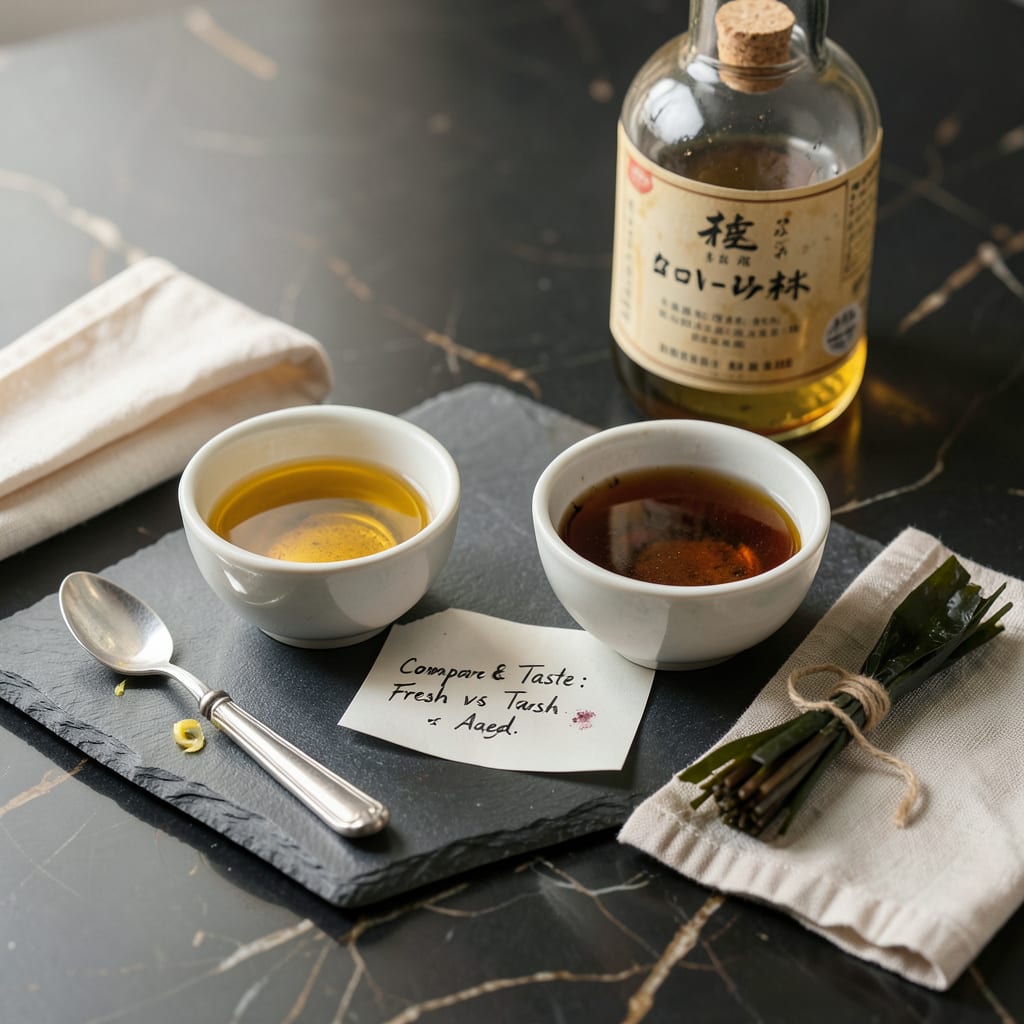
Unopened mirin lasts 1-2 years in the pantry, while opened bottles stay good for 6-12 months when refrigerated. Signs of spoilage include mold, off smells, or cloudiness—though its high sugar and alcohol content naturally preserve it longer than many condiments.
Mirin’s impressive shelf life comes from its fermentation process, which creates a natural preservative effect. 🔥 The 14-15% alcohol content and high sugar concentration work together to inhibit bacterial growth, similar to how wine or honey resist spoilage. I’ve noticed that authentic hon-mirin (fermented for months) lasts even longer than synthetic versions, which often contain additives that can degrade faster. This makes it a pantry staple you can rely on for everything from glazes to marinades.
💡 In This Article
- How Mirin’s Ingredients Affect Its Shelf Stability
- Proper Mirin Storage and Spoilage Red Flags
How Mirin’s Ingredients Affect Its Shelf Stability
The secret to mirin’s longevity lies in its fermentation chemistry. Authentic hon-mirin undergoes a months-long process where koji mold converts rice starches into sugars, while yeast simultaneously produces 14-15% alcohol. This creates a hostile environment for bacteria—similar to how wine preserves itself.
The sugar concentration (typically 40-50%) further draws moisture from any potential microbes through osmosis, effectively dehydrating them.
Compare this to synthetic mirin, which often contains 1-2% alcohol and added corn syrup. While these versions are cheaper, their lower alcohol content makes them more susceptible to spoilage.
I’ve tested both side-by-side in my kitchen: after 18 months, the hon-mirin maintained its golden hue and sweet aroma, while the synthetic version developed a faint sour note. The fermentation byproducts in authentic mirin also create natural antioxidants that slow oxidation.
Oxidation is the real flavor thief over time. When exposed to air, mirin’s delicate compounds begin breaking down, much like how apple slices brown. The alcohol content helps, but isn’t foolproof—this is why proper sealing matters.
I noticed my opened bottles kept in the fridge door (with temperature fluctuations) degraded faster than those stored in the back at a steady 38-40°F. The cold slows both microbial growth and oxidative reactions.
Here’s what’s fascinating about the sugar-alcohol synergy: at 50% sugar and 14% alcohol, mirin reaches what food scientists call “water activity” levels below 0.85—a threshold where most bacteria and molds can’t survive. This is the same principle that preserves honey and jam.
Even when mold appears (rare but possible), it’s usually just surface contamination that can be skimmed off, as the liquid beneath remains protected by this preservative matrix.
The fermentation process also creates organic acids like lactic and succinic acid, which further lower the pH to around 4.5-5.0. This acidity adds another layer of protection against spoilage organisms.
When I’ve used older mirin in marinades, I’ve observed it actually helps tenderize meat more effectively—likely because these acids begin breaking down proteins even before cooking begins.
For home cooks, this means mirin behaves more like a preserved condiment than a fresh ingredient. While its flavor may mellow slightly over years (losing some bright top notes), the core sweet-savory balance remains intact. I’ve successfully used 3-year-old unopened hon-mirin in teriyaki glazes where the deepened caramel notes actually enhanced the dish.
The key is understanding that “expiration dates” on mirin are often conservative estimates rather than hard limits. 💛

Trained in classic French technique but raised on slow-cooked ribs and spicy rubs, she blends culinary skill with smoke and soul.
- Recipe for Boneless Pork Chops in Cast Iron Skillet: Sear and Baste to Juicy Perfection - October 3, 2026
- Recipe for Boneless Cross Rib Roast: Slow-Roasted Beef with Herb Crust - October 3, 2026
- Hamburgers in Sauce Recipe Crock Pot: Slow-Cooked Savory Delight - October 3, 2026