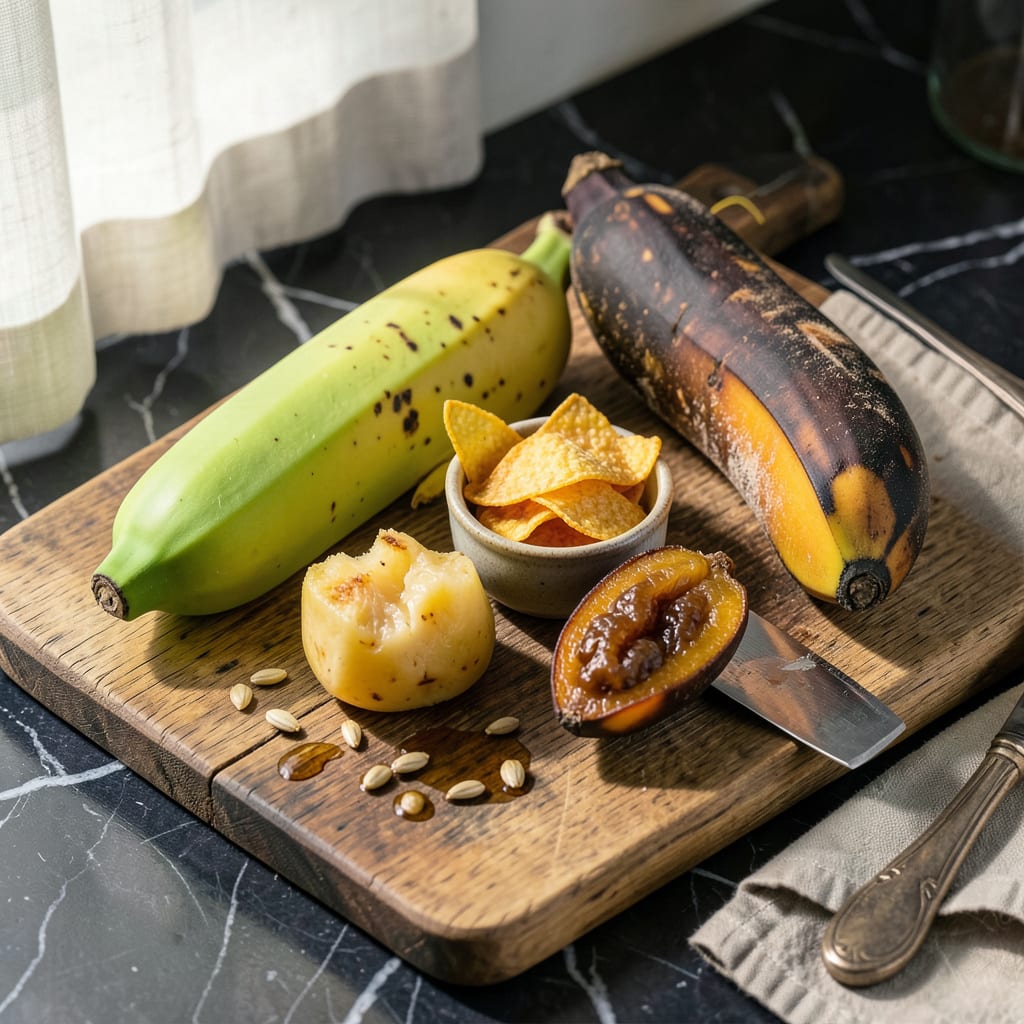
Unripe plantains last 1-2 weeks at room temperature, while ripe ones keep for 3-5 days. Refrigerated, they stay fresh for up to a week, and frozen (peeled/sliced) can last 3-6 months.
I’ve found that the starch-to-sugar transformation as plantains ripen dramatically affects their keeping time. 🔥 That green, firm stage holds up best at room temperature, while the sweeter, softer yellow ones need quicker attention. What many don’t realize is that refrigeration actually halts the ripening process entirely—perfect when you need to buy time. The freezer becomes your best ally for long-term storage, especially if you prep them properly by peeling and slicing first.
💡 In This Article
- Factors That Affect Plantain Freshness and Shelf Life
- Best Storage Methods to Extend Plantain Freshness
Factors That Affect Plantain Freshness and Shelf Life
The ripeness stage dramatically changes how long plantains stay fresh because of starch conversion. Green plantains contain mostly resistant starch (about 70-80% of their dry weight), which acts like fiber and resists spoilage. As they ripen, enzymes break down these starches into simple sugars—this is why yellow plantains taste sweeter but spoil faster.
The sugar content becomes food for microbes, accelerating decay. 🔥
Temperature and humidity play massive roles in preservation. Plantains are tropical fruits that thrive in warm, humid environments (70-85°F with 85-90% humidity). When stored below 55°F, their cellular metabolism slows dramatically, which is why refrigeration extends shelf life.
However, cold temperatures can cause “chilling injury”—visible as dark spots on the skin—if stored too long in the fridge. The ideal balance is 55-60°F with moderate humidity to prevent both spoilage and chilling damage.
Ethylene gas exposure speeds up ripening significantly. Plantains produce ethylene naturally as they mature, but storing them near other ethylene producers (like apples, bananas, or tomatoes) creates a gas concentration that can ripen them 2-3 times faster. This is why separating green plantains from other fruits can add days to their freshness.
The gas triggers cellular processes that convert starches to sugars and soften the flesh—great when you want ripe plantains quickly, but problematic for long-term storage. ✨
The physical structure of plantains affects their keeping time too. Their thick, waxy skin provides natural protection against moisture loss and microbial invasion. However, once peeled or cut, the exposed flesh oxidizes rapidly (turning brown) and becomes vulnerable to bacteria.
This is why whole plantains last weeks while cut pieces only stay fresh for 2-3 days even when refrigerated. The skin’s protective layer contains natural antimicrobial compounds that degrade once compromised.
Oxygen exposure accelerates spoilage through two main processes: oxidation and microbial growth. When plantain flesh is exposed to air, polyphenol oxidase enzymes react with oxygen to create brown pigments (similar to how apples brown). Simultaneously, aerobic bacteria and molds thrive in these conditions.
Vacuum-sealing or using airtight containers reduces oxygen exposure by about 90%, which is why these methods can double or triple storage life for cut plantains. 💫
Here’s what most people overlook: the variety matters. Some plantain cultivars have been bred for longer shelf life, containing up to 20% more resistant starch in their green stage. The “Horn” variety, for example, typically lasts 3-5 days longer than “French” plantains at room temperature.
This genetic difference affects how quickly the fruit converts starches to sugars and how resilient the skin is to environmental stressors.
The final game-changer is physical handling. Bruising creates microscopic tears in the skin that become entry points for microbes and accelerate ethylene production at the damage site. A plantain with even minor bruising can ripen 24-48 hours faster than an undamaged one.
This is why careful storage—avoiding stacking or pressure points—can meaningfully extend freshness, especially for green plantains you’re trying to keep unripe for cooking. ⚡

Trained in classic French technique but raised on slow-cooked ribs and spicy rubs, she blends culinary skill with smoke and soul.
- Recipe for Boneless Pork Chops in Cast Iron Skillet: Sear and Baste to Juicy Perfection - October 3, 2026
- Recipe for Boneless Cross Rib Roast: Slow-Roasted Beef with Herb Crust - October 3, 2026
- Hamburgers in Sauce Recipe Crock Pot: Slow-Cooked Savory Delight - October 3, 2026