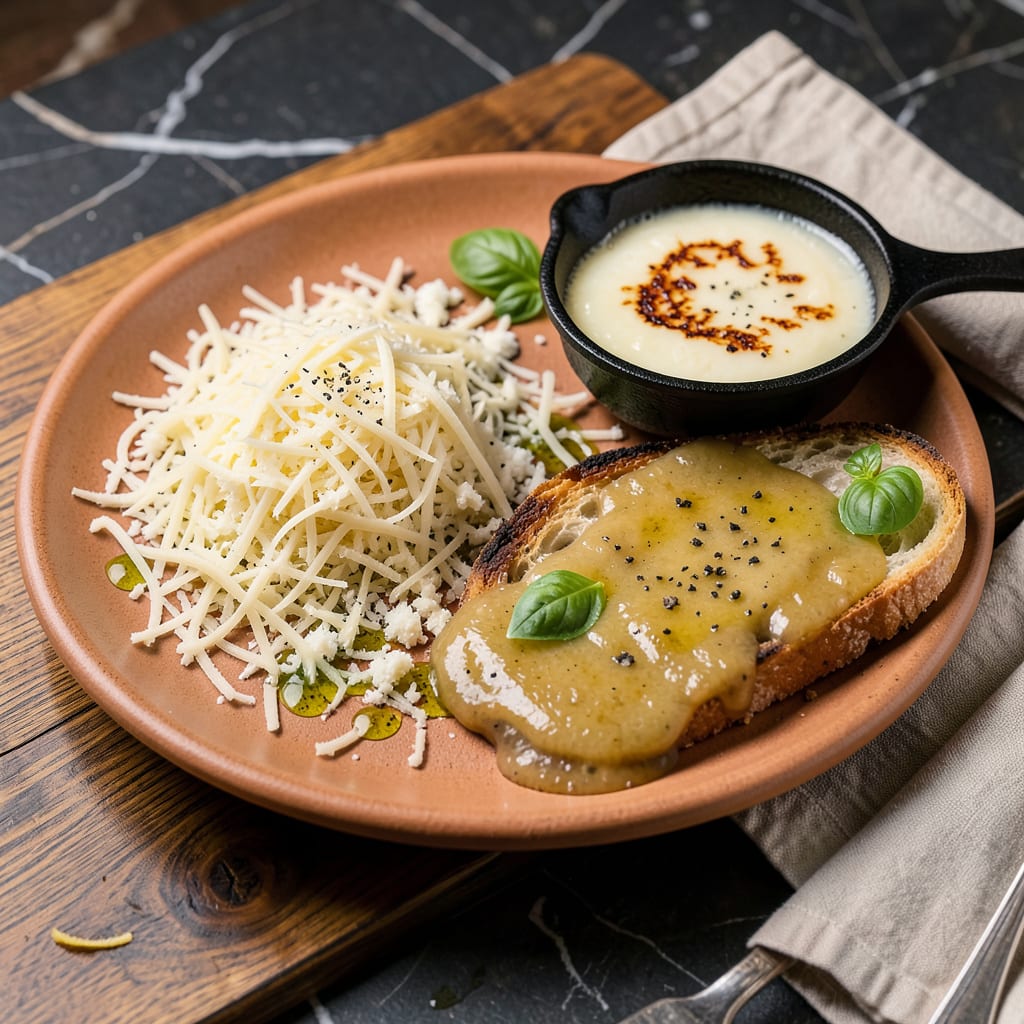
Parmigiano Reggiano doesn’t melt smoothly like other cheeses due to its low moisture and high protein content. Instead, it softens and becomes creamy when grated or shaved over hot dishes, adding rich umami flavor without forming strings or gooey texture.
This isn’t a flaw—it’s what makes this cheese a culinary powerhouse. 🔥 The aging process, often 24+ months, strips away moisture while concentrating proteins, creating a texture that transforms under heat rather than collapsing. Think of it as a flavor bomb: when sprinkled over risotto or pasta, it dissolves just enough to coat every bite with its nutty, salty depth, but stays distinct enough to add texture. My pro tip? Grate it fresh and add it at the very end of cooking to preserve its signature character.
💡 In This Article
- Why Parmigiano Reggiano Behaves Differently When Heated
- Best Cooking Techniques for Parmigiano Reggiano’s Unique Texture
Why Parmigiano Reggiano Behaves Differently When Heated
The secret lies in its 24-48 month aging process, where moisture evaporates and proteins break down into complex chains. Unlike mozzarella (which contains 50-60% water), Parmigiano Reggiano drops to just 30% moisture—this dramatic reduction prevents the cheese from flowing like melted plastic.
Instead, the proteins form a tight matrix that softens but maintains structure when heated. 🔥
When exposed to temperatures above 140°F, the cheese’s casein proteins begin to unwind but don’t fully separate like in cheddar or Swiss. This partial denaturation creates that signature “creamy but not stringy” texture.
The aged tyrosine crystals (those crunchy bits you notice) actually help distribute heat evenly, preventing the cheese from turning into a gooey puddle. It’s why a sprinkle over hot pasta creates a silky sauce rather than a cheese blanket.
Here’s what’s fascinating: the longer it’s aged, the more resistant it becomes to melting. A 36-month wheel will soften less than a 24-month because the proteins have had more time to cross-link. This is why younger Parmigiano works better for sauces while older wheels shine as garnishes.
The Maillard reaction also kicks in at higher temps (300°F+), creating those golden, nutty crusts you see on gratin dishes. ✨
Compare this to Pecorino Romano (its sheep’s milk cousin) which melts slightly better due to higher fat content, or Grana Padano that softens more readily from its shorter aging. Parmigiano’s unique behavior comes from strict production rules: raw cow’s milk, natural whey cultures, and copper vat cooking—all contributing to its heat-resistant character.
The copper actually helps develop proteins that stay stable when heated.
What most home cooks miss is that this “non-melting” quality is intentional. Italian chefs rely on it for dishes where they want cheese flavor without texture loss. Try this test: sprinkle grated Parmigiano on hot soup versus cold salad.
On the soup, it’ll create a delicate, flavorful film; on the salad, it stays in distinct, crunchy shards. That versatility is why it’s been a kitchen staple since the Middle Ages. 💫
The fat content (28-32%) also plays a role—higher than you’d expect, but it’s locked in the protein structure. When heated, the fat releases slowly, coating your tongue with rich flavor without making the cheese runny. This is why it’s perfect for finishing dishes rather than being the main melting component.
The next time you see it specified in a recipe, you’ll know exactly why!

Trained in classic French technique but raised on slow-cooked ribs and spicy rubs, she blends culinary skill with smoke and soul.
- Recipe for Boneless Pork Chops in Cast Iron Skillet: Sear and Baste to Juicy Perfection - October 3, 2026
- Recipe for Boneless Cross Rib Roast: Slow-Roasted Beef with Herb Crust - October 3, 2026
- Hamburgers in Sauce Recipe Crock Pot: Slow-Cooked Savory Delight - October 3, 2026