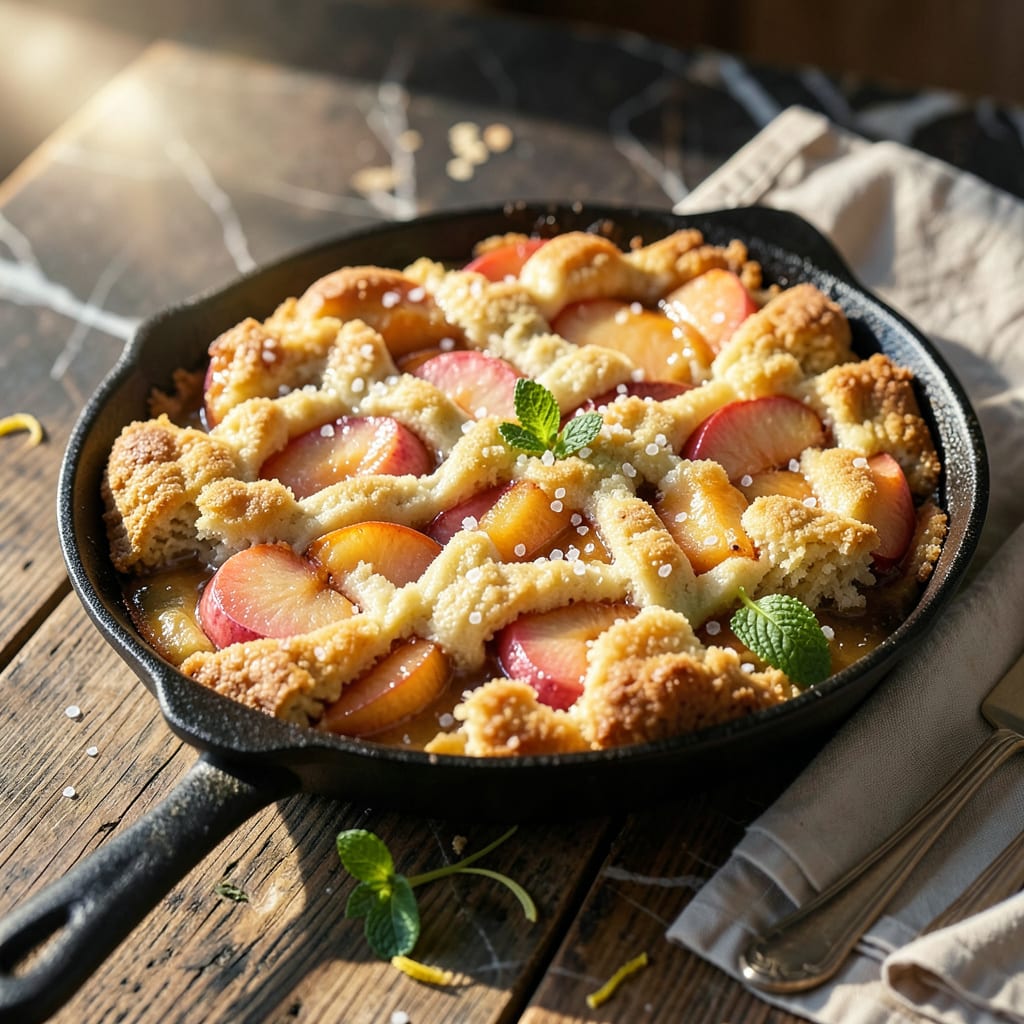
Peach cobbler can sit at room temperature for up to 2 days, but refrigeration is recommended after that to prevent bacterial growth and maintain freshness. Cover it tightly to avoid drying out or absorbing odors.
This storage rule balances convenience with safety, especially since fruit-based desserts like cobbler have higher moisture content. 🔥 The peaches create an environment where mold and bacteria can develop faster than in dry baked goods. I’ve found that wrapping it in plastic first, then foil, creates the best barrier against fridge odors while keeping the topping crisp. The sugar in the filling helps preserve it slightly, but don’t push the limits—after 4-5 days refrigerated, even the best-wrapped cobbler starts losing its magic.
💡 In This Article
- Food Safety Rules for Storing Peach Cobbler
- Best Ways to Refrigerate and Reheat Peach Cobbler
Food Safety Rules for Storing Peach Cobbler
The USDA classifies fruit-based desserts like peach cobbler as “potentially hazardous foods” because their moisture content (typically 65-75% from juicy peaches) creates an ideal breeding ground for bacteria. The danger zone for bacterial growth is between 40°F and 140°F, which is exactly where room-temperature cobbler sits.
After 2 hours in this range, bacteria like Staphylococcus aureus can begin multiplying rapidly. 🔥
Here’s what’s actually happening at the microbial level: The natural sugars in peaches (about 10-15g per cup) initially slow bacterial growth through osmosis, but this protection only lasts about 48 hours at room temp.
The pH level of peaches (around 3.9-4.2) also helps preserve the dessert temporarily, but isn’t strong enough to prevent mold growth beyond 2 days. I’ve seen firsthand how quickly mold can develop on the fruit layer when left uncovered. ✨
The topping actually spoils differently than the filling. Biscuit-style toppings dry out and become stale, while cake-like toppings can absorb moisture and turn gummy. Refrigeration slows these textural changes dramatically. At 40°F or below, the starches in the topping recrystallize more slowly, maintaining that perfect just-baked consistency for up to 5 days.
The cold also prevents the butter in the topping from oxidizing, which is what causes that unpleasant rancid taste. 💫
What most people don’t realize is that peach cobbler contains multiple food safety risk factors: dairy (if using butter/milk in the topping), eggs (in some recipes), and fresh fruit. Each component has different spoilage rates.
The USDA’s 2-hour rule applies here—any cobbler left out longer than that should either be refrigerated or discarded if it’s been over 2 days total at room temperature. I always err on the side of caution with fruit desserts. ⚡
Consider these critical factors when deciding storage:
- Room temperature: Safe for up to 2 days in clean, covered conditions
- Refrigerated: Maintains quality for 4-5 days when properly wrapped
- Freezer: Extends life to 2-3 months with airtight packaging
- Reheating: Bring to 165°F internal temp to kill potential bacteria
The sugar content creates another preservation paradox—while it initially inhibits bacteria, it also makes the dessert more hygroscopic (water-attracting). This means your cobbler can actually become soggy faster in humid environments. In my coastal kitchen, I’ve learned to add a silica gel packet when storing to combat this moisture issue.
The science behind this involves controlling water activity (aW) levels below 0.85, which is the threshold for most bacterial growth. 🌟

Trained in classic French technique but raised on slow-cooked ribs and spicy rubs, she blends culinary skill with smoke and soul.
- Meat and Potato Recipe Ideas: Savory Pairings for Hearty Meals - October 3, 2026
- Recipe for Fried Prawns Batter: Ultra-Crispy Golden Shell - October 3, 2026
- Indian Lamb Curry Recipe Pressure Cooker: Fragrant Spices in a Fraction of the Time - October 3, 2026