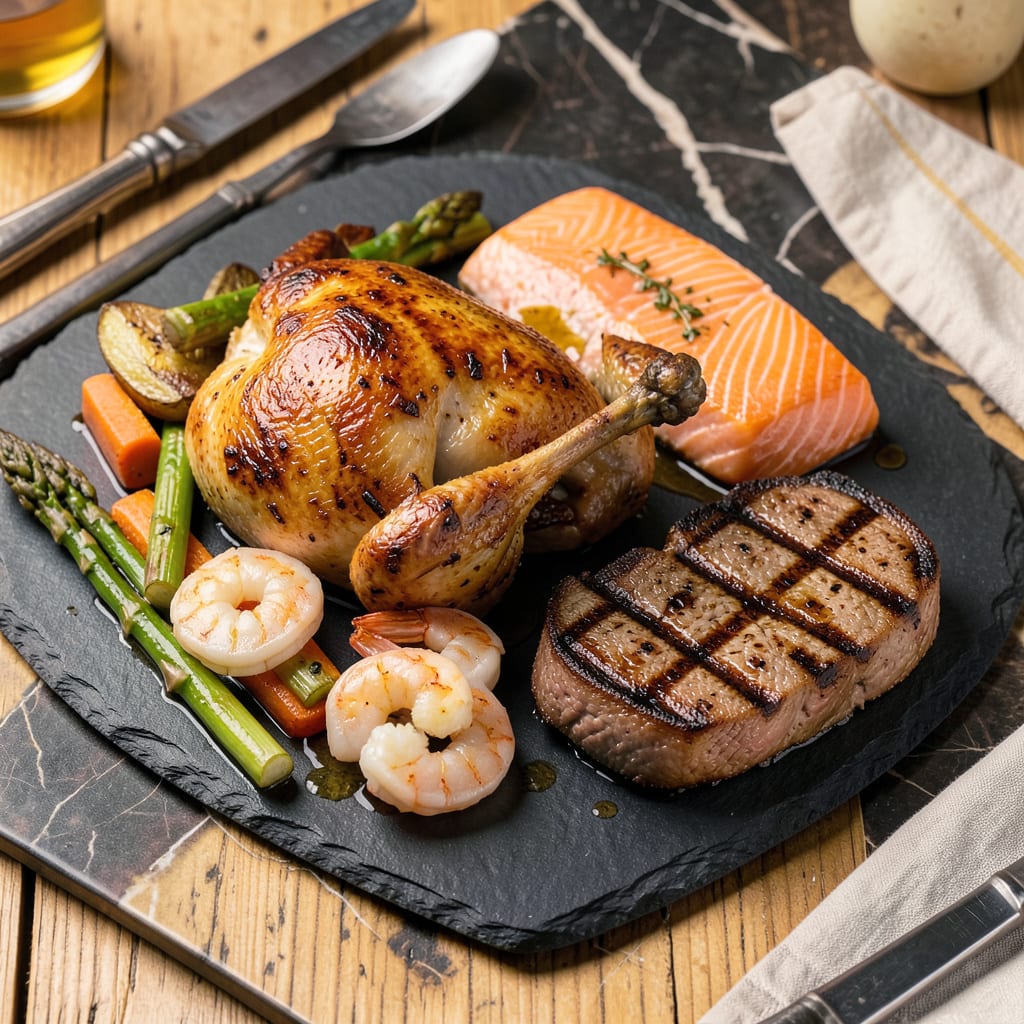
Food is fully cooked when it reaches the proper internal temperature, shows no pink or translucent areas, and releases clear juices when pierced. Use a food thermometer for accuracy, especially with meats, poultry, and seafood.
After years of working in professional kitchens and judging BBQ competitions, I’ve learned that doneness goes beyond just color changes. The protein fibers in meat actually tighten and squeeze out moisture as they cook, which is why you see those juices rising to the surface. For poultry, I always check the joint areas where bones meet—those spots cook slower and reveal hidden pinkness. 🔥
What many home cooks overlook is how carryover cooking affects doneness. Even after removing food from heat, the internal temperature can rise another 5-10°F while resting. This is particularly crucial with thicker cuts of meat where the outer layers insulate the center. I factor this into my timing to avoid overcooking.
💡 In This Article
- Scientific Signs That Food Has Reached Safe Doneness
- Practical Tests to Check Food Doneness Without a Thermometer
Scientific Signs That Food Has Reached Safe Doneness
When proteins in meat hit specific temperatures, their molecular structure changes dramatically. At 140°F, collagen begins breaking down into gelatin, while muscle fibers contract and expel moisture—this is why undercooked meat appears translucent. By 160°F, myoglobin (the protein that makes meat red) denatures completely, turning beef from pink to brown.
The Maillard reaction kicks in around 280°F on the surface, creating that coveted crust and complex flavors. 🔥
The USDA’s temperature guidelines aren’t arbitrary—they’re based on pathogen death points. Salmonella dies instantly at 165°F in poultry, while E. coli in ground beef requires 160°F. Fish needs only 145°F because parasites (not bacteria) are the main concern.
I’ve seen competition judges disqualify perfect-looking brisket that didn’t hit 195°F internally—because that’s when connective tissue fully renders. ✨
Moisture evaporation tells you more than you think. Clear juices mean proteins have coagulated enough to release water, while pink or bloody juices indicate raw proteins still holding onto moisture. The “fork test” works because properly cooked meat offers just enough resistance—like pressing a firm sponge—while undercooked meat feels mushy.
This resistance comes from tightened protein fibers. 💫
Here’s what most people miss: color changes happen at different rates depending on pH levels. Acid-marinated meats may stay pinker even when fully cooked, while alkaline conditions (like baking soda in ground meat) can make it brown prematurely. That’s why I always cross-check with temperature—my thermometer doesn’t lie about those critical internal readings. ⚡
For baked goods, doneness isn’t about temperature but structure. The 210°F threshold for cakes isn’t about killing pathogens (flour pasteurization happens at 160°F), but when starches fully gelatinize and proteins set. A toothpick comes out clean because the batter has transformed from liquid to solid matrix—no more free-flowing moisture. 🌟
Pro tip: The “bounce back” test for bread works because gluten strands become elastic when properly baked. Underbaked dough lacks this springiness because the gluten hasn’t fully developed. I learned this the hard way judging artisan bread competitions—appearance can deceive, but texture never lies. 💛

Trained in classic French technique but raised on slow-cooked ribs and spicy rubs, she blends culinary skill with smoke and soul.
- Recipe for Boneless Pork Chops in Cast Iron Skillet: Sear and Baste to Juicy Perfection - October 3, 2026
- Recipe for Boneless Cross Rib Roast: Slow-Roasted Beef with Herb Crust - October 3, 2026
- Hamburgers in Sauce Recipe Crock Pot: Slow-Cooked Savory Delight - October 3, 2026