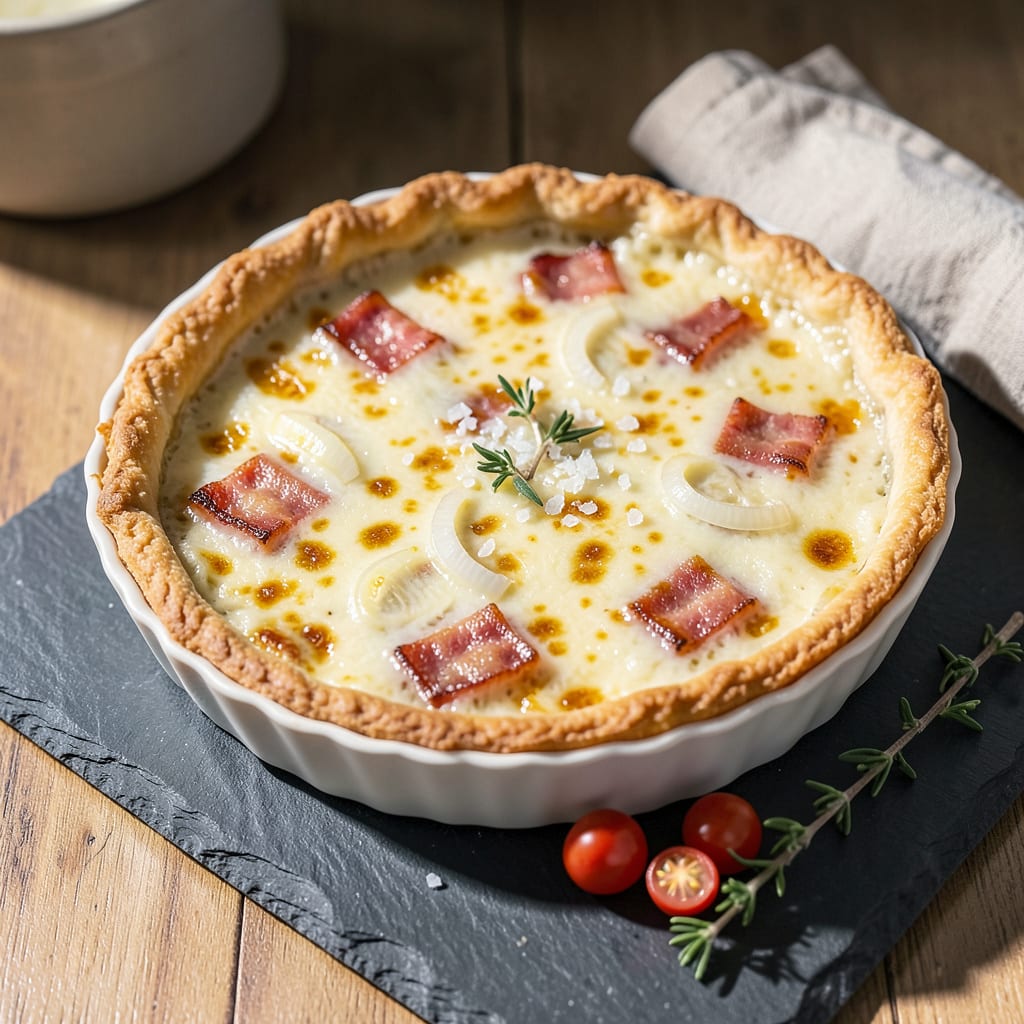
Traditional quiche contains dairy through ingredients like cheese, milk, or cream in both the custard filling and sometimes the crust. However, dairy-free versions can be made with plant-based substitutes.
I’ve always loved how quiche gets its signature richness from dairy—but here’s the thing: that creamy texture and savory depth come from a trio of key ingredients. The cheese (often Gruyère or Swiss) melts into the custard for sharpness, while milk or cream creates that velvety base. Even the crust frequently relies on butter for flakiness. 🔥
What fascinates me is how modern substitutions can mimic these qualities. Coconut cream brings a similar unctuousness to custards, and nutritional yeast adds that cheesy umami kick without a drop of dairy. The right plant-based butter can even deliver that golden, crisp crust we all crave.
💡 In This Article
- Dairy Ingredients in Classic Quiche Recipes
- How to Make Dairy-Free Quiche Without Sacrificing Flavor
Dairy Ingredients in Classic Quiche Recipes
The magic of traditional quiche starts with its dairy foundation. The custard filling relies on a precise ratio of eggs to dairy—typically 1 cup of milk or cream per 3-4 eggs—to create that signature silky texture.
The dairy’s fat content (about 30-40% in heavy cream) coats the egg proteins during baking, preventing them from over-coagulating and turning rubbery. This is why low-fat milk just can’t deliver the same luxurious mouthfeel. 🔥
Cheese plays a dual role in both flavor and structure. When 1-2 cups of Gruyère or Swiss melts into the custard, its casein proteins form a delicate network that traps moisture, while the fat (about 28-30% in these cheeses) creates pockets of richness.
The cheese also browns beautifully during baking, adding depth through Maillard reactions—those complex flavor compounds that develop at temperatures above 285°F. ✨
The crust often contains butter for two critical reasons. First, butter’s 15-18% water content creates steam during baking, which separates the dough layers for flakiness. Second, its milk solids brown at 325-350°F, giving the crust that golden color and nutty aroma.
I’ve found that all-butter crusts develop about 30% more flakiness than those made with shortening, though they require more careful handling due to the lower melting point. 🌟
What most home cooks don’t realize is how these dairy components interact during baking. The cheese proteins actually help stabilize the custard as it sets, while the butter in the crust creates a moisture barrier that prevents sogginess.
This synergy explains why dairy-free versions often struggle with texture—without these natural emulsifiers and structure-builders, alternatives must work harder to replicate the experience. 💫
Temperature control becomes especially important with dairy-rich quiches. The custard should bake at 325-350°F until it reaches an internal temperature of 160-165°F—hot enough to set the eggs but not so hot that the dairy separates.
I always pull my quiche when the center still has a slight wobble; it’ll finish setting as it cools, and this prevents the proteins from squeezing out moisture and creating that dreaded watery layer. ⚡
Consider these key dairy functions in classic quiche:
- Custard base: Cream provides 30-40% fat for silkiness and prevents egg proteins from over-coagulating
- Cheese matrix: Melts at 130-150°F, creating flavor pockets and structural support
- Crust development: Butter’s water content steams at 212°F, creating flaky layers
- Browning reactions: Milk solids caramelize at 320°F+, adding color and aroma

Trained in classic French technique but raised on slow-cooked ribs and spicy rubs, she blends culinary skill with smoke and soul.
- Recipe for Boneless Pork Chops in Cast Iron Skillet: Sear and Baste to Juicy Perfection - October 3, 2026
- Recipe for Boneless Cross Rib Roast: Slow-Roasted Beef with Herb Crust - October 3, 2026
- Hamburgers in Sauce Recipe Crock Pot: Slow-Cooked Savory Delight - October 3, 2026