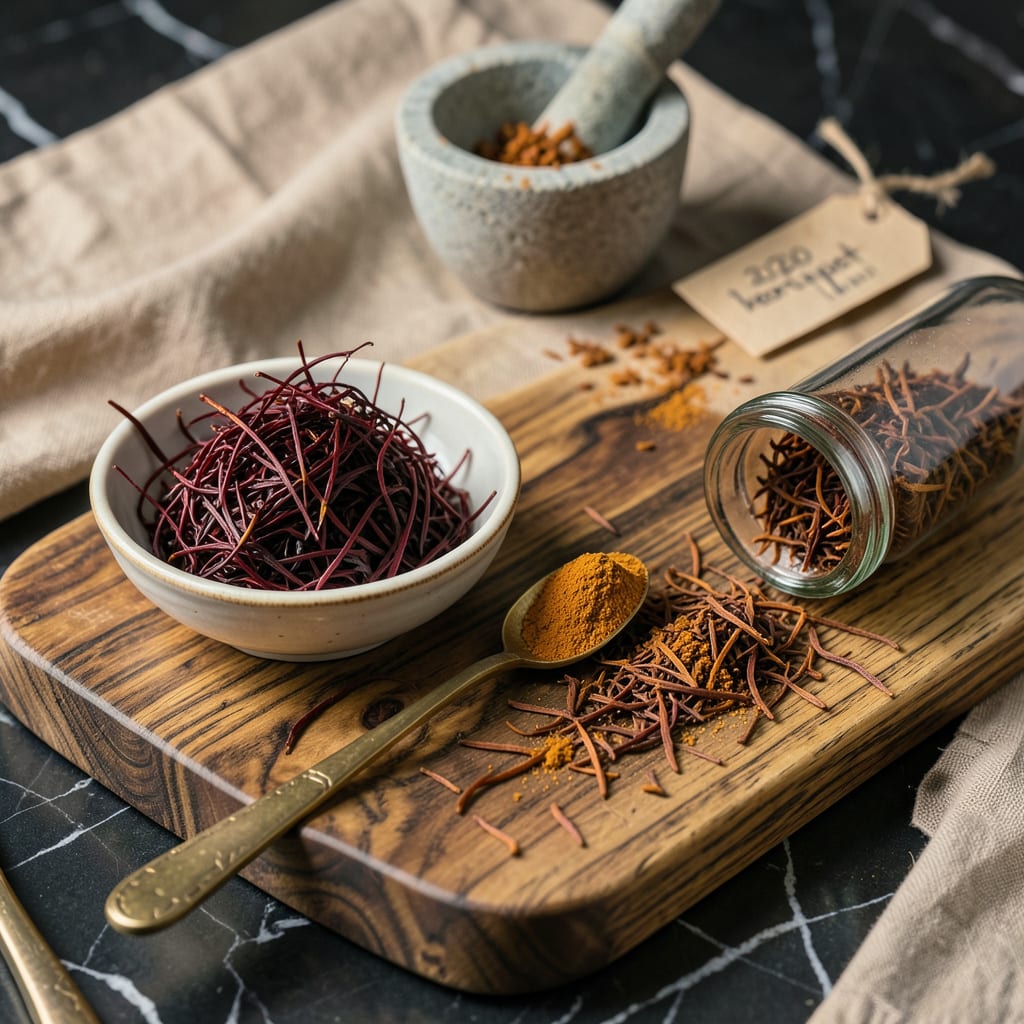
Saffron doesn’t spoil like other spices but loses potency over time. Properly stored, it retains quality for 2-3 years, though its vibrant color and aroma fade gradually. Old saffron won’t harm you but may lack flavor intensity.
Think of saffron like a fine wine—it doesn’t turn bad, but its magic slowly diminishes. 🌟 The delicate threads contain volatile oils that evaporate over time, especially when exposed to heat, light, or air. I’ve seen chefs panic when their saffron loses its punch, but here’s the secret: storing it in a cool, dark place (like a spice drawer with a tight seal) preserves those precious compounds. The difference between fresh and stale saffron is night and day in dishes like paella or risotto, where its aroma and golden hue are everything.
💡 In This Article
- How Saffron Degrades Over Time and Why
- Best Storage Practices to Extend Saffron’s Freshness
How Saffron Degrades Over Time and Why
The secret to saffron’s longevity lies in its chemical composition. The vibrant red threads contain three key compounds: crocin (responsible for color), picrocrocin (bitter taste), and safranal (aroma). Over time, crocin oxidizes when exposed to air, causing the threads to fade from deep crimson to dull orange.
Safranal, being volatile, evaporates gradually—this is why old saffron smells weaker. 🌟
Whole saffron threads last significantly longer than ground saffron because grinding exposes more surface area to oxygen. A study in the Journal of Food Science found that ground saffron loses 50% of its crocin content within 6 months, while whole threads retain most of their potency for 2-3 years.
Moisture is another enemy—any humidity above 60% risks mold growth, though properly dried saffron (below 12% moisture) is naturally resistant.
Temperature accelerates degradation. Storing saffron at 70°F (21°C) causes safranal to evaporate 3x faster than at 50°F (10°C). Light breaks down crocin molecules through photodegradation—this is why clear containers are a mistake.
I once left a batch in a glass jar on my windowsill, and within 3 months, it turned pale yellow and lost all aroma. 🔥
The aging process affects flavor in stages. First, the aroma fades (safranal loss), then the bitterness softens (picrocrocin breakdown), and finally, the coloring power weakens (crocin oxidation). Old saffron won’t ruin your dish, but you’ll need 2-3x more threads to achieve the same golden hue and complex flavor.
Think of it like aged tea leaves—still usable, but requiring adjustment.
Here’s a quick comparison of degradation rates:
- Whole threads in ideal conditions: 2-3 years with minimal loss
- Ground saffron: 6-12 months before significant decline
- Exposed to light/heat: 3-6 months for noticeable fading
- High humidity storage: Risk of mold within 1 year
Pro tip: If your saffron no longer turns water bright yellow within 10 minutes of soaking, it’s past its prime. The color test is more reliable than smell for determining potency, since safranal evaporates before crocin fully degrades. ✨

Trained in classic French technique but raised on slow-cooked ribs and spicy rubs, she blends culinary skill with smoke and soul.
- Recipe for Boneless Pork Chops in Cast Iron Skillet: Sear and Baste to Juicy Perfection - October 3, 2026
- Recipe for Boneless Cross Rib Roast: Slow-Roasted Beef with Herb Crust - October 3, 2026
- Hamburgers in Sauce Recipe Crock Pot: Slow-Cooked Savory Delight - October 3, 2026