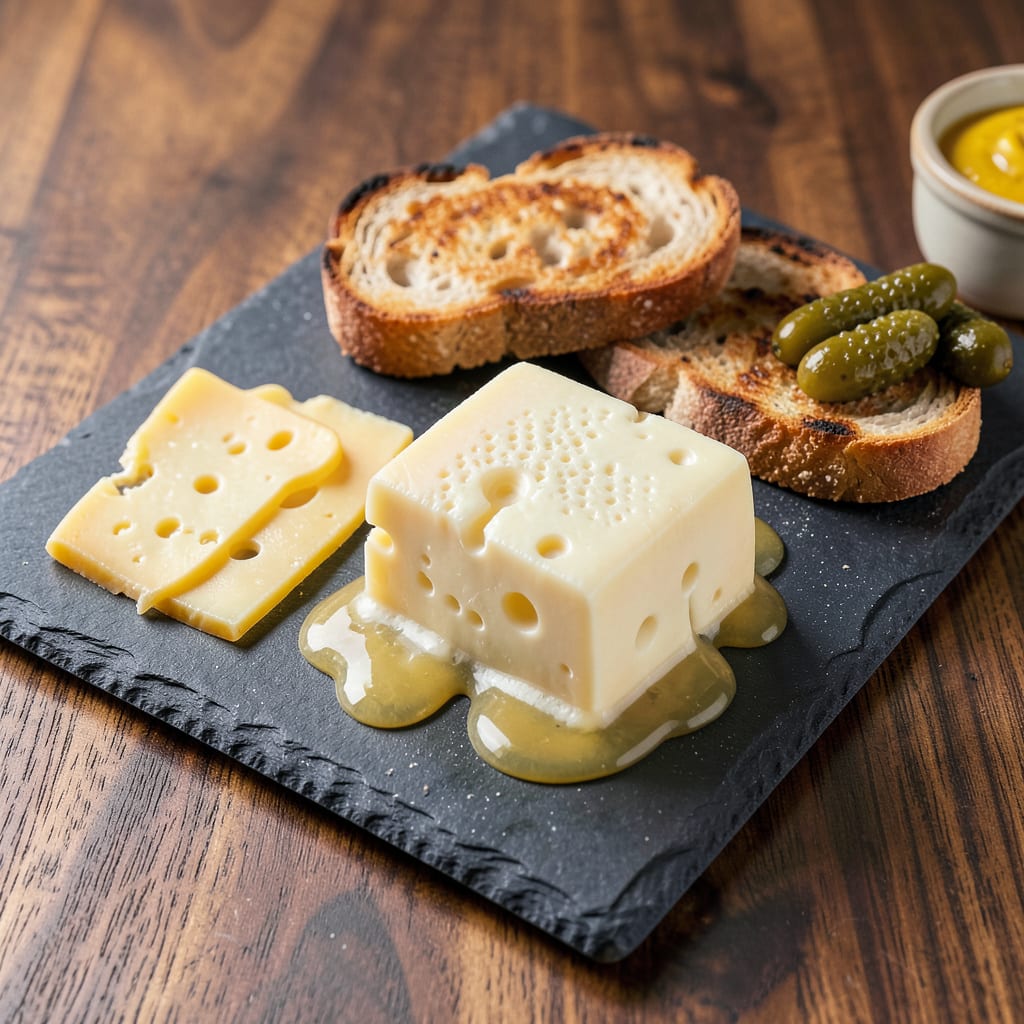
Swiss cheese melts beautifully but behaves differently than cheddar—it becomes creamy and smooth with a slightly stringy texture when heated properly. The key is low to medium heat to prevent separation or graininess.
I’ve found Swiss cheese transforms into something magical when melted, thanks to its unique structure. Those iconic holes aren’t just for looks—they create pockets that help distribute heat more evenly, giving you that velvety consistency. 🔥 The higher moisture content (around 40%) means it melts faster than harder cheeses, but requires careful temperature control. I always recommend shredding it fresh rather than using pre-shredded versions, as the anti-caking agents in packaged cheese can interfere with that perfect melt.
💡 In This Article
- Why Swiss Cheese Melts Differently Than Other Varieties
- Best Melting Techniques for Swiss Cheese in Cooking
Why Swiss Cheese Melts Differently Than Other Varieties
The secret lies in Swiss cheese’s unique composition. With a moisture content of 38-42%—higher than cheddar’s 35-37%—it contains more water molecules that turn to steam when heated. This creates that signature creamy texture, but requires careful temperature control.
The fat content (about 27-30%) is evenly distributed throughout the cheese matrix, unlike cheddar where fat globules cluster more densely. 🔥
Those iconic holes (called “eyes”) play a crucial role in melting behavior. Formed by propionic acid bacteria during aging, these cavities create air pockets that act as insulation. When heat is applied, these pockets help distribute warmth more evenly throughout the cheese, preventing hot spots that could cause separation.
The protein structure also differs—Swiss cheese has longer, more flexible casein strands that unwind smoothly when heated, rather than the tighter network found in mozzarella.
Aging transforms Swiss cheese’s melting properties dramatically. Young Swiss (aged 2-3 months) melts more readily with a stretchier consistency, while well-aged varieties (over 6 months) develop more complex flavors but require slightly higher temperatures to achieve the same flow.
The calcium content increases with age, which can make the melted texture slightly more granular if overheated. I’ve found the sweet spot for most applications is Swiss aged 4-5 months—perfect balance of meltability and flavor development.
What truly sets Swiss apart is how its proteins interact with heat. The casein proteins in Swiss cheese have a unique ability to form a more stable emulsion with fat and water when melted. This creates that velvety, flowing texture we love in fondue.
Unlike cheddar, which can become stringy from aligned protein fibers, Swiss maintains a smoother consistency because its protein matrix breaks down more uniformly. The result is a melt that coats beautifully rather than forming long strands.
Temperature control becomes especially important with Swiss cheese. At 140-160°F, it reaches that perfect creamy state. Push it beyond 180°F, and you risk breaking the emulsion—causing the fats to separate and the proteins to clump. This is why Swiss works so well in fondues and sauces where gentle, consistent heat can be maintained.
The cheese’s natural sodium content (about 1.2-1.5%) also helps stabilize the melt, preventing the separation that plagues some other varieties.
Here’s what most people don’t realize: the size of those characteristic holes affects melting performance. Larger eyes (like in classic Emmental) create more surface area for heat transfer, resulting in a faster, more even melt. Smaller-eyed varieties (like some domestic Swiss) may require slightly more time to achieve the same creamy consistency.
This structural difference explains why some Swiss cheeses perform better in different applications—larger-eyed varieties excel in fondues, while smaller-eyed types work beautifully in sandwiches where you want a slower melt. ✨

Trained in classic French technique but raised on slow-cooked ribs and spicy rubs, she blends culinary skill with smoke and soul.
- Recipe for Boneless Pork Chops in Cast Iron Skillet: Sear and Baste to Juicy Perfection - October 3, 2026
- Recipe for Boneless Cross Rib Roast: Slow-Roasted Beef with Herb Crust - October 3, 2026
- Hamburgers in Sauce Recipe Crock Pot: Slow-Cooked Savory Delight - October 3, 2026