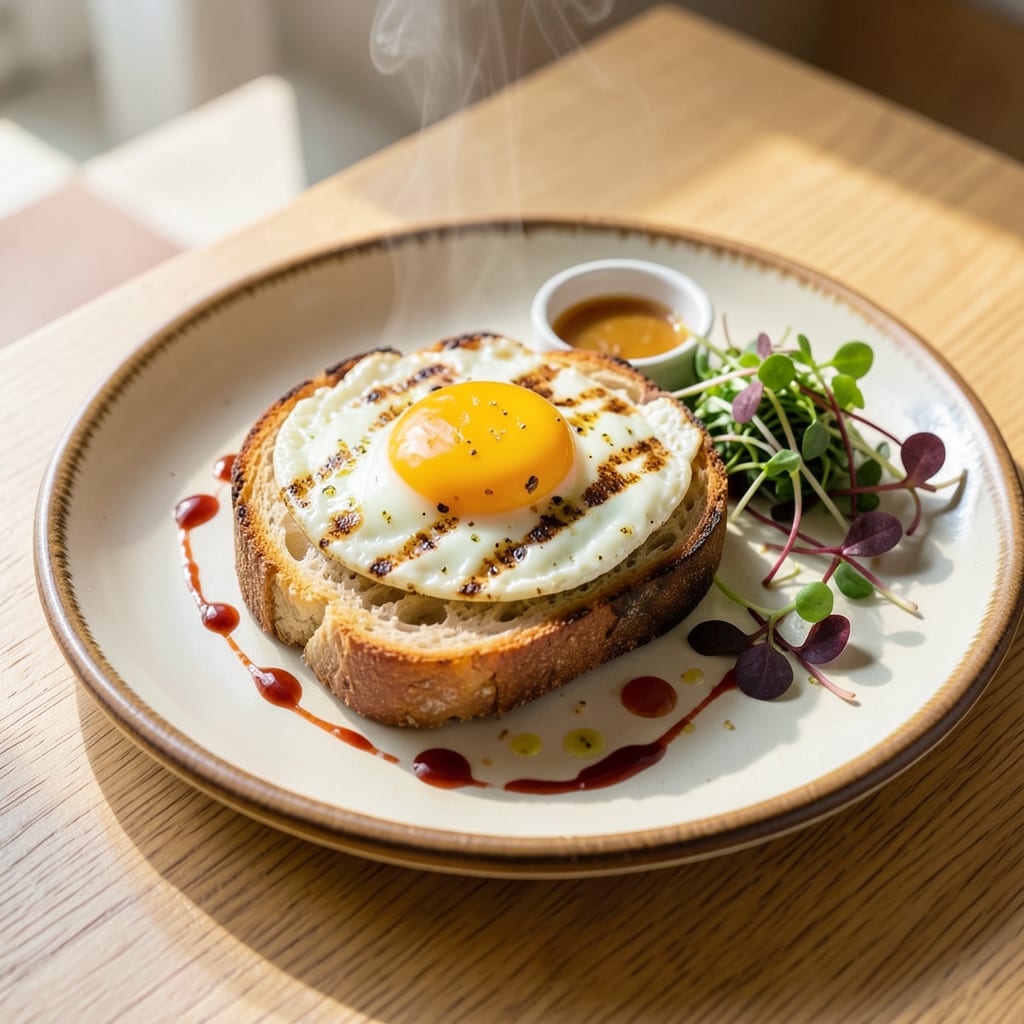
A griddled egg is cooked on a flat-top griddle or skillet with minimal oil, resulting in crispy edges and a tender yolk. It’s similar to fried but with a more uniform shape and slightly caramelized flavor.
This method shines because of the griddle’s even heat distribution, which creates that signature lacy edge while keeping the center silky. 🔥 I love how the direct contact with the metal surface develops a subtle sweetness through caramelization—something you don’t get with traditional frying. The key difference lies in the cooking surface: a griddle’s broad, flat plane ensures consistent browning without hot spots, making it ideal for breakfast perfectionists.
💡 In This Article
- How Griddle Cooking Transforms Egg Texture and Flavor
- Step-by-Step Guide to Perfect Griddled Eggs at Home
How Griddle Cooking Transforms Egg Texture and Flavor
The magic of griddled eggs starts with the cooking surface itself. A griddle’s solid, flat metal plate distributes heat more evenly than a typical skillet, eliminating hot spots that can cause uneven cooking.
This consistent 325-350°F temperature allows proteins in the egg white to coagulate gradually, creating that perfect balance between crispy edges and a tender center. The direct metal contact also promotes faster moisture evaporation, which is what gives those edges their signature lace-like crunch. ✨
Here’s where the science gets interesting: the Maillard reaction kicks in at around 300°F, transforming amino acids and reducing sugars into complex flavor compounds. On a griddle, this happens more uniformly than in a pan because the entire egg surface makes contact with the heat source. The result?
A subtle caramelized sweetness that you just don’t get from standard frying. I’ve noticed this effect is particularly pronounced when using cast iron griddles, which retain heat better than stainless steel.
What really sets griddled eggs apart is how they handle moisture. The broad surface area allows steam to escape more efficiently than in a deep skillet, preventing that rubbery texture you sometimes get with fried eggs.
The yolk stays runny because the heat transfers primarily through the thin layer of oil and metal contact, rather than surrounding the egg like in a pool of hot oil. This is why you’ll often see chefs using a thin 1/8-inch oil layer—just enough for crisping without deep-frying.
The texture contrast is where griddled eggs truly shine. The edges develop a delicate, almost chip-like crispness while the center remains custardy. This happens because the outer proteins denature quickly from direct heat, forming that crisp shell, while the interior cooks more gently through conduction.
Compare this to a traditional fried egg where the edges can sometimes become greasy from sitting in oil, and you’ll taste the difference immediately. 🔥
Temperature control is everything with this method. Too hot (above 375°F), and you’ll burn the edges before the center sets. Too cool (below 300°F), and you lose that crispy texture. The sweet spot is right around 325°F, where you get perfect browning without overcooking.
I always preheat my griddle for at least 5 minutes to ensure even temperature distribution before adding the eggs.
One pro tip I’ve learned from years of griddle cooking: the type of fat matters. Butter adds incredible flavor but burns at 350°F, so I often use a mix of butter and neutral oil. The butter gives that rich taste while the oil prevents burning.
This combination creates the perfect crispy-yet-tender texture that makes griddled eggs so special. 💛

Trained in classic French technique but raised on slow-cooked ribs and spicy rubs, she blends culinary skill with smoke and soul.
- Recipe for Boneless Pork Chops in Cast Iron Skillet: Sear and Baste to Juicy Perfection - October 3, 2026
- Recipe for Boneless Cross Rib Roast: Slow-Roasted Beef with Herb Crust - October 3, 2026
- Hamburgers in Sauce Recipe Crock Pot: Slow-Cooked Savory Delight - October 3, 2026