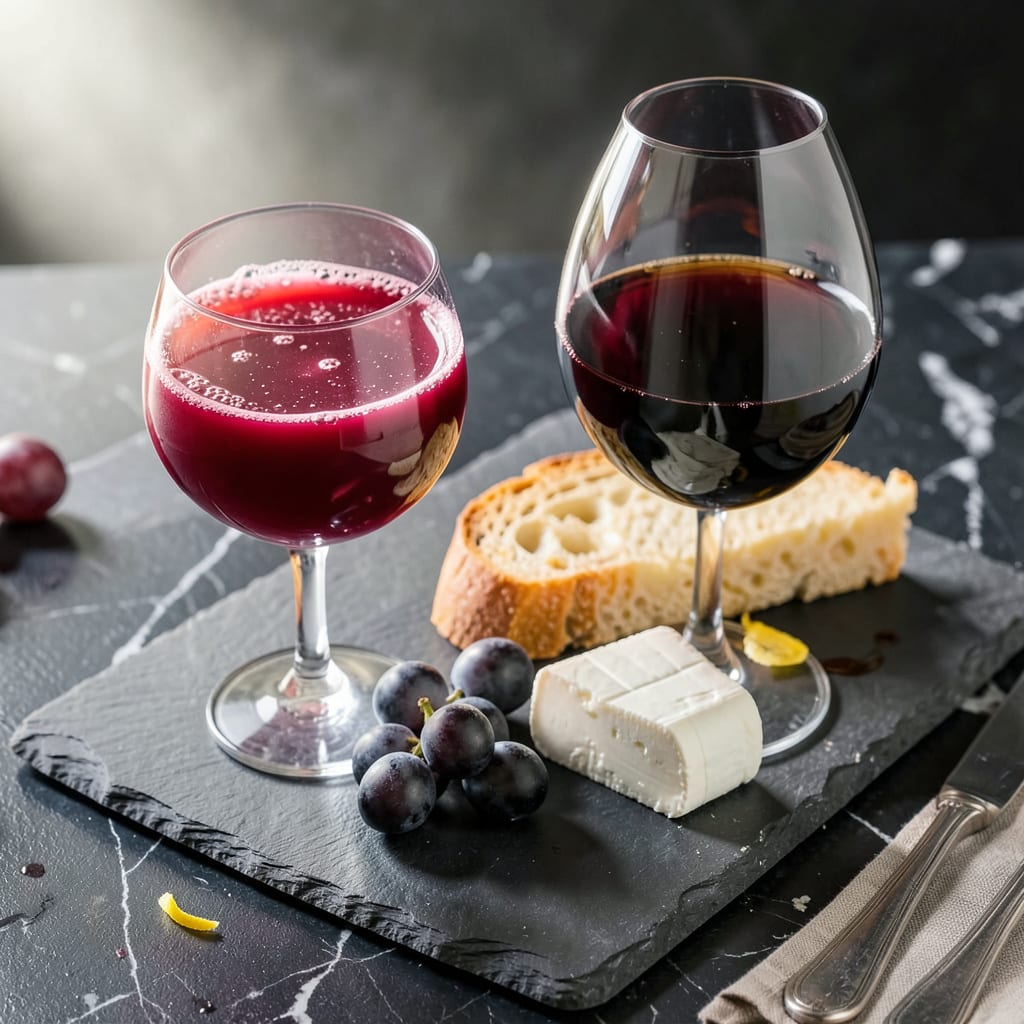
Wine doesn’t taste like grape juice—it’s more complex, with earthy, tart, or bitter notes from fermentation. Grape juice is sweet and simple, while wine develops layered flavors from yeast, aging, and tannins.
Think of grape juice as the blank canvas and wine as the finished masterpiece. 🔥 The transformation happens when yeast consumes the natural sugars, creating alcohol and unlocking a spectrum of flavors—think dried fruit, spice, or even leather notes in aged varieties. I’ve noticed even the same grape variety can taste dramatically different based on where it’s grown and how it’s processed. That’s why a crisp Sauvignon Blanc and a bold Cabernet Sauvignon, both from grapes, offer entirely distinct experiences.
💡 In This Article
- How Fermentation Changes Grape Juice into Wine
- Tasting Wine vs Grape Juice: What to Expect
How Fermentation Changes Grape Juice into Wine
When yeast meets grape juice, magic happens—but it’s actually science. 🔥 The fermentation process transforms simple sugars (fructose and glucose) into ethanol (alcohol) and carbon dioxide. This chemical reaction, called alcoholic fermentation, typically takes 5-14 days depending on the wine style.
As yeast consumes sugars, it produces heat and secondary compounds like esters that contribute fruity aromas and glycerol that adds body.
The real flavor transformation comes from what yeast leaves behind. While grape juice contains about 10-15% sugar, wine ends up with 0.2-2% residual sugar in dry styles. The alcohol content climbs to 12-15% ABV, creating that warming sensation. Tannins from grape skins, seeds, and oak barrels add bitterness and structure—something completely absent in juice.
Red wines develop deeper tannins from extended skin contact during fermentation.
Here’s what most people miss: fermentation also creates hundreds of aromatic compounds. 💫 Grape juice might smell simply of grapes, but wine develops complex bouquets through esters (fruity notes), pyrazines (green pepper in Cabernet), and thiols (citrus in Sauvignon Blanc).
The temperature during fermentation matters too—cooler temps (50-59°F) preserve delicate aromas, while warmer (75-85°F) extracts more color and tannin.
Aging takes this transformation further. In stainless steel, wines retain fresh fruit flavors. But oak barrels add vanillin (vanilla notes), eugenol (clove), and allow slow oxygen exposure that softens tannins. This is why a Chardonnay aged in oak tastes nothing like grape juice—it develops buttery, toasty characteristics from malolactic fermentation and barrel contact.
Even the same grape variety shows dramatic differences. Compare Welch’s grape juice to a Pinot Noir: the juice has 14g sugar per 100ml, while the wine has 0.5g sugar but gains flavors of cherry, earth, and spice. The yeast strain matters too—Saccharomyces cerevisiae produces different flavor profiles than non-Saccharomyces yeasts like Torulaspora delbrueckii.
The final kicker? Terroir influences fermentation outcomes. 🌟 Grapes from cool climates develop higher acidity, while warm regions produce riper, jammier flavors. That’s why a Riesling from Germany tastes nothing like one from California—despite both starting as grape juice. The fermentation process amplifies these natural differences into distinct wine personalities.

Trained in classic French technique but raised on slow-cooked ribs and spicy rubs, she blends culinary skill with smoke and soul.
- Recipe for Fried Pork Chops With Flour: Crispy Crust and Juicy Centers - October 3, 2026
- Octopus Recipe Pan Fried: Crispy Edges With Tender Bites - October 3, 2026
- Recipe For Fried Pork Chops In An Iron Skillet: Crispy Crust With Juicy Centers - October 3, 2026