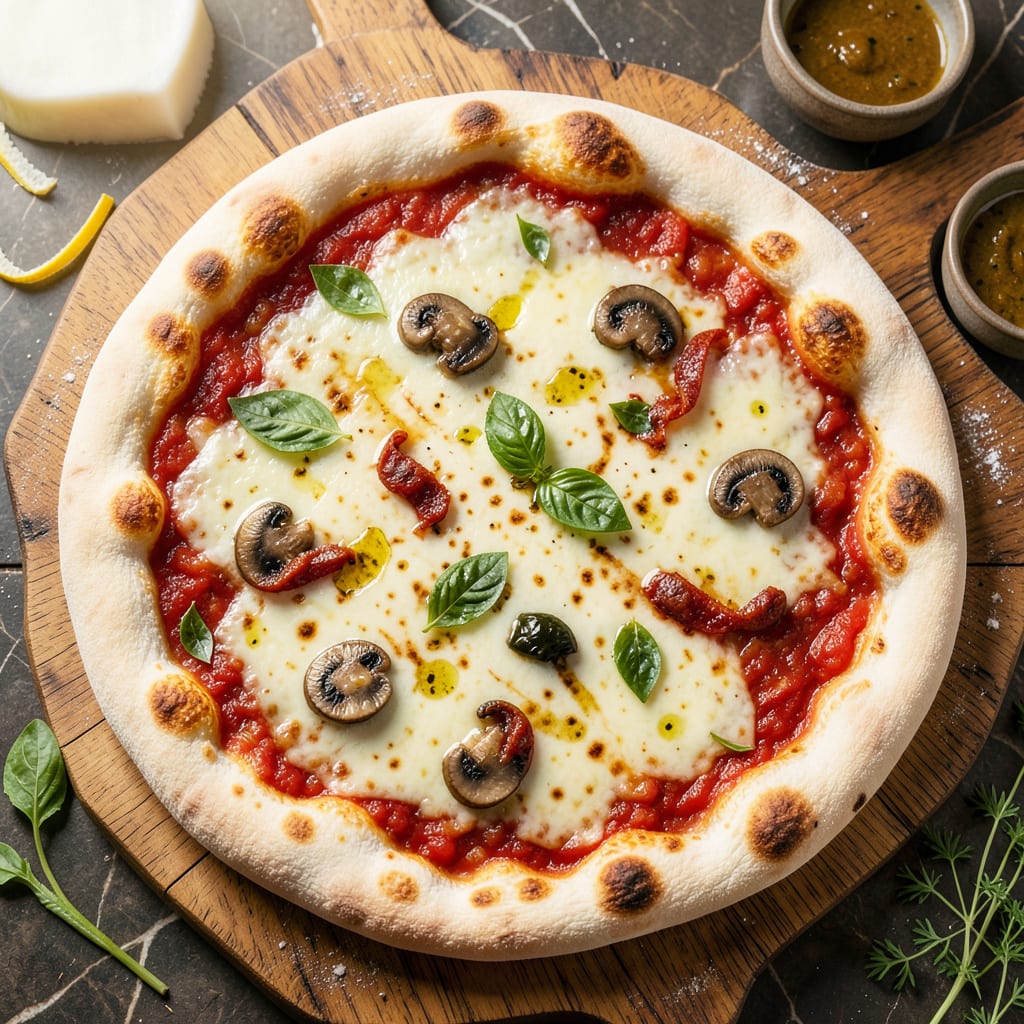
Doughy pizza has a thick, undercooked crust that feels soft and raw in the center instead of crispy. It happens when the dough isn’t baked long enough, has too much moisture, or lacks proper yeast activation.
I’ve seen this happen countless times in my kitchen—what you’re tasting is essentially unbaked dough that never got the chance to transform. The magic of pizza crust comes from the Maillard reaction, where heat creates that golden, crispy exterior while fully cooking the interior. When your oven isn’t hot enough (think below 450°F) or your dough sits too long before baking, the yeast exhausts itself, leaving behind a gummy, dense base. Even something as simple as overloading toppings can trap steam, turning your crust into a sad, soggy mess instead of that perfect bite you’re craving. 🔥
💡 In This Article
- Why Pizza Dough Stays Raw in the Middle
- How to Fix and Prevent Doughy Pizza Crust
Why Pizza Dough Stays Raw in the Middle
The culprit behind that uncooked center is often a perfect storm of moisture and heat mismanagement. When dough hits the oven, two critical reactions need to happen simultaneously: starch gelatinization (around 140°F) and protein coagulation (starting at 160°F).
If your oven lingers below 450°F, these processes drag out, leaving the interior gummy while the surface might appear done. Home ovens typically max at 500°F, but that’s still 200°F cooler than professional pizza ovens—meaning your bake time needs precise adjustment. 🔥
Yeast behavior plays a sneaky role too. Overproofed dough (left to rise too long) exhausts its sugar supply, creating a weak gluten structure that collapses under heat. I’ve seen this firsthand when dough sits for 24+ hours in the fridge—the yeast consumes everything, leaving no fuel for that final oven spring.
Meanwhile, underproofed dough enters the oven too dense, preventing heat from penetrating evenly. The ideal window? 1-2 hours at room temp or 12-18 hours cold-proofed for that perfect balance. ⚡
Moisture content is the silent saboteur. Dough hydration above 65% creates a steamy environment that resists crisping. That’s why Neapolitan-style dough (typically 58-62% hydration) bakes faster than New York-style (65-70%). When you load up on wet toppings like fresh mozzarella or veggies, you’re adding even more moisture that needs to evaporate.
Without proper ventilation or a screaming-hot surface, that steam gets trapped, leaving you with what I call “bread pudding pizza” instead of a crisp crust. 💫
Your baking surface matters more than you think. A cold pizza stone or metal pan acts like a heat sink, stealing energy from the dough before it can rise properly. Preheating your stone for at least 45 minutes creates that thermal mass needed for instant heat transfer.
I once ruined three pizzas in a row before realizing my “preheated” stone was only 300°F at the core—far below the 500°F+ needed for proper crust development. Even the position in your oven makes a difference: too high and the top burns before the bottom cooks; too low and you get a pale, doughy base.
✨
Here’s what most home cooks miss: commercial pizza ovens use infrared heat that penetrates dough instantly, while home ovens rely on convection that cooks from the outside in. That’s why professional pies bake in 90 seconds while yours might need 10-15 minutes. The solution?
Crank your oven as high as it goes, use the broiler for the last 2 minutes, and consider a pizza steel (which conducts heat 20% better than stone) for that perfect crisp. 🌟
Even your dough stretching technique affects the final texture. Stretching too thin in the center creates weak spots that can’t support toppings, while leaving the edges too thick prevents even cooking. The ideal thickness? About 1/4 inch at the center, tapering to 1/2 inch at the edges.
This gradient allows the center to cook through while the rim gets that coveted puff. Remember: pizza dough is like a living organism—it responds to temperature, time, and touch in ways that can make or break your crust. 💛

Trained in classic French technique but raised on slow-cooked ribs and spicy rubs, she blends culinary skill with smoke and soul.
- Recipe for Boneless Pork Chops in Cast Iron Skillet: Sear and Baste to Juicy Perfection - October 3, 2026
- Recipe for Boneless Cross Rib Roast: Slow-Roasted Beef with Herb Crust - October 3, 2026
- Hamburgers in Sauce Recipe Crock Pot: Slow-Cooked Savory Delight - October 3, 2026