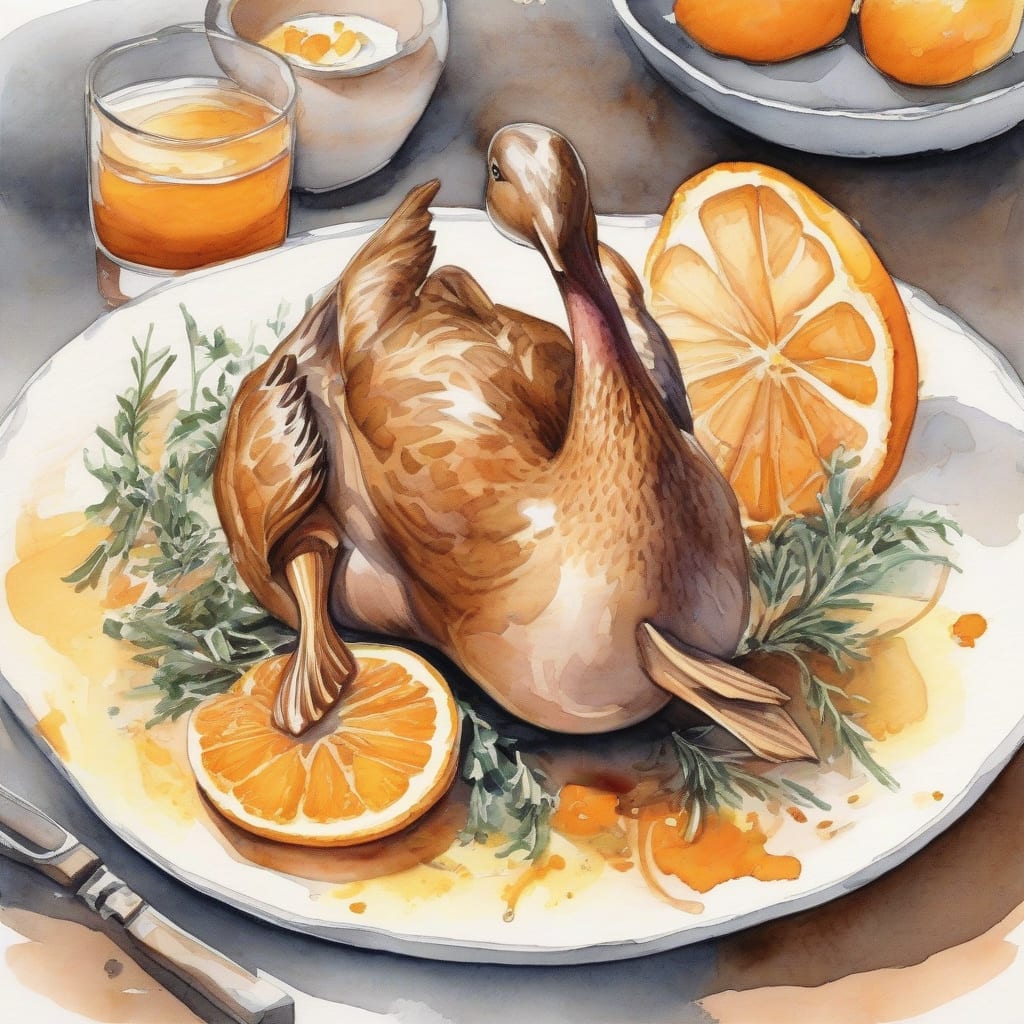
I’m about to share Gordon Ramsay‘s take on the classic duck l’orange recipe that will elevate your cooking game. 🔥 This dish is a masterclass in balancing flavors, from the crispy duck skin to the tangy orange sauce.
The secret to this recipe lies in its simplicity and attention to detail. By focusing on quality ingredients and precise cooking techniques, you’ll achieve a restaurant-quality meal at home.
Let’s dive into the cooking process, where we’ll cover everything from preparing the duck to crafting the perfect orange sauce. With these steps, you’ll be able to create a truly memorable dining experience.
Ingredients for duck a l’orange recipe gordon ramsay
Here’s everything you need to create Gordon Ramsay’s signature duck l’orange recipe at home with ease.
| Ingredient | Amount | Notes |
|---|---|---|
| Duck Breasts 🦆 | 4 whole | Skin on, about 6 oz each |
| Orange Zest 🍊 | 2 tbsp | Freshly grated from oranges |
| Orange Juice 🍊 | 1 cup | Freshly squeezed navel oranges |
| Grand Marnier 🍸 | ¼ cup | Or other orange liqueur |
| Butter 🧈 | 4 tbsp | Unsalted, softened |
| Shallots 🧅 | 2 whole | Finely chopped |
| Garlic Cloves 🧄 | 2 cloves | Minced |
| Thyme 🌿 | 2 tsp | Fresh leaves, chopped |
| Salt 🧂 | 1 tsp | Kosher salt preferred |
| Black Pepper 🌶️ | ½ tsp | Freshly ground |
| All-Purpose Flour 🌾 | 1 tbsp | For thickening sauce |
| Chicken Stock 🍲 | 1 cup | Low sodium |
[recipe_ingredient_scaler]
For the best results, source high-quality duck breasts from a reputable butcher or Whole Foods. Choose navel oranges for their juice and zest, as they provide the best flavor. Look for fresh thyme and shallots at your local farmers market or grocery store. For the Grand Marnier, select a premium orange liqueur for the most authentic taste.
If you can't find Grand Marnier, you can substitute it with Cointreau or another orange-flavored liqueur. For a non-alcoholic version, use orange extract or additional orange juice. If duck breasts are unavailable, you can use chicken breasts as a substitute, though the flavor will be different. When using thyme, be sure to strip the leaves from the stems for the best flavor.
Store leftover duck in an airtight container in the refrigerator for up to 3 days. Reheat gently in the oven to maintain the crispy skin. The orange sauce can be made ahead and refrigerated for up to 5 days or frozen for up to 3 months. Reheat the sauce gently before serving.
Step-by-Step Instructions for Gordon Ramsay’s Duck L’Orange
I’ll guide you through this classic dish with a modern twist, ensuring perfect results every time.
👨🍳 Step 1: Prepare the Duck Breasts
Start by seasoning the duck breasts with kosher salt and freshly ground black pepper. I like to be generous with the seasoning to ensure flavor throughout. Let the duck breasts sit at room temperature for 30 minutes before cooking to help them cook more evenly.
While the duck is coming to temperature, prepare the orange zest. Use a microplane to grate the zest from your navel oranges, being careful not to include any white pith. You’ll need 2 tablespoons of freshly grated orange zest for the recipe. Set it aside for later use in the sauce.
🔥 Step 2: Sear the Duck Breasts
Heat a large skillet over medium-high heat. Add 2 tablespoons of the softened unsalted butter and let it melt. Once melted and foamy, place the duck breasts skin-side down in the skillet. Sear for 5-7 minutes until the skin is crispy and golden brown. Don’t move the duck during this time—let it develop that perfect crust.
Flip the duck breasts over and cook for another 3-4 minutes on the other side, or until they reach your desired level of doneness. For medium-rare, aim for an internal temperature of 130-135°F. Transfer the duck to a plate and tent with foil to keep warm while you make the sauce.
🍳 Step 3: Make the Orange Sauce
In the same skillet (don’t clean it—those browned bits are full of flavor), add the remaining 2 tablespoons of softened unsalted butter. Once melted, add the finely chopped shallots and cook for 2-3 minutes until they’re soft and translucent. Add the minced garlic cloves and cook for another 30 seconds until fragrant.
Pour in the freshly squeezed orange juice and Grand Marnier, scraping up any browned bits from the bottom of the pan. Bring the mixture to a simmer and let it reduce by half, which should take about 5 minutes. You’ll notice the sauce starting to thicken and develop a rich orange color.
🥘 Step 4: Finish the Sauce and Serve
Stir in the chopped fresh thyme and freshly grated orange zest. Sprinkle the all-purpose flour over the surface of the sauce and whisk it in to help thicken the sauce. Gradually add the low sodium chicken stock, whisking continuously to avoid lumps. Simmer the sauce for another 2-3 minutes until it coats the back of a spoon.
Slice the rested duck breasts against the grain into ¼-inch thick slices. Serve with the warm orange sauce spooned over the top. The sauce should be rich and velvety, with a beautiful orange color and a deep, complex flavor profile. Garnish with additional fresh thyme if desired, and serve immediately.
Gordon Ramsay’s duck l’orange recipe is a masterclass in balancing flavors and textures. The dish is a classic French recipe that has been revamped by the Michelin-starred chef to create a truly unforgettable culinary experience 🍴. To start, you’ll need to prepare the duck breasts, seasoning them with salt, pepper, and a hint of sugar. Make sure to score the fat layer in a crisscross pattern, allowing the fat to render during cooking and the skin to crisp up nicely 🔪.
Cooking the Duck 🔥
Heat a skillet over medium-high heat and sear the duck breasts, skin side down, until golden brown. Flip the duck and finish cooking to your desired level of doneness. Let the duck rest before slicing it thinly against the grain.
Preparing the Orange Sauce 🍊
To make the signature orange sauce, you’ll need to combine freshly squeezed orange juice, Grand Marnier, and a mixture of butter and flour to thicken. Reduce the sauce to intensify the flavors and strain it to remove any impurities. The result is a velvety, citrusy sauce that perfectly complements the rich duck breast.
To serve, place a sliced duck breast on a plate, spoon the orange sauce over the top, and garnish with fresh herbs and orange segments. The combination of flavors and textures is sure to impress your dinner guests and leave them wanting more 😋.
- Use high-quality ingredients, such as fresh oranges and real Grand Marnier, to ensure the best flavor.
- Don’t overcook the duck breast – it should be cooked to a nice medium-rare.
- Experiment with different types of citrus fruits, like blood oranges or lemons, to create a unique twist.
Tips & Tricks for Perfect Duck L’Orange
These expert tips will help you master Gordon Ramsay’s Duck L’Orange recipe, ensuring a restaurant-quality dish every time.
Temperature Control: In Step 2, make sure your skillet is hot enough before adding the duck breasts. A simple test is to flick a few drops of water onto the pan – if they sizzle and evaporate quickly, it’s ready. For perfect medium-rare, aim for an internal temperature of 130-135°F. 🔥
Searing Technique: Don’t overcrowd the pan when searing the duck breasts in Step 2. Cook them in batches if necessary, to ensure they have enough room to develop that beautiful golden-brown crust. This prevents steaming instead of searing.
Sauce Enhancement: When making the orange sauce in Step 3, don’t skip the step of scraping up the browned bits from the bottom of the pan. These bits add depth and complexity to the sauce. If you find the sauce too thick, you can thin it out with a little more chicken stock.
Resting is Key: After cooking the duck breasts, let them rest for 5-7 minutes before slicing. This allows the juices to redistribute, making the duck more tender and flavorful. 💡
Nutrition Facts
420kcal
[recipe_ingredient_scaler]

Trained in classic French technique but raised on slow-cooked ribs and spicy rubs, she blends culinary skill with smoke and soul.
- Recipe for Boneless Pork Chops in Cast Iron Skillet: Sear and Baste to Juicy Perfection - October 3, 2026
- Recipe for Boneless Cross Rib Roast: Slow-Roasted Beef with Herb Crust - October 3, 2026
- Hamburgers in Sauce Recipe Crock Pot: Slow-Cooked Savory Delight - October 3, 2026