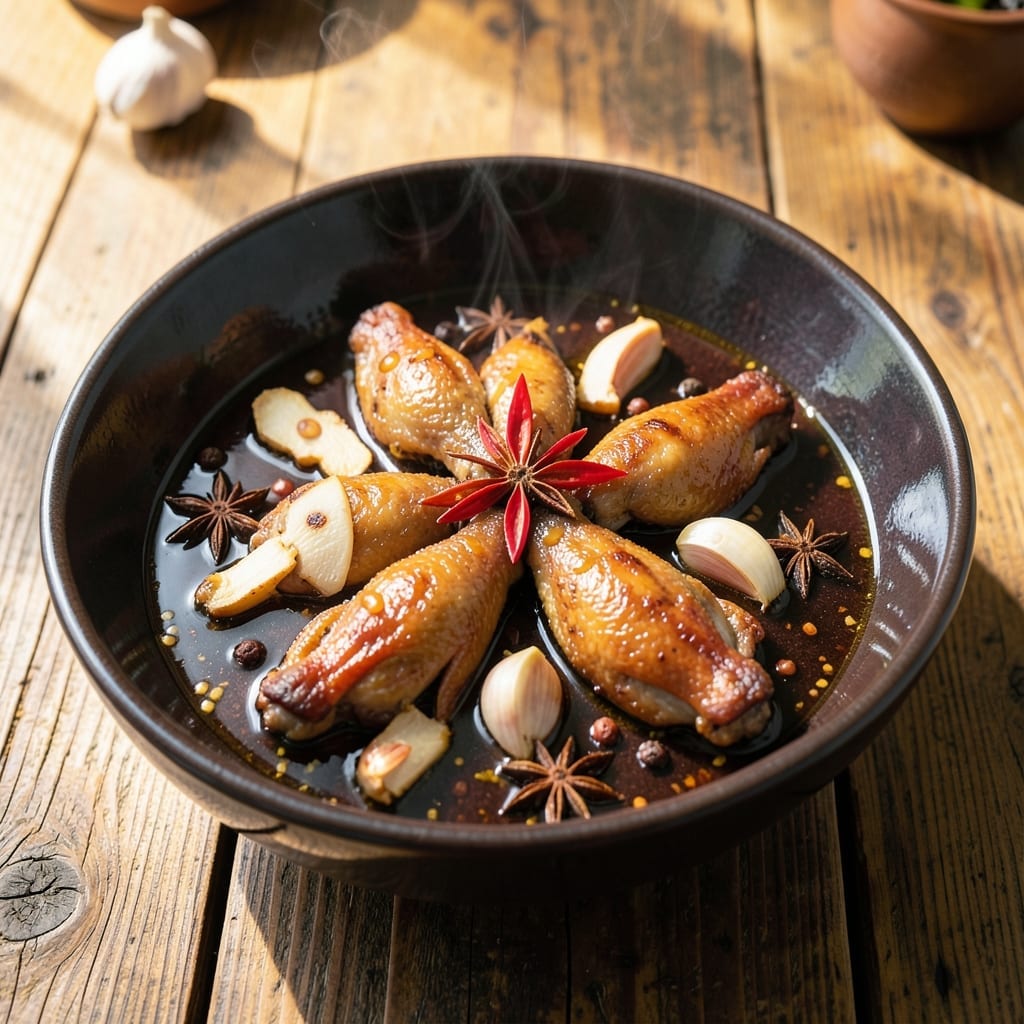
Few dishes deliver the crispy texture and umami depth of properly prepared duck head. This method transforms an often-overlooked ingredient into a centerpiece worthy of any table.
The secret lies in slow simmering followed by high-heat finishing. This dual approach ensures the meat becomes fall-off-the-bone tender while the skin achieves that coveted crispiness.
I developed this technique after years of experimenting with various cooking methods. The result is a dish that balances rich flavors with satisfying textures in every bite.
Perfect for adventurous eaters looking to explore beyond conventional cuts. The preparation honors tradition while delivering modern precision.
Ingredients for Duck Head
Four duck heads and a dozen aromatic ingredients create this restaurant-worthy dish with deep umami and crispy skin.
| Ingredient | Amount | Notes |
|---|---|---|
| Duck Heads 🦆 | 4 whole | Cleaned, beaks and eyes removed |
| Water 💧 | 8 cups | For initial simmering |
| Soy Sauce 🫕 | ½ cup | Low-sodium preferred |
| Shaoxing Wine 🍷 | ¼ cup | Or dry sherry substitute |
| Star Anise Pods ⭐ | 2 whole | Lightly crushed |
| Sichuan Peppercorns 🌶️ | 1 tsp | Whole, for aromatic depth |
| Ginger Slices 🌿 | 6 slices | Fresh, thick-cut |
| Scallions 🧅 | 4 whole | Cut into 2-inch pieces |
| Garlic Cloves 🧄 | 6 cloves | Lightly smashed |
| Rock Sugar 🍬 | 1 tbsp | Or substitute with brown sugar |
| Vegetable Oil 🫒 | 2 cups | High smoke point for frying |
| Cornstarch 🌾 | ½ cup | For coating and crispiness |
| Salt 🧂 | 1 tbsp | Kosher or sea salt preferred |
| Five-Spice Powder 🌿 | 1 tsp | For authentic seasoning |
[recipe_ingredient_scaler]
The duck heads must be fresh and properly cleaned—Asian markets often carry them frozen, which works perfectly (thaw overnight). Look for plump heads with intact skin; avoid any with discoloration. For the Shaoxing wine, Koon Chun is a reliable brand, but dry sherry from your grocery store’s wine aisle works in a pinch. The star anise and Sichuan peppercorns are non-negotiable for authentic flavor.
No Shaoxing wine? Dry sherry or mirin can substitute, though the flavor profile will shift slightly. Out of rock sugar? Brown sugar dissolves just as well. If Sichuan peppercorns are hard to find, a pinch of black pepper plus a tiny bit of ground cinnamon mimics some complexity. The cornstarch coat is essential for that shatteringly crisp skin—don’t skip it.
Store cleaned duck heads in the fridge for up to 2 days before cooking, or freeze for 3 months. The simmering broth can be saved and reused once. Leftover crispy duck heads reheat best in a dry skillet to revive the skin—microwaving ruins the texture.
Why You’ll Love This Recipe
- One Pot Simplicity: I just toss the duck heads, soy sauce, Shaoxing wine, and star anise into a pot with water and let it simmer—hardly any cleanup.
- Deep Umami Bomb: The star anise and soy sauce infuse the broth with this rich, layered flavor that’s honestly next-level good.
- Feeds a Hungry Table: I serve this at family gatherings, and it’s always a hit—everyone digs in, no fancy plating needed.
- Budget Stretcher: Duck heads are cheap, and this recipe turns them into a hearty meal that lasts for days. I’ll be real: it’s my go-to when I’m watching my wallet.
Step-by-Step Instructions for Duck Head
This professional method ensures maximum crispiness and deep umami flavor in every bite.
Step 1: Simmer the Duck Heads in Aromatic Broth
In a large stockpot, combine the 8 cups Water, 0.5 cup Soy Sauce, 0.25 cup Shaoxing Wine, 2 whole Star Anise Pods, 1 tsp Sichuan Peppercorns, 6 slices Ginger Slices, 4 whole Scallions, 6 cloves Garlic Cloves, and 1 tbsp Rock Sugar. Bring to a boil over high heat.
Add the 4 whole Duck Heads and reduce heat to maintain a gentle simmer. Cook for 45-60 minutes until the meat is tender and begins to pull away from the bone. Skim any foam that rises to the surface during simmering to keep the broth clean.
Step 2: Drain and Season the Duck Heads
Carefully remove the duck heads from the broth using a slotted spoon and drain on a wire rack set over a baking sheet. Discard the broth or reserve it for another use. While still warm, season the duck heads evenly with 1 tbsp Salt and 1 tsp Five-Spice Powder, rubbing the spices into the skin and crevices.
This seasoning step is crucial for building layers of flavor. The warm meat absorbs the spices better than when cold. Let the seasoned duck heads cool to room temperature before proceeding—this prevents the cornstarch coating from clumping.
Step 3: Coat in Cornstarch for Crispiness
Place the 0.5 cup Cornstarch in a large bowl. Dredge each duck head in the cornstarch, pressing gently to ensure an even, thick coating on all surfaces. Shake off any excess—you want a visible layer but not so much that it creates a gummy texture when fried.
The cornstarch creates that signature crispy texture that distinguishes this dish. For extra crunch, I recommend a double-dredge: dip the cornstarch-coated heads in water, then dredge in cornstarch again. This builds a thicker, more robust crust.
Step 4: Deep-Fry to Golden Perfection
Heat the 2 cups Vegetable Oil in a deep, heavy-bottomed pot to 350-375°F. The oil is ready when a pinch of cornstarch sizzles immediately upon contact. Working in batches to avoid crowding the pot, carefully lower the duck heads into the hot oil.
Fry for 6-8 minutes, turning occasionally, until the skin is deep golden brown and ultra-crispy. The internal temperature should reach 165°F to ensure the meat is fully cooked. Use a slotted spoon to transfer the fried duck heads to a wire rack or paper towels to drain excess oil.
Real talk: maintaining the oil temperature is key. If it drops too low, the duck heads will absorb oil and become greasy rather than crispy. Adjust the heat as needed between batches to keep the temperature steady.
Pro Tips For Making Duck Head
- Blanch First: Parboil the duck heads in plain water for 5-7 minutes before braising—I learned this the hard way after my first batch turned out murky and bitter from impurities.
- Toast the Spices: Lightly dry-toast the star anise in the pot for 30 seconds before adding liquids; it wakes up the aroma and prevents that flat, one-note flavor.
- Skip the Rush: Simmer the heads for at least 90 minutes on low heat—any higher and the meat turns tough, any shorter and the collagen won’t melt into that sticky, rich sauce.
- Use Dark Soy: Swap half the regular soy sauce for dark soy sauce; it adds depth and that deep mahogany color without making the dish overly salty.
Dietary Considerations for duck head
Protein Richness
Duck head offers a surprising protein punch with about 20 grams per serving, making it an excellent choice for muscle maintenance. The slow-cooked meat provides all essential amino acids your body needs. I love how this often-overlooked cut delivers such nutritional value. 💪
Fat Content
While duck is known for its fat, most renders out during the simmering and frying process. The crispy skin adds rich flavor without excessive grease. This dish actually has less saturated fat than many traditional pork preparations.
Low Carb Friendly
With only trace carbohydrates from the cornstarch coating, this fits perfectly into keto or low-carb diets. The 0.5 cup Cornstarch adds minimal carbs per serving. Perfect for those watching their carb intake while still wanting indulgent flavors.
Allergen Considerations
The recipe contains soy from the soy sauce and gluten from the cornstarch. For gluten-free versions, substitute tapioca starch and use tamari instead of regular soy sauce. Always check labels for hidden allergens.
Bone Marrow Benefits
The bones in duck head contain nutrient-dense marrow rich in iron and collagen. These nutrients support bone health and skin elasticity. The simmering process helps extract these valuable compounds into the meat.
Sodium Awareness
With 1 tbsp Salt and 0.5 cup Soy Sauce in the recipe, the sodium content is moderate. I recommend using low-sodium soy sauce and adjusting final seasoning to taste. Those on sodium-restricted diets should consume in moderation. 💡
Nutrition Facts
Frequently Asked Questions
Can I use frozen duck heads?
Yes, thaw them overnight in the refrigerator before cooking. Never refreeze after thawing.
What if I don’t have Shaoxing wine?
Dry sherry works perfectly as a substitute. Use the same 0.25 cup measurement for best results.
How do I know when it’s fully cooked?
The skin should be deep golden brown and internal temperature must reach 165°F. The meat will pull away from the bone easily.
Can I bake instead of frying?
For a healthier option, bake at 400°F for 20-25 minutes after coating. The texture won’t be as crispy but still delicious.

Trained in classic French technique but raised on slow-cooked ribs and spicy rubs, she blends culinary skill with smoke and soul.
- Recipe for Boneless Pork Chops in Cast Iron Skillet: Sear and Baste to Juicy Perfection - October 3, 2026
- Recipe for Boneless Cross Rib Roast: Slow-Roasted Beef with Herb Crust - October 3, 2026
- Hamburgers in Sauce Recipe Crock Pot: Slow-Cooked Savory Delight - October 3, 2026