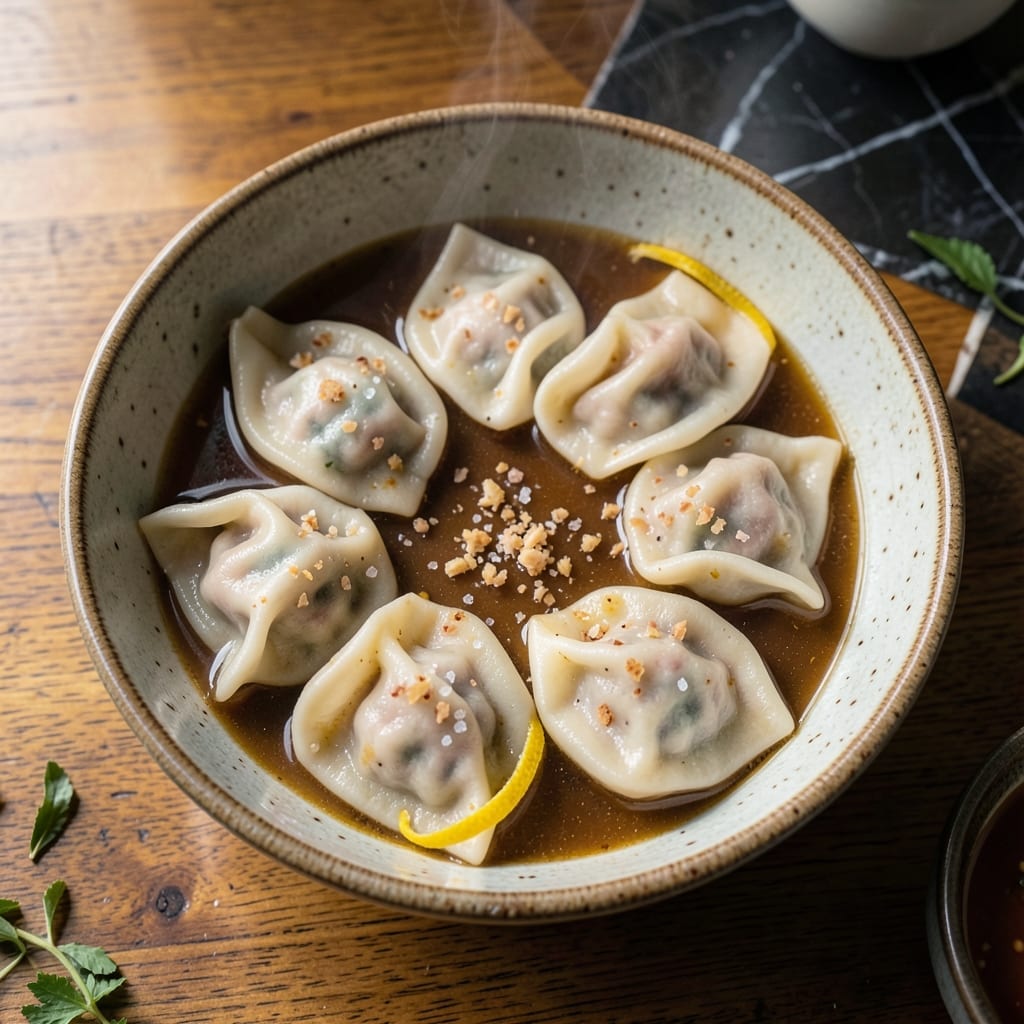
Steam does the heavy lifting in this dumpling recipe, creating light, airy folds without chemical leaveners. The technique relies on proper folding and cooking method rather than baking powder.
I developed this approach after realizing many traditional dumpling recipes don’t require baking powder at all. The key is working with the dough’s natural elasticity and the power of steam expansion.
What emerges from the pot are tender, fluffy dumplings with a delicate texture that absorbs broth beautifully. The method is both traditional and foolproof.
Perfect for soups, stews, or serving as a main dish with dipping sauce. This technique delivers consistent results every time.
Ingredients for Dumpling Recipe Without Baking Powder
Simple dough ingredients and aromatic broth create these tender, fluffy dumplings without chemical leaveners.
| Ingredient | Amount | Notes |
|---|---|---|
| All-Purpose Flour 🌾 | 2 cups | Sifted for even texture |
| Water 💧 | ¾ cup | Warm, about 110°F |
| Salt 🧂 | ½ tsp | Fine sea salt preferred |
| Neutral Oil 🫒 | 1 tbsp | Vegetable or canola oil |
| Chicken Broth 🥣 | 4 cups | Low-sodium for control |
| Ground Ginger 🌿 | ½ tsp | Fresh ground for potency |
| Garlic Powder 🧄 | ½ tsp | Fine powder for even distribution |
| Green Onions 🧅 | 3 whole | Thinly sliced for garnish |
| Sesame Oil 🫒 | 1 tsp | Toasted for aroma |
| Soy Sauce 🫕 | 2 tbsp | Low-sodium variety preferred |
| Cornstarch 🌽 | 1 tbsp | For thickening broth |
| Red Pepper Flakes 🌶️ | ¼ tsp | Optional for heat |
[recipe_ingredient_scaler]
The flour is foundational here. King Arthur or Bob’s Red Mill all-purpose flour provides consistent protein content for elastic dough. Water temperature matters—too hot kills the dough’s structure, too cold prevents proper steam expansion. Salt enhances flavor without overpowering. Most grocery stores carry these basics, but bulk bins offer better value for frequent dumpling makers.
No all-purpose flour? Bread flour at half the amount works but yields denser dumplings. Out of fresh ginger? Double the ground ginger, though the flavor profile shifts slightly. Chicken broth can be swapped for vegetable broth without issue. For gluten-free versions, rice flour plus xanthan gum mimics the texture, but expect a learning curve with folding.
Store flour in an airtight container for 6-12 months. The dough can rest covered at room temperature for 1 hour before shaping. Cooked dumplings keep in broth for 2-3 days refrigerated, though they’re best fresh. Freezing uncooked dumplings works for 1 month if properly sealed.
Why You’ll Love This Recipe
- No Fuss Dough: I love that this uses just flour, water, salt, and oil—no last-minute store runs for baking powder.
- Pure Broth Magic: The chicken broth infuses every dumpling with rich, savory depth that plain water just can’t touch.
- Weeknight Lifesaver: Honestly, I can start these while my soup simmers and have dinner ready in one pot.
- Budget Stretcher: A handful of pantry staples makes a filling meal that costs pennies per serving.
Step-by-Step Instructions for Dumpling Recipe Without Baking Powder
Master the technique of creating light, airy dumplings using steam as the leavening agent.
Step 1: Prepare the Dumpling Dough
In a large mixing bowl, combine the 2 cups All-Purpose Flour and 0.5 tsp Salt. I sift the flour first to ensure a smooth, even texture in the final dumplings. Make a well in the center and add the 0.75 cup Water, which should be warm—about 110°F—to activate the gluten properly.
Gradually incorporate the flour into the water using chopsticks or a fork until a shaggy dough forms. Then, add the 1 tbsp Neutral Oil and knead the dough by hand for 8-10 minutes until it becomes smooth and elastic. The dough should be firm but pliable—this development of gluten is crucial for achieving the right texture without baking powder.
Step 2: Shape and Fill the Dumplings
Divide the dough into 4 equal portions and roll each into a log about 1 inch in diameter. Cut each log into 6-8 pieces and roll each piece into a ball. Flatten each ball into a thin circle, about 3 inches in diameter, keeping the edges slightly thinner than the center for even cooking.
Place a small spoonful of your preferred filling in the center of each circle. For a simple option, I often mix 0.5 tsp Ground Ginger and 0.5 tsp Garlic Powder into ground meat or tofu. Fold the dough over the filling, pleating the edges as you go to seal tightly. This ensures the dumplings hold their shape and the filling stays intact during cooking.
Step 3: Prepare the Broth for Cooking
In a large pot, bring the 4 cups Chicken Broth to a gentle simmer over medium heat. Stir in the 2 tbsp Soy Sauce and 0.25 tsp Red Pepper Flakes for added depth of flavor and a subtle kick. If you prefer a thicker broth, mix the 1 tbsp Cornstarch with a small amount of cold water to create a slurry, then stir it into the simmering broth until it reaches your desired consistency.
I always use low-sodium chicken broth here to control the saltiness of the final dish. The broth should be fragrant and lightly seasoned, as the dumplings will absorb some of this flavor as they cook.
Step 4: Cook the Dumplings in the Broth
Carefully place the dumplings into the simmering broth. Do not overcrowd the pot—work in batches if necessary. Cover the pot with a lid and let the dumplings cook for 10-12 minutes. The steam trapped inside the pot will expand the dough, creating the fluffy texture you want without any chemical leavening agents.
You’ll know they’re done when the dough is no longer translucent and the dumplings float to the surface. Resist the urge to stir them while cooking, as this can break the delicate pleats and release the filling into the broth.
Step 5: Finish and Serve
Once the dumplings are cooked, use a slotted spoon to transfer them to serving bowls. Ladle the hot broth over the top, ensuring each bowl gets a generous portion. Drizzle each serving with 1 tsp Sesame Oil for a nutty aroma, and garnish with the thinly sliced 3 whole Green Onions for a fresh, crisp finish.
Serve immediately while hot. The dumplings should be tender yet substantial, with a light and airy texture achieved purely through the power of steam. The broth will be rich and flavorful, perfectly complementing the delicate folds of the dumplings.
Pro Tips For Making Dumpling Recipe Without Baking Powder
- Knead the Dough Longer: Work the flour and water mixture for at least 8-10 minutes until smooth and elastic—I learned this the hard way after my first few batches turned out dense and gummy.
- Use Hot Broth: Pouring boiling chicken broth over the dumplings as they cook makes them fluffier, even without baking powder. Sounds weird, but it works.
- Skip Cold Water: Always use room temperature or slightly warm water for the dough—cold water can make the dumplings tough and slow to cook.
- Rest Before Rolling: Let the dough rest for 15-20 minutes under a damp towel before shaping. My grandmother swore by this, and she was right: it rolls out smoother and doesn’t shrink back.
Common Mistakes When Making This Recipe
Overworking the Dough
Kneading beyond 10 minutes develops too much gluten, making dumplings tough instead of tender. Stop when the dough is smooth and elastic—this gives the perfect texture for steam expansion to work its magic.
Skipping the Rest
Let the dough rest for at least 30 minutes after kneading. This relaxes the gluten, making it easier to roll out and fold. I learned this the hard way—my first batch sprang back like a rubber band.
Thick Dough Circles
Roll the dough to about ⅛ inch thickness. Any thicker and the dumplings won’t cook through properly in the 10-12 minutes. Thin edges also help create those beautiful pleats. 💡
Overcrowding the Pot
Cook dumplings in batches if needed. Too many in the pot at once lowers the broth temperature, leading to gummy, unevenly cooked results. Give them room to float and expand.
Peeking Too Soon
Resist opening the lid for at least 8 minutes. The steam is what makes these fluffy—releasing it too early disrupts the process. Patience is key here.
Cold Water Mistake
Use 110°F water for the dough. Cold water slows gluten development, while too-hot water can kill the dough’s structure. Warm is just right for that perfect rise. 🌡️
Nutrition Facts
Frequently Asked Questions
What gives these dumplings their fluffy texture?
Steam trapped in the covered pot expands the dough, creating air pockets without chemical leaveners. Proper sealing of pleats is key to holding this steam.
Can I use cold water for the dough?
No, use 110°F water. Cold water slows gluten development, while too-hot water can damage the dough’s structure. Warm is ideal.
How long should I knead the dough?
Knead for 8-10 minutes until smooth and elastic. Overworking toughens the texture, while underworking prevents proper rise.
Can I cook them without a lid?
No, the lid traps steam essential for fluffiness. Remove it only after 8 minutes to check doneness.

Trained in classic French technique but raised on slow-cooked ribs and spicy rubs, she blends culinary skill with smoke and soul.
- Recipe for Boneless Pork Chops in Cast Iron Skillet: Sear and Baste to Juicy Perfection - October 3, 2026
- Recipe for Boneless Cross Rib Roast: Slow-Roasted Beef with Herb Crust - October 3, 2026
- Hamburgers in Sauce Recipe Crock Pot: Slow-Cooked Savory Delight - October 3, 2026