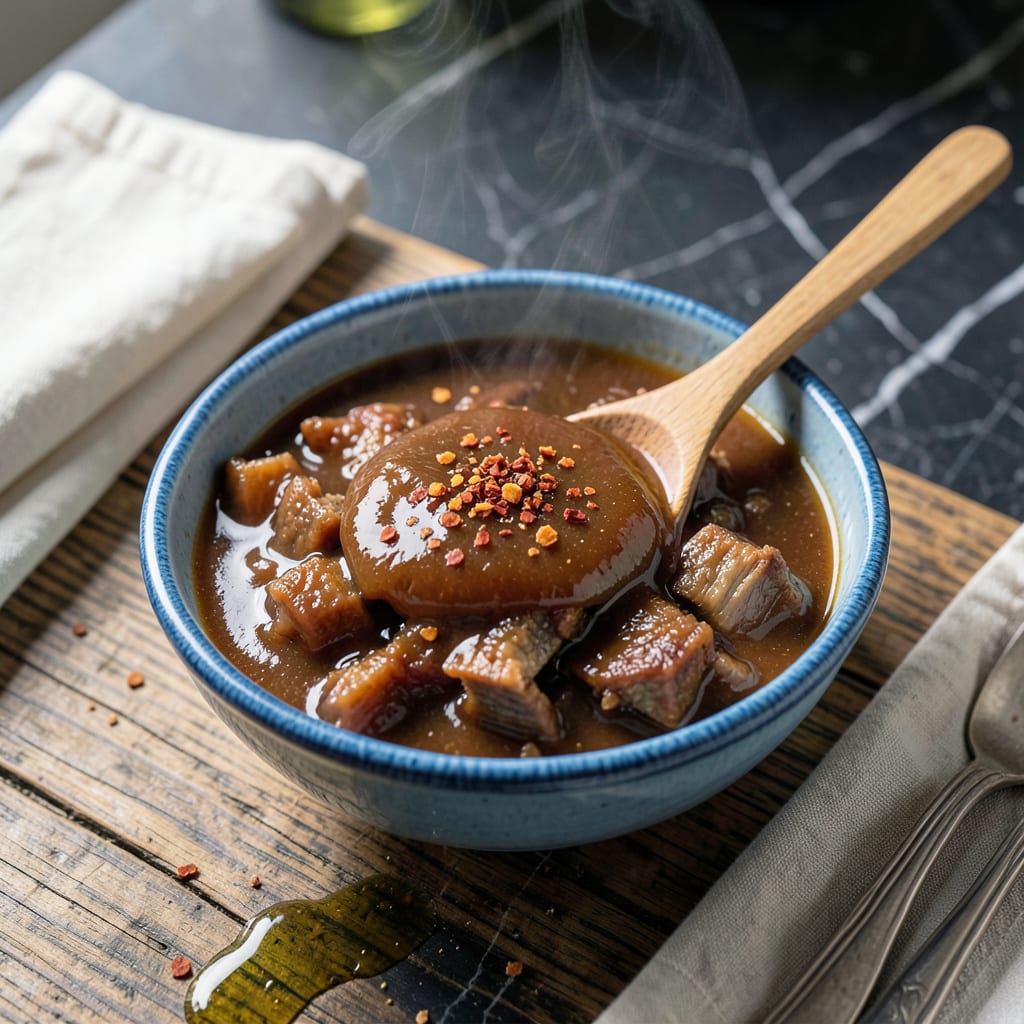
This thin vinegar-based sauce cuts through rich pulled pork with a sharp, tangy brightness that defines Eastern NC tradition. I perfected this balance after judging countless local competitions.
With just a handful of pantry staples and 10 minutes of simmering, you’ll create a versatile condiment that elevates smoked meats without overpowering them.
Ingredients for East North Carolina Bbq Sauce
Pantry staples blend into this bright, tangy Eastern NC classic sauce.
| Ingredient | Amount | Notes |
|---|---|---|
| White Vinegar 💧 | 2 cups | Standard 5% acidity |
| Apple Cider Vinegar 🍏 | 1 cup | Unfiltered for depth |
| Ketchup 🍅 | ½ cup | For subtle sweetness |
| Hot Sauce 🌶️ | 2 tbsp | Like Texas Pete |
| Brown Sugar 🍚 | ¼ cup | Light or dark works |
| Crushed Red Pepper Flakes 🌶️ | 1 tsp | Adjust for heat preference |
| Kosher Salt 🧂 | 1 tsp | Diamond Crystal preferred |
| Ground Black Pepper 🌶️ | ½ tsp | Freshly ground preferred |
| Cayenne Pepper 🔥 | ½ tsp | Optional for extra heat |
[recipe_ingredient_scaler]
The vinegar base is everything here. White vinegar gives that sharp tang, while apple cider vinegar adds depth. I grab mine in gallon jugs from Costco—cheaper and you’ll use it up fast. Ketchup might seem odd, but it rounds out the acidity without sweetening too much. Look for brands like Heinz or Hunts—nothing fancy, just consistent.
No apple cider vinegar? Use all white vinegar with a pinch of sugar to mimic the fruitiness. Hot sauce can be any vinegar-based brand—Texas Pete is traditional in NC. Skip the brown sugar if you prefer pure tang. For extra complexity, a dash of Worcestershire (check for anchovies if that matters to you) works well. The red pepper flakes can be adjusted or swapped for fresh jalapeño.
This keeps in the fridge for 1 month easy—flavor actually improves over time. Store in a glass jar (the vinegar will eat through plastic eventually). Perfect for pulled pork, but also great on brisket or ribs if you want that NC zing.
Why You’ll Love This Recipe
- Five Minute Mix: I just dump everything in a bowl—vinegars, ketchup, a dash of hot sauce—and stir. Honestly, it’s ready before the grill heats up.
- Tangy Kick: That sharp vinegar bite balanced with brown sugar’s sweetness? It’s the exact flavor I crave on pulled pork.
- Meat’s Best Friend: I slather it on ribs, mix it into shredded chicken, or drizzle it over brisket. Between us, it works on everything.
- Pantry Staples: No special shopping—just stuff I always have. I’ll be real: it saves me a trip to the store every time.
Step-by-Step Instructions for East North Carolina BBQ Sauce
This thin, tangy vinegar-based sauce comes together quickly on the stovetop.
Step 1: Combine Vinegars and Ketchup
In a medium saucepan, pour in the 2 cups White Vinegar and 1 cup Apple Cider Vinegar. Add the 0.5 cup Ketchup and whisk until the mixture is uniform. The ketchup will give the sauce its signature subtle sweetness while the vinegars provide that sharp, tangy backbone this region is known for.
Place the saucepan over medium heat and bring to a gentle simmer. You’ll notice the vinegar aroma becomes pronounced—that’s exactly what we want. This initial heating helps blend the flavors before we add the remaining ingredients.
Step 2: Incorporate Sweet and Spicy Elements
Stir in the 0.25 cup Brown Sugar, 2 tbsp Hot Sauce, 1 tsp Crushed Red Pepper Flakes, and 0.5 tsp Cayenne Pepper. The brown sugar will dissolve quickly in the warm vinegar mixture, while the hot sauce and peppers begin infusing their heat.
I always taste at this point to gauge the heat level. The crushed red pepper flakes add visible specks and a steady warmth, while the cayenne provides a more immediate kick. If you prefer milder sauce, you can reduce or omit the cayenne—this is where you customize to your preference.
Step 3: Season and Simmer to Perfection
Add the 1 tsp Kosher Salt and 0.5 tsp Ground Black Pepper, then whisk thoroughly. The salt enhances all the flavors, while the black pepper adds another layer of complexity to the heat profile.
Reduce the heat to low and let the sauce simmer uncovered for 10-12 minutes. You’ll see the mixture slightly reduce and the colors deepen. The sauce should remain thin—this isn’t a thick, clingy barbecue sauce but rather a liquid that soaks into pulled pork beautifully.
Step 4: Cool and Adjust to Taste
Remove the saucepan from heat and let the sauce cool to room temperature. As it cools, the flavors will meld together. The vinegar tang will mellow slightly, and the heat from the peppers will distribute evenly throughout the sauce.
Give it a final taste and adjust if needed. If it’s too sharp, a pinch more brown sugar can balance it. If it needs more heat, a dash more hot sauce or cayenne will do the trick. The sauce should be tangy with a subtle sweetness and a slow-building warmth that lingers pleasantly.
Pro Tips For Making East North Carolina Bbq Sauce
- Simmer Low and Slow: I learned this the hard way—boiling the sauce makes the vinegar too harsh. Keep it at a gentle simmer for 15-20 minutes to let the flavors meld without losing the tang.
- Balance the Vinegars: Use a 2:1 ratio of apple cider vinegar to white vinegar. The apple cider adds depth, while white keeps it sharp—skip the white entirely and the sauce tastes flat.
- Resist Early Tasting: The raw vinegar bite will scare you if you taste too soon. Give it at least 10 minutes of simmering before adjusting seasoning—it mellows out.
- Dissolve the Sugar: Whisk the brown sugar into the warm vinegar first, not the cold ketchup. Sounds weird, but it works: prevents grainy texture and saves stirring time.
Regional Styles of This Recipe
Eastern NC Tradition
This thin vinegar-based sauce is the soul of Eastern North Carolina BBQ, where pitmasters swear by its sharp tang to cut through rich pulled pork. I first tasted it at a roadside joint near Ayden—pure vinegar magic. The ratio of white to cider vinegar is what defines authenticity here. 🗺️
Western NC Contrast
Head west to Lexington and you’ll find a ketchup-heavy version with tomato depth. Their sauce is thicker, sweeter, and clings to the meat differently. I prefer Eastern style for its bright acidity, but both have their place at the table. The vinegar forward approach here makes it ideal for dipping or mopping.
Piedmont Style
In the Piedmont region, they often blend both traditions—more ketchup than Eastern but still vinegar-forward. It’s a nice middle ground that works well on ribs. I’ve judged competitions where this hybrid style won over purists from both sides. The key is maintaining that tangy backbone.
Coastal Variations
Near the coast, some add a touch of seafood stock or Old Bay seasoning for a briny twist. This works beautifully with shrimp or fish. I discovered this version at a waterfront cook-off in Morehead City—unexpected but delicious. The vinegar still dominates, but with a subtle oceanic note.
Competition Secrets
At local BBQ competitions, I’ve seen teams add a splash of bourbon or honey for complexity. The judges always notice these subtle upgrades. Remember, the sauce should enhance, not overpower—the meat is still the star. A 10-minute simmer is all you need for the flavors to meld perfectly.
Nutrition Facts

Trained in classic French technique but raised on slow-cooked ribs and spicy rubs, she blends culinary skill with smoke and soul.
- Recipe for Boneless Pork Chops in Cast Iron Skillet: Sear and Baste to Juicy Perfection - October 3, 2026
- Recipe for Boneless Cross Rib Roast: Slow-Roasted Beef with Herb Crust - October 3, 2026
- Hamburgers in Sauce Recipe Crock Pot: Slow-Cooked Savory Delight - October 3, 2026