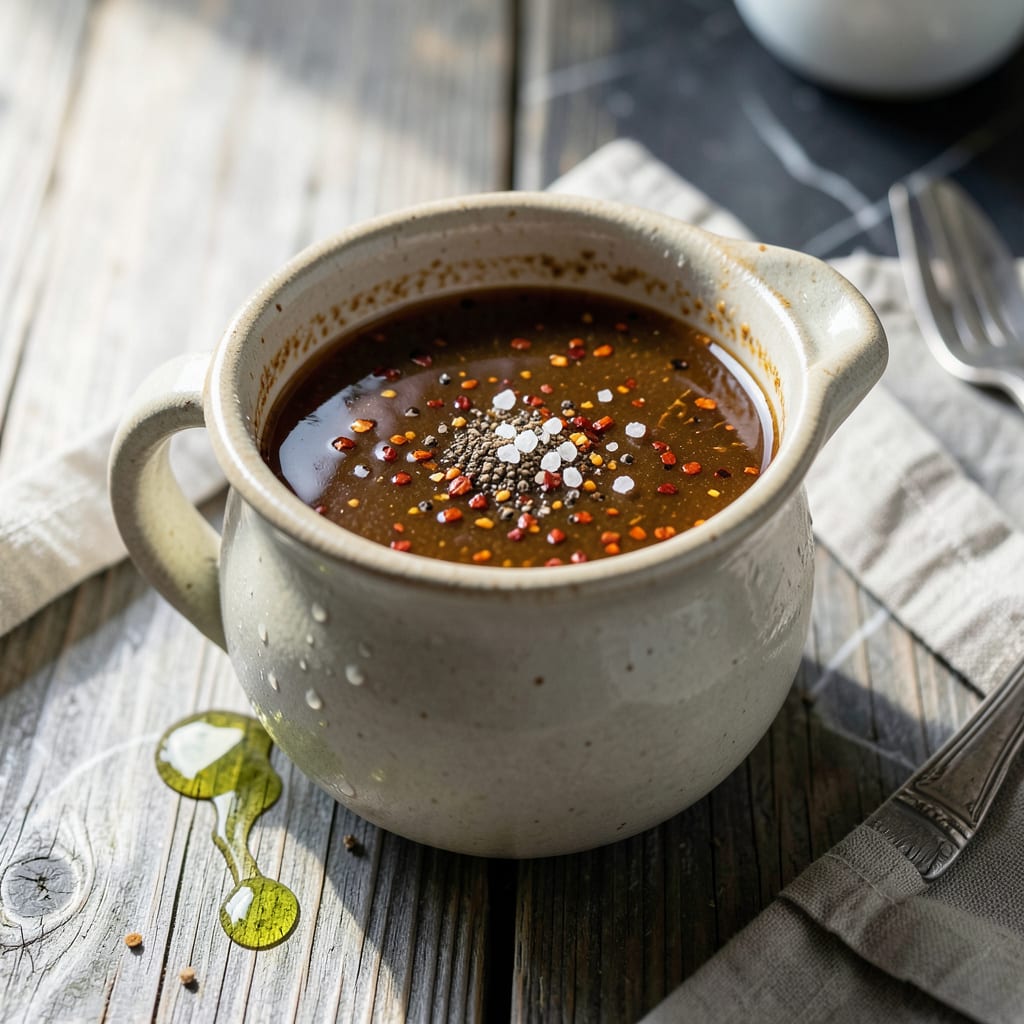
This vinegar-based sauce captures the authentic tang of Eastern North Carolina barbecue tradition. A perfect balance of sharp vinegar and bold spices brings out the best in pulled pork.
Its thin consistency lets it penetrate deep into the meat, delivering that signature peppery bite with every forkful. Store in the fridge for up to 3 weeks and use generously on all your smoked meats.
Ingredients for Eastern North Carolina Bbq Sauce
Vinegar, spice, and a touch of sweetness make this sauce sing.
| Ingredient | Amount | Notes |
|---|---|---|
| Apple Cider Vinegar 🍏 | 2 cups | The backbone of the tang |
| White Vinegar 🍶 | 1 cup | Adds extra sharpness |
| Crushed Red Pepper Flakes 🌶️ | 2 tbsp | Adjust for heat preference |
| Ground Black Pepper 🌶️ | 2 tbsp | Freshly ground preferred |
| Kosher Salt 🧂 | 1 ½ tbsp | Diamond Crystal recommended |
| Brown Sugar 🍚 | ¼ cup | Balances the acidity |
| Hot Sauce 🔥 | 2 tbsp | Texas Pete or similar |
| Worcestershire Sauce 🍶 | 1 tbsp | Adds depth to flavor |
[recipe_ingredient_scaler]
The vinegars are key here. Apple cider vinegar is non-negotiable for authentic flavor—Bragg is a solid choice. White vinegar adds that extra punch, so don’t skip it. For the pepper flakes, McCormick or any trusted brand works. The black pepper should be freshly ground (trust me on this) for maximum bite. Most grocery stores carry everything you need.
No apple cider vinegar? White vinegar with a splash of apple juice gets you 80% there. Out of pepper flakes? Cayenne at half the amount works. Want it sweeter? Double the brown sugar. The hot sauce can be swapped for any vinegar-based variety. If you’re avoiding Worcestershire (it contains anchovies), coconut aminos are a decent sub.
This sauce keeps 3 weeks in the fridge—glass jar is best. The flavor actually improves after a day or two. Freezing isn’t recommended (it’ll separate), but you’ll use it up fast on pulled pork or ribs.
Why You’ll Love This Recipe
- 5-Minute Mix: I measure everything in one bowl, stir, and it’s ready—no cooking required.
- Tangy Kick: That sharp vinegar bite with just enough heat from the red pepper flakes hits the spot every time.
- Grill Night Hero: I slather it on pulled pork, ribs, even chicken, and it steals the show at backyard cookouts.
- Penny-Pincher’s Dream: Honestly, five affordable pantry staples make a quart of sauce that beats store-bought.
Step-by-Step Instructions for Eastern North Carolina BBQ Sauce
This vinegar-based sauce comes together quickly with a simple simmer and strain.
Step 1: Combine Vinegars and Dry Ingredients
In a medium saucepan, pour in the 2 cups Apple Cider Vinegar and 1 cup White Vinegar. These form the tangy foundation that defines this regional style. Add the 2 tbsp Crushed Red Pepper Flakes, 2 tbsp Ground Black Pepper, and 1.5 tbsp Kosher Salt.
Stir well to distribute the spices evenly. The mixture will look cloudy at first—that’s normal as the vinegar begins to infuse with the seasonings. I always use Diamond Crystal kosher salt here because its coarse texture dissolves perfectly during simmering.
Step 2: Incorporate Sweet and Umami Elements
Add the 0.25 cup Brown Sugar, 2 tbsp Hot Sauce, and 1 tbsp Worcestershire Sauce to the vinegar mixture. The brown sugar will start to dissolve immediately, while the hot sauce and Worcestershire add depth and a subtle heat that balances the acidity.
I prefer Texas Pete for the hot sauce—it has a vinegar base that complements the other ingredients. The Worcestershire adds a fermented complexity that’s essential to the authentic flavor profile. Give it a good stir until the brown sugar is mostly incorporated.
Step 3: Simmer and Infuse the Flavors
Place the saucepan over medium heat and bring to a gentle simmer. You’ll see small bubbles forming around the edges first—that’s your cue to reduce the heat to medium-low to maintain a steady, gentle simmer.
Let it cook for 15-20 minutes, stirring occasionally. The sauce should reduce slightly and take on a deeper color as the flavors meld together. The crushed red pepper flakes will release their oils, giving the sauce its characteristic heat and color.
The kitchen will start to smell sharply of vinegar at first, but as it simmers, the aromas will mellow into a complex, tangy scent that’s unmistakably Carolina BBQ.
Step 4: Strain and Cool for Smooth Consistency
After simmering, remove the sauce from heat and let it cool for 5 minutes. This brief rest makes it safer to handle and allows the flavors to settle. Then, pour the mixture through a fine-mesh strainer into a clean bowl or jar.
Press gently on the solids with a spoon to extract all the flavorful liquid, but don’t force it—you want a smooth sauce without gritty bits. The strained sauce should have a thin, pourable consistency that’s perfect for mopping or dipping.
Let the sauce cool to room temperature before using. It will keep in the refrigerator for up to 2 weeks, and the flavors actually improve after a day or two as they continue to meld.
Pro Tips For Making Eastern North Carolina Bbq Sauce
- Balance the Vinegars: Use a 2:1 ratio of apple cider vinegar to white vinegar—I learned this the hard way after my first batch tasted harsh. The cider vinegar’s sweetness softens the white vinegar’s bite.
- Bloom the Spices: Toast the crushed red pepper flakes and black pepper in a dry pan for 30 seconds before adding vinegar. Sounds weird, but it works: it wakes up the flavors without burning them.
- Skip the Boil: Never let this sauce come to a rolling boil—just warm it gently. After burning a batch to a syrupy mess, I now keep it under 180°F to preserve the tang.
- Rest Overnight: Mix it the day before you need it. I was skeptical until I tried it, but 12 hours in the fridge lets the flavors meld in a way 30 minutes on the stove just can’t.
Troubleshooting This Recipe
Too Thin or Watery
If your sauce seems watery, it likely needs more simmering time. Return it to medium-low heat and reduce for an additional 5-10 minutes. The vinegar base should naturally thicken slightly, but it will remain thin by design. This consistency is traditional for Eastern North Carolina style. 💡
Overly Harsh Vinegar Taste
If the vinegar bite is too sharp, balance it with an extra 1-2 tbsp brown sugar. Stir well and let it simmer for 5 minutes to incorporate. I’ve found that Texas Pete hot sauce also helps mellow the acidity while adding complexity.
Not Spicy Enough
For more heat, add ½ tsp cayenne pepper or an extra 1 tbsp crushed red pepper flakes during the simmer. If you’re in a pinch, a few dashes of your favorite hot sauce will work, but the flakes give a more authentic, slow-building heat.
Gritty Texture
Grittiness usually means the spices didn’t fully dissolve. Strain the sauce again through a fine-mesh sieve, pressing gently. For future batches, ensure the brown sugar dissolves completely before simmering. A quick stir with a whisk can help distribute ingredients evenly.
Sauce Separating
If your sauce separates after storage, it’s normal—just give it a good shake or stir before using. To prevent this, make sure the sauce cools completely before sealing in a glass jar. I always let mine sit at room temperature for 30 minutes post-straining. 🔥
Flavor Too Mild
If the flavor seems weak, it might need more salt or a longer simmer. Add ½ tbsp kosher salt and simmer for another 5 minutes. Taste and adjust—remember, the boldness develops as it sits, so let it rest overnight if possible.
Nutrition Facts

Trained in classic French technique but raised on slow-cooked ribs and spicy rubs, she blends culinary skill with smoke and soul.
- Recipe for Boneless Pork Chops in Cast Iron Skillet: Sear and Baste to Juicy Perfection - October 3, 2026
- Recipe for Boneless Cross Rib Roast: Slow-Roasted Beef with Herb Crust - October 3, 2026
- Hamburgers in Sauce Recipe Crock Pot: Slow-Cooked Savory Delight - October 3, 2026