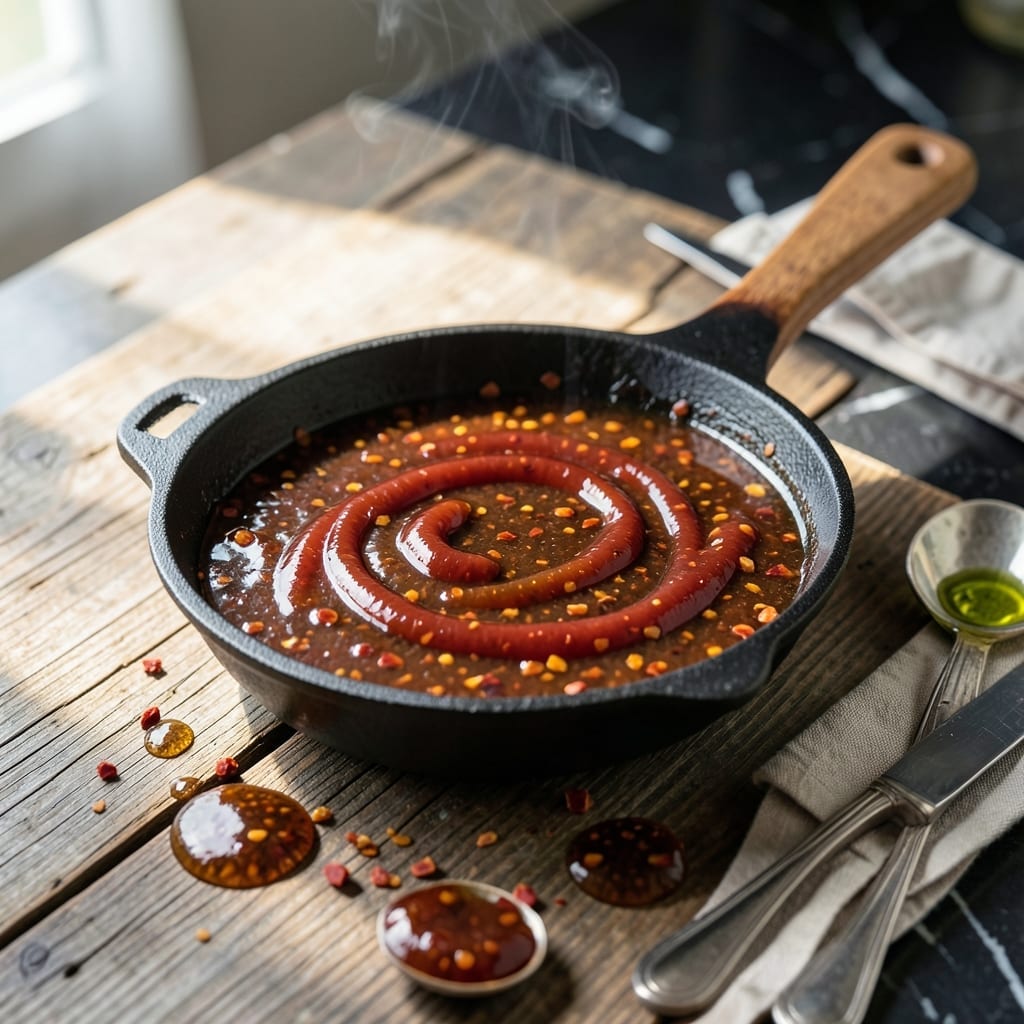
This Eastern Carolina sauce delivers the signature vinegar-based tang that defines the region’s barbecue tradition. A perfect balance of sharpness and subtle heat makes it ideal for pulled pork.
Simple ingredients and a 10-minute prep time yield a sauce that’s versatile enough for dipping, mopping, or serving on the side.
Ingredients for Eastern Carolina Barbecue Sauce
Sharp, tangy, and just a little spicy. The perfect balance for authentic Carolina flavor.
| Ingredient | Amount | Notes |
|---|---|---|
| Apple Cider Vinegar 🍏 | 2 cups | The base of the sauce |
| White Vinegar 🍶 | 1 cup | Adds extra sharpness |
| Brown Sugar 🏝️ | ½ cup | Balances the acidity |
| Ketchup 🍅 | ½ cup | For subtle sweetness |
| Crushed Red Pepper Flakes 🌶️ | 1 tbsp | Adjust for heat preference |
| Hot Sauce 🔥 | 2 tbsp | Texas Pete preferred |
| Worcestershire Sauce 🍶 | 1 tbsp | Adds depth of flavor |
| Black Pepper 🌶️ | 1 tbsp | Freshly ground preferred |
| Salt 🧂 | 1 tbsp | Kosher or sea salt |
| Cayenne Pepper 🔥 | ½ tsp | Optional for extra heat |
[recipe_ingredient_scaler]
The vinegars are the foundation here. Apple cider vinegar provides the signature tang, while white vinegar sharpens it further. Most grocery stores carry both—look for Bragg or Heinz brands for consistency. The brown sugar is non-negotiable; it tempers the acidity without overwhelming the vinegar’s punch. Domino or C&H are reliable choices for consistent results.
No apple cider vinegar? All apple cider vinegar with a splash of lemon juice works in a pinch. Short on hot sauce? Frank’s RedHot or Tabasco are solid substitutes. The Worcestershire can be omitted if needed, but it adds a savory depth worth keeping. For a milder sauce, reduce the crushed red pepper by half. The cayenne is entirely optional—leave it out if you prefer just a hint of warmth.
This sauce keeps beautifully. Store in an airtight container in the fridge for up to 2 weeks. For longer storage, freeze in ice cube trays, then transfer to a bag—thaw only what you need. The flavors meld and deepen over time.
Why You’ll Love This Recipe
- 5-Minute Mix: I dump everything in one bowl, stir, and it’s done—no cooking, no fuss.
- Tangy Kick: The apple cider vinegar and crushed red pepper flakes give it that bright, spicy bite I crave.
- Pitmaster’s Secret: Honestly, this sauce works on pulled pork, ribs, or even as a dipping sauce for fries.
- Pantry Staples: Between us, I always have these ingredients on hand, so I can make it whenever the mood strikes.
Step-by-Step Instructions for Eastern Carolina Barbecue Sauce
This streamlined method delivers the signature thin, tangy sauce with perfect balance every time.
Step 1: Combine Vinegars and Sweet Elements
In a medium saucepan, pour in the 2 cups Apple Cider Vinegar and 1 cup White Vinegar. Add the 0.5 cup Brown Sugar and 0.5 cup Ketchup, stirring until the sugar begins to dissolve. Place the saucepan over medium heat and bring to a gentle simmer.
This initial combination creates the foundation of the sauce, where the vinegar’s sharpness starts to mellow as it meets the sweetness of the sugar and ketchup. Watch for the mixture to turn slightly translucent as the sugar fully dissolves.
Step 2: Incorporate Spices and Seasonings
Once simmering, add the 1 tbsp Crushed Red Pepper Flakes, 2 tbsp Hot Sauce, 1 tbsp Worcestershire Sauce, 1 tbsp Black Pepper, 1 tbsp Salt, and 0.5 tsp Cayenne Pepper. Stir thoroughly to distribute the spices evenly throughout the liquid.
The spices will begin to bloom in the warm vinegar base, releasing their flavors and aromas. You’ll notice the sauce taking on a deeper color and a more complex scent as the spices infuse.
Step 3: Simmer for Flavor Development
Reduce the heat to low and let the sauce simmer uncovered for 20-25 minutes. Stir occasionally to prevent any spices from settling at the bottom of the pan.
As it simmers, the flavors will meld together, and the sauce will reduce slightly, intensifying its character. The vinegar’s sharpness will soften, while the spices will create a subtle heat that lingers. You’ll know it’s ready when the sauce has a consistent, thin texture and a rich, tangy aroma fills your kitchen.
Step 4: Cool and Taste for Adjustments
Remove the saucepan from heat and let the sauce cool to room temperature, about 30 minutes. This cooling period allows the flavors to fully marry and mellow.
Once cooled, taste the sauce and adjust the seasoning if needed. If you prefer a bit more sweetness, add a pinch more brown sugar. For extra heat, incorporate a dash more cayenne pepper. The sauce should have a bright, tangy flavor with a balanced warmth from the spices.
Transfer the sauce to a jar or bottle and store it in the refrigerator for up to 2 weeks. The flavors will continue to develop over time, making it even more delicious.
Pro Tips For Making Eastern Carolina Barbecue Sauce
- Simmer Low and Slow: Let the sauce cook at a gentle simmer for at least 20-30 minutes—any higher heat and the vinegars will evaporate too quickly, leaving you with a sauce that’s harsh instead of tangy.
- Balance the Vinegars: Use a 2:1 ratio of apple cider vinegar to white vinegar. I learned this the hard way—too much white vinegar and the sauce tastes sharp, not bright.
- Skip the Boil: Resist the urge to boil the sauce aggressively. It’ll turn syrupy and lose that thin, punchy consistency Eastern Carolina BBQ is known for.
- Bloom the Pepper Flakes: Toast the crushed red pepper flakes in a dry pan for 30 seconds before adding liquids. Sounds weird, but it works—wakes up the heat without making it bitter.
Best Sauces and Condiments for This eastern carolina barbecue sauce
Classic Pairings
This sauce shines brightest with pulled pork sandwiches, where its tang cuts through the richness. I love drizzling it over slow-smoked pork shoulder at our local BBQ competitions. The thin consistency makes it perfect for mopping during the last hour of cooking. 🔥
Unexpected Uses
Try it as a marinade for chicken wings before grilling—the vinegar tenderizes while adding that signature Carolina zing. It also works wonderfully as a dressing for coleslaw, replacing mayonnaise entirely. Honestly, I even use it to perk up grilled vegetables.
Dipping Sauce
Serve it as a dipping sauce for hush puppies or fried chicken. The sharpness balances the crispy exterior beautifully. I keep a small bowl on the table whenever we’re serving anything fried—it’s always the first to disappear.
Seafood Twist
My coastal rides inspired this one: use it as a glaze for grilled shrimp or oysters. The acidity complements seafood perfectly. Brush it on during the last 2 minutes of grilling for maximum flavor impact without overpowering the delicate meat.
Breakfast Boost
Drizzle over biscuits with a slice of country ham for a Carolina-style breakfast. The vinegar’s brightness wakes up the whole dish. I’ve even stirred a spoonful into scrambled eggs for a tangy morning surprise. 💡
Storage Tip
Keep a jar in your fridge for up to 2 weeks. For longer storage, freeze in ice cube trays—perfect for portioning out just what you need. The flavors deepen beautifully over time, making it even better after a few days.
Nutrition Facts
Frequently Asked Questions
Why is this sauce so vinegar-forward?
The sharp vinegar base is a hallmark of Eastern Carolina style. It perfectly cuts through rich, fatty meats like pulled pork while preserving their smoky flavor.
Can I reduce the spice level?
Start by halving the crushed red pepper and omitting the cayenne. Taste before adding more heat—remember the vinegar already provides a bold kick.
How long does homemade sauce stay fresh?
Stored in an airtight container in the fridge, it keeps for up to 2 weeks. For longer storage, freeze in ice cube trays—thaw only what you need.
What’s the best way to use this sauce?
It’s perfect for mopping during the last 30 minutes of smoking or as a finishing sauce. Also try it as a tangy coleslaw dressing or marinade for chicken.

Trained in classic French technique but raised on slow-cooked ribs and spicy rubs, she blends culinary skill with smoke and soul.
- Recipe for Boneless Pork Chops in Cast Iron Skillet: Sear and Baste to Juicy Perfection - October 3, 2026
- Recipe for Boneless Cross Rib Roast: Slow-Roasted Beef with Herb Crust - October 3, 2026
- Hamburgers in Sauce Recipe Crock Pot: Slow-Cooked Savory Delight - October 3, 2026