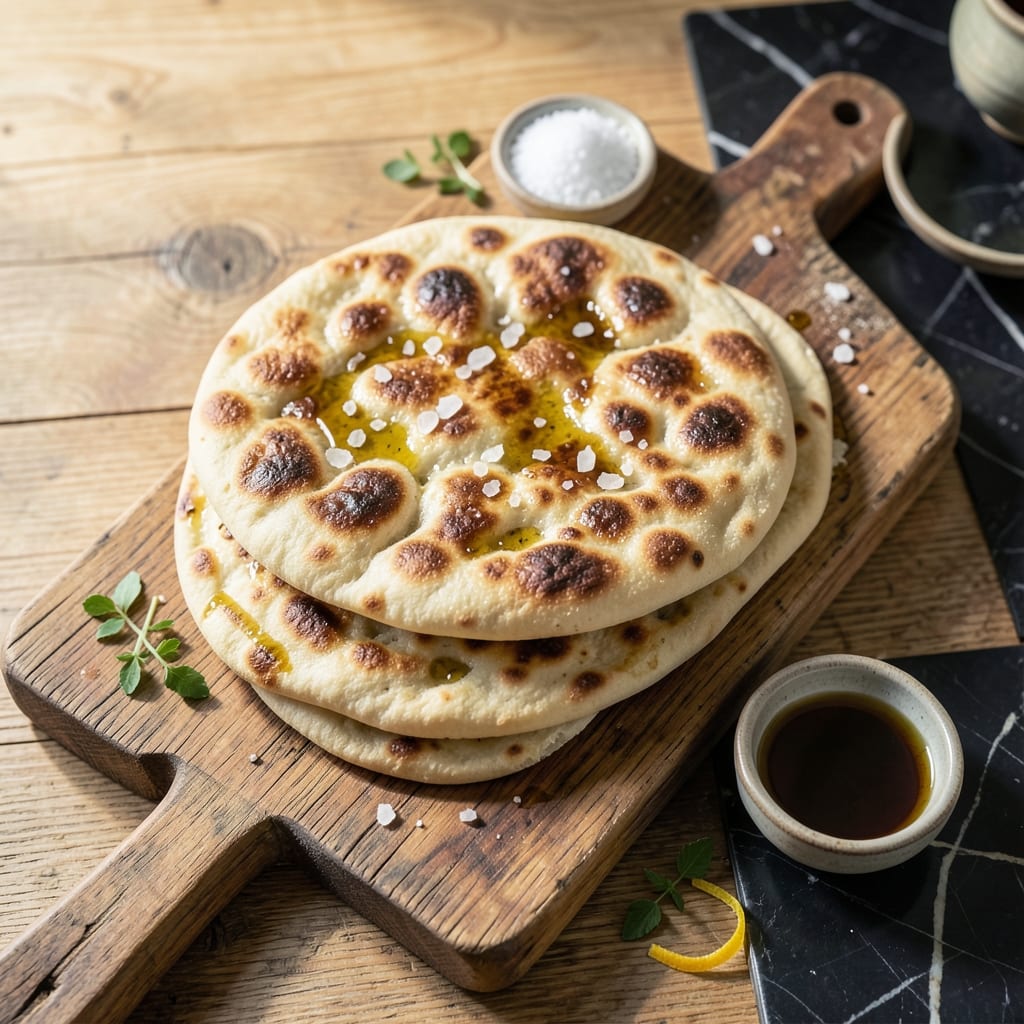
This no-milk flatbread comes together with just 4 ingredients and minimal effort. The secret lies in the perfect balance of flour, water, oil, and salt to create a soft, pillowy texture that rivals any traditional recipe.
I developed this method after realizing many flatbread recipes unnecessarily complicate things with dairy. This version proves you don’t need milk to achieve restaurant-quality results at home. The dough comes together in minutes, resting briefly before cooking.
The cooking process is simple: heat a dry skillet and cook each flatbread for about 2 minutes per side. They puff slightly, developing golden spots while staying tender inside. No special equipment required—just a pan and a spoon.
These are versatile enough for dipping, wrapping, or serving alongside any meal. The simplicity makes them ideal for weeknight cooking or last-minute gatherings.
Ingredients for Easy Flatbread Recipe No Milk
Four ingredients, zero dairy, all the flavor. Simple enough for any night.
| Ingredient | Amount | Notes |
|---|---|---|
| All-Purpose Flour 🌾 | 2 cups | Plus extra for dusting |
| Warm Water 💧 | ¾ cup | About 110°F for activation |
| Olive Oil 🫒 | 2 tbsp | Extra-virgin preferred |
| Sea Salt 🧂 | 1 tsp | Fine grain for even distribution |
[recipe_ingredient_scaler]
The flour is the foundation here. King Arthur or Bob’s Red Mill all-purpose deliver consistent results. Warm water activates the gluten without dairy—use filtered if your tap water has a strong taste. The olive oil adds tenderness; California Olive Ranch is a reliable supermarket option. Sea salt dissolves evenly, but Diamond Crystal kosher works too (just use 50% more by volume).
No all-purpose? Bread flour works at a 1:1 ratio but yields a slightly chewier texture. Out of olive oil? Avocado oil or melted coconut oil substitute equally. For extra flavor, infuse the oil with garlic or rosemary before mixing. Skip the salt if using salted butter (though this is a no-milk recipe, so that’s a non-issue here).
Dough rests best covered at room temp for 30-60 minutes. Cooked flatbreads keep in an airtight container for 2 days—reheat in a dry skillet to restore softness. Freeze dough balls for up to 1 month (thaw before rolling).
Why You’ll Love This Recipe
- No Fuss Dough: Honestly, it’s just flour, water, olive oil, and salt—no resting, no milk, no waiting for yeast to wake up.
- Crispy & Chewy: That golden crust with a soft, pillowy center? Comes from brushing hot flatbread with a little extra olive oil and sea salt.
- Endless Pairings: I’ve served it with hummus, wrapped around grilled chicken, and even as a quick pizza base. Between us, my kids eat it plain.
Step-by-Step Instructions for Easy Flatbread No Milk
This method delivers soft, pillowy flatbreads with minimal effort and maximum flavor.
Step 1: Activate the Dough
In a large mixing bowl, combine the 2 cups All-Purpose Flour with the 1 tsp Sea Salt. I use fine grain sea salt for even distribution throughout the dough. Make a well in the center and add the 0.75 cup Warm Water (about 110°F for optimal activation).
Using a wooden spoon or your hands, mix until a shaggy dough forms. The water temperature is crucial—too hot and it’ll kill the potential for gluten development, too cold and the dough won’t come together properly. You’ll notice the mixture transforms from dry and crumbly to cohesive in about 2-3 minutes of stirring.
Step 2: Incorporate the Fat
Add the 2 tbsp Olive Oil to the bowl. I prefer extra-virgin for its superior flavor, but any olive oil will work. Knead the dough directly in the bowl for 5-7 minutes until smooth and elastic. The oil creates a tender crumb while allowing the gluten to develop properly.
You’ll know it’s ready when the dough springs back slowly when pressed with a finger. If it’s too sticky, add a sprinkle of flour; if too dry, wet your hands slightly. The texture should be soft but not tacky. This step builds the structure that makes your flatbreads pillowy rather than dense.
Step 3: Rest and Relax the Gluten
Cover the bowl with a damp towel and let the dough rest at room temperature for 30 minutes. This resting period allows the gluten strands to relax, making the dough easier to shape and preventing it from shrinking back when rolled.
During this time, the dough will rise slightly but won’t double in size like traditional bread dough. The surface should appear smooth with small bubbles forming beneath. Don’t skip this step—rested dough handles better and produces more even flatbreads.
Step 4: Shape and Cook the Flatbreads
Divide the dough into 4 equal portions and shape each into a ball. On a lightly floured surface, roll each ball into a ¼-inch thick round. I find that rolling from the center outward in all directions creates the most even shape.
Heat a skillet or griddle over medium-high heat. When hot, cook each flatbread for 2-3 minutes per side until golden brown spots appear and the bread puffs slightly in places. The first flatbread might take a bit longer as you gauge the heat. Press down gently with a spatula if areas puff too much.
Transfer to a plate and cover with a clean towel to keep warm while cooking the remaining flatbreads. Serve immediately for the best texture.
Pro Tips For Making Easy Flatbread Recipe No Milk
- Heat the Pan First: Crank your skillet to medium-high and let it sit empty for 2-3 minutes before adding the flatbread—I learned this the hard way after too many pale, doughy results.
- Use Warm Water: Not hot, not cold: aim for about 110°F, like warm bathwater. Sounds fussy, but it actually changes how the dough comes together.
- Skip Over-Flouring: Dust your surface lightly, but resist the urge to keep adding flour while rolling. Too much makes the flatbread tough and dry.
- Press, Don’t Roll: For the fastest, most rustic results, use your hands to press the dough flat instead of a rolling pin—saves time and gives it that nice, uneven texture.
Dietary Considerations for This Recipe
Vegan-Friendly Basis
This flatbread is naturally vegan with no dairy products used, making it suitable for plant-based diets. The simple combination of flour, water, oil, and salt creates a delicious base that aligns perfectly with vegan dietary principles. I love how accessible this makes it for everyone at the table. 🌱
Dairy-Free Assurance
With no milk, butter, or other dairy ingredients, this recipe avoids common allergens while maintaining soft, pillowy texture. The olive oil provides the necessary fat for tenderness without any dairy substitutes. It’s a great option for those with lactose intolerance or dairy sensitivities.
Allergen Considerations
Beyond dairy, this recipe is free from nuts, eggs, and soy, making it safe for many common allergies. The 4 basic ingredients keep the allergen list short and simple. Always check your flour brand for potential cross-contamination if severe allergies are a concern.
Gluten-Free Adaptation
For gluten-sensitive diners, you can substitute 1:1 gluten-free flour blend for the all-purpose flour. I’ve had success with King Arthur’s Measure for Measure. The texture will be slightly different but still delicious. Add 1 tsp xanthan gum if your blend doesn’t include it. 💡
Low-Sodium Option
To reduce sodium, you can either omit the salt entirely or use ½ tsp instead of the full amount. The flatbread will still cook properly, though the flavor may be slightly more neutral. I often do this when serving with particularly salty dips or toppings.
Nut-Free Confirmation
This recipe contains no nuts or nut products, making it safe for nut-free kitchens. The ingredients are all simple pantry staples that don’t require any special nut-free substitutions. It’s a worry-free option for school events or nut-free households.
Nutrition Facts
Frequently Asked Questions
Can I use cold water instead of warm?
Warm water at 110°F works best to activate the gluten properly. Cold water will make the dough sluggish and harder to knead, and the flatbreads may turn out denser.
Why did my flatbread not puff up?
Likely the dough didn’t rest long enough. Ensure the dough rests for 30 minutes covered at room temperature. Also, cook on medium-high heat to encourage puffing.
Can I make these ahead of time?
Cooked flatbreads keep in an airtight container for 2 days. Reheat briefly in a dry skillet to restore softness.
What if I don’t have olive oil?
You can substitute avocado oil or melted coconut oil at a 1:1 ratio. Each adds its own subtle flavor while keeping the texture tender.

Trained in classic French technique but raised on slow-cooked ribs and spicy rubs, she blends culinary skill with smoke and soul.
- Recipe for Boneless Pork Chops in Cast Iron Skillet: Sear and Baste to Juicy Perfection - October 3, 2026
- Recipe for Boneless Cross Rib Roast: Slow-Roasted Beef with Herb Crust - October 3, 2026
- Hamburgers in Sauce Recipe Crock Pot: Slow-Cooked Savory Delight - October 3, 2026