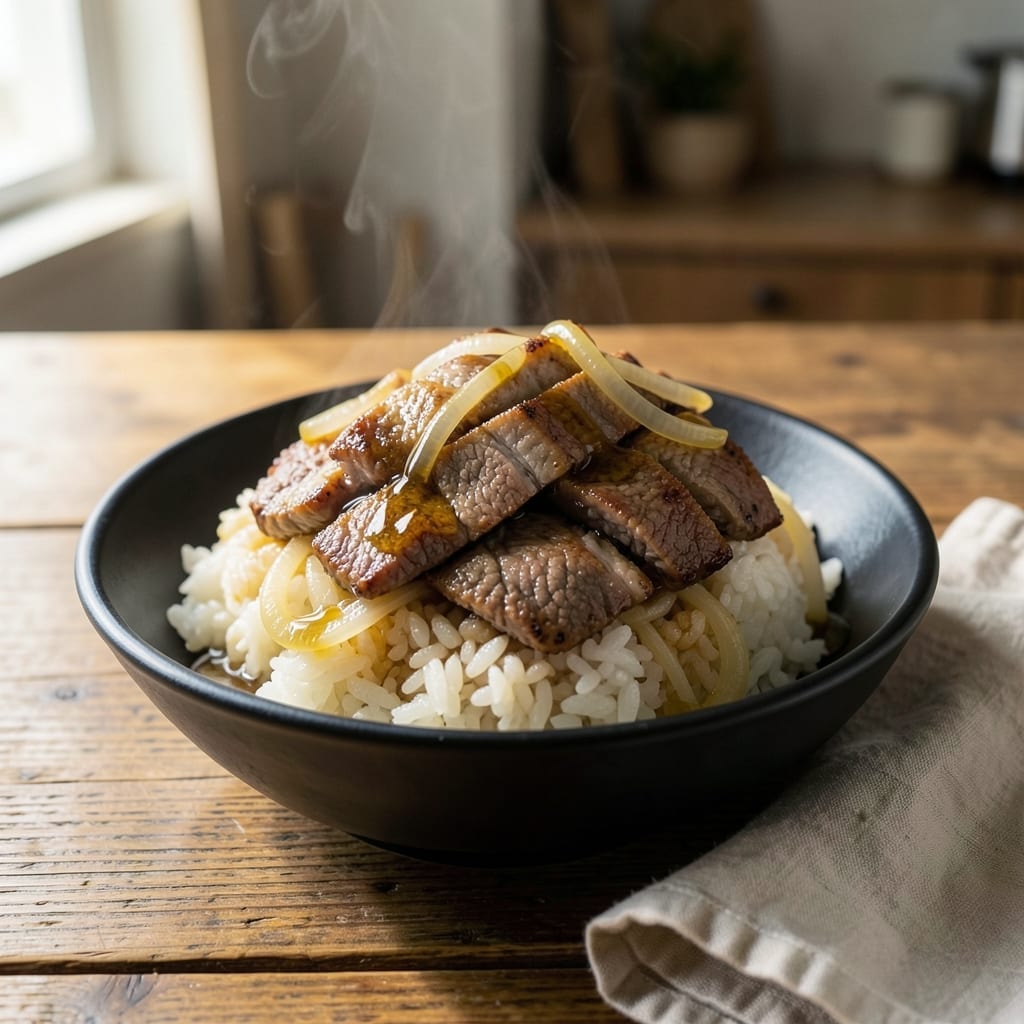
I developed this easy gyudon recipe after testing multiple versions in my small kitchen, finding the perfect balance of sweet and savory flavors. The dish captures the essence of Yoshinoya-style beef bowls without the restaurant price.
Thinly sliced beef and onions cook quickly in a wok, soaking up the rich sauce made with soy sauce, mirin, and sugar. The simplicity of the ingredients makes this dish both approachable and deeply satisfying.
What results is a bowl of tender beef and soft onions swimming in a glossy, umami-packed sauce over steamed rice. It’s comfort food that comes together faster than takeout.
Serve it piping hot with pickled ginger or a soft-boiled egg for an authentic touch. This version stays true to the classic while being easy to recreate at home.
Ingredients for Easy Gyudon Recipe Yoshinoya
Thin beef, sweet onions, and a rich sauce come together for this comforting bowl.
| Ingredient | Amount | Notes |
|---|---|---|
| Thinly Sliced Beef 🥩 | 1 lb | Ribeye or sirloin preferred |
| Yellow Onions 🧅 | 2 whole | Thinly sliced, large |
| Soy Sauce 🫒 | ½ cup | Japanese variety preferred |
| Mirin 🍶 | ¼ cup | Sweet rice wine |
| Granulated Sugar 🍚 | 2 tbsp | White or brown |
| Dashi Stock 🍲 | ½ cup | Or substitute beef broth |
| White Rice 🍚 | 2 cups | Uncooked, short-grain preferred |
| Garlic Cloves 🧄 | 2 cloves | Minced finely |
| Fresh Ginger 🌿 | 1 tbsp | Grated or minced |
| Neutral Oil 🫒 | 1 tbsp | Vegetable or canola |
| Green Onions 🌿 | 2 whole | Thinly sliced for garnish |
| Pickled Ginger 🌸 | ¼ cup | Optional, for serving |
| Soft-Boiled Eggs 🥚 | 4 whole | Optional, for serving |
[recipe_ingredient_scaler]
The beef is key here—ribeye or sirloin gives that melt-in-your-mouth texture. Most Asian markets sell it pre-sliced for sukiyaki, which saves time. Look for well-marbled cuts if slicing yourself. The onions should be sweet and fresh, not the pre-cut kind (they lose flavor fast). Japanese soy sauce like Kikkoman or Yamasa makes a difference over regular versions.
No mirin? 1 tbsp sugar plus 3 tbsp water per 1 tbsp mirin in a pinch. Substitute dry sherry for dashi if needed. Brown sugar works if that’s what’s in your pantry. For a gluten-free version, tamari replaces soy sauce. The rice can be any variety, but short-grain absorbs the sauce best.
The cooked beef and onions keep 3-4 days in the fridge. Freeze the sauce separately for up to 3 months. Reheat gently to keep the beef tender—microwave at 50% power works well. Always cook rice fresh for best texture.
Why You’ll Love This Recipe
- One Pan Meal: Honestly, I just brown the beef and onions, pour in the soy-mirin-sugar mix, and dinner’s done in one pot.
- Sweet-Savory Magic: The mirin and sugar caramelize into this glossy sauce that clings to every slice of beef and onion.
- Weeknight Hero: Between us, I’ve served this for lazy Tuesdays and last-minute weekend lunches with zero complaints.
- Budget Stretcher: A pound of thinly sliced beef and a couple of onions feed four of us, with enough left for tomorrow’s lunch.
Step-by-Step Instructions for Wok-Tossed Beef and Onion Bowl
This straightforward method delivers tender beef and sweet onions in a savory-sweet sauce over rice.
Step 1: Prepare the Rice Base
Rinse the 2 cups white rice under cold water until the water runs clear, which removes excess starch and prevents the grains from sticking together. Drain well and transfer to a rice cooker or heavy pot.
Add water in the ratio recommended for your rice type (typically 2¼ cups water for short-grain) and cook according to package instructions. I start this first because it takes the longest—about 20-25 minutes for perfectly fluffy rice. Keep it warm once done; the hot rice soaks up the sauce beautifully.
Step 2: Cook the Aromatics and Beef
Heat the 1 tbsp neutral oil in a large wok or deep skillet over medium-high heat until it shimmers but doesn’t smoke. Add the 2 whole yellow onions (thinly sliced) and cook for 5-6 minutes, stirring often, until they soften and turn translucent.
Add the 2 cloves garlic cloves (minced) and 1 tbsp fresh ginger (grated), stirring constantly for 30 seconds until fragrant. Push the onions to one side, then add the 1 lb thinly sliced beef, spreading it in a single layer. Let it sear undisturbed for 1 minute before stirring.
The beef should turn from red to brown and release its juices. Cook for another 2-3 minutes until no longer pink. The thin slices ensure quick, even cooking without toughness.
Step 3: Build the Gyudon Sauce
Pour in the 0.5 cup soy sauce, 0.25 cup mirin, 2 tbsp granulated sugar, and 0.5 cup dashi stock. Stir well to combine, then bring to a gentle simmer. Reduce heat to medium and let it cook for 3-4 minutes, stirring occasionally.
You’ll notice the sauce start to thicken slightly and coat the beef and onions. The sugar caramelizes, balancing the saltiness of the soy sauce. Taste and adjust sweetness or saltiness if needed, but the original ratios are well-balanced.
Step 4: Assemble and Garnish
Divide the cooked white rice among four bowls. Spoon the beef and onion mixture with its sauce over the rice, distributing it evenly. The rice should be mostly covered but still peeking through in spots.
Garnish each bowl with the 2 whole green onions (thinly sliced) scattered on top. For serving, offer the 0.25 cup pickled ginger and 4 whole soft-boiled eggs on the side. The pickled ginger adds a tangy contrast, while the eggs provide a creamy richness when mixed in.
Pro Tips For Making Easy Gyudon Recipe Yoshinoya
- Slice Against Grain: Thinly slice the beef against the grain—it stays tender even with quick cooking. I learned this the hard way after chewing through a few rubbery batches.
- Caramelize Those Onions: Cook the yellow onions until deeply golden, about 5-7 minutes. Sounds tedious, but it builds the sweet base that balances the soy and mirin.
- Simmer, Don’t Boil: Keep the heat at a gentle simmer once the sauce is in. After burning two pans of gyudon, I finally realized boiling makes the beef tough.
- Use Cold Beef: Add the thinly sliced beef straight from the fridge—it cooks faster and more evenly in the hot broth. My grandmother swore by this, and she was right.
Storing and Reheating easy gyudon recipe yoshinoya
Refrigerator Storage
Let your gyudon cool for no more than 2 hours before transferring to airtight containers—I use glass ones from my Boston kitchen. Store at 40°F or below for up to 3-4 days. The onions will soften further, but the flavors deepen beautifully. ❄️
Freezer Storage
The beef and onion mixture freezes well for up to 3 months. I recommend flat freezer bags for efficient stacking. Squeeze out excess air to prevent freezer burn, and leave 1 inch of headspace for expansion. Always freeze the sauce with the beef for best results.
Stovetop Reheating
This is my preferred method for maintaining texture. Reheat in a skillet over medium-low heat with 2 tbsp water or dashi stock to prevent drying. Cover and stir occasionally for 5-7 minutes until heated through. The beef stays tender this way. 🔥
Microwave Reheating
For quick meals, microwave individual portions covered with a damp paper towel. Use 50% power for 2-3 minutes, stir, then continue in 30-second intervals until reaching 165°F. Add a splash of water if the mixture looks dry.
Rice Considerations
Always cook fresh rice for serving—reheated rice tends to dry out and doesn’t absorb the sauce as well. If you must reheat rice, sprinkle 1-2 tsp water over it and microwave covered for 1 minute before topping with the beef mixture.
Garnish Refresh
Add fresh green onions and prepare new soft-boiled eggs when reheating. The pickled ginger keeps well in the fridge for up to 2 weeks, so it’s always ready to complement your bowl.
Nutrition Facts
Frequently Asked Questions
What type of beef works best?
Use well-marbled ribeye or sirloin for tender results. Most Asian markets sell pre-sliced beef for sukiyaki, which saves prep time. Avoid lean cuts as they can dry out during cooking.
Can I make this without mirin?
Yes! Substitute with 1 tbsp sugar plus 3 tbsp water per 1 tbsp mirin. Alternatively, use dry sherry for a similar depth of flavor. The dish will still taste authentic.
How do I prevent the beef from becoming tough?
Slice the beef thinly against the grain and cook over medium-high heat for just 2-3 minutes. Thin slices ensure quick cooking, keeping the meat juicy and tender.
Can I use regular soy sauce?
Japanese soy sauce is ideal, but regular works in a pinch. The flavor may be saltier, so reduce by 1-2 tbsp and adjust to taste. For gluten-free, use tamari.

Trained in classic French technique but raised on slow-cooked ribs and spicy rubs, she blends culinary skill with smoke and soul.
- Recipe for Boneless Pork Chops in Cast Iron Skillet: Sear and Baste to Juicy Perfection - October 3, 2026
- Recipe for Boneless Cross Rib Roast: Slow-Roasted Beef with Herb Crust - October 3, 2026
- Hamburgers in Sauce Recipe Crock Pot: Slow-Cooked Savory Delight - October 3, 2026