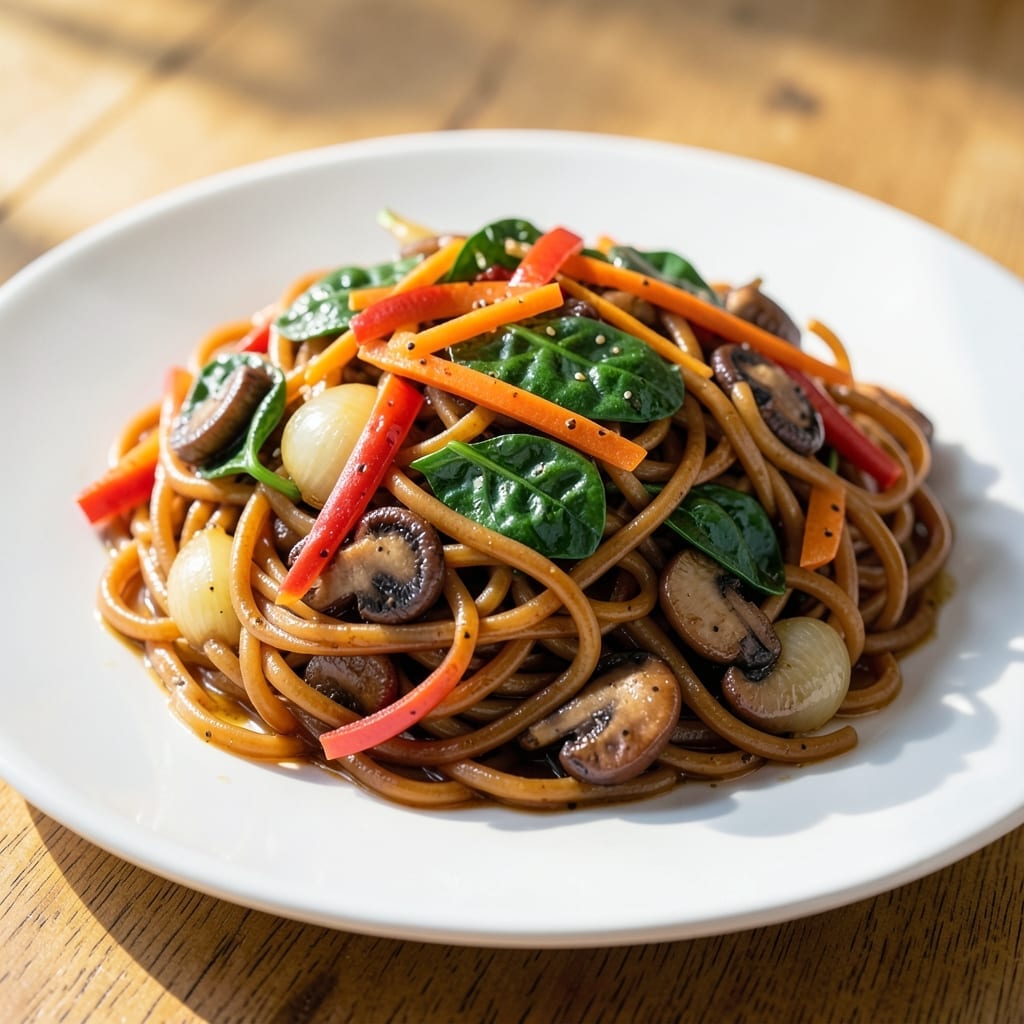
I’ve tested this dish multiple times to ensure it stays true to traditional Korean flavors while keeping it simple. Glass noodles meet garden-fresh vegetables in a dish that’s as satisfying as it is straightforward.
This vegetarian version skips complicated steps but delivers on texture and taste. Sweet potato starch noodles, spinach, and carrots come together with a savory-sweet sauce that’s foolproof for home cooks.
The result is a colorful, slightly chewy noodle dish packed with crunch and umami depth. It’s perfect for meal prep or serving at gatherings, with no compromise on authenticity.
Ready in 30 minutes, this recipe proves plant-based can be both easy and impressive.
Ingredients for Easy Japchae Recipe Vegetarian
Glass noodles and garden vegetables create this traditional Korean-inspired dish with ease.
| Ingredient | Amount | Notes |
|---|---|---|
| Sweet Potato Starch Noodles 🍜 | 8 oz | Dried, also called dangmyeon |
| Spinach 🥬 | 4 cups | Fresh, loosely packed |
| Carrots 🥕 | 2 whole | Julienned or matchstick cut |
| Red Bell Pepper 🌶️ | 1 whole | Thinly sliced |
| Shiitake Mushrooms 🍄 | 4 pieces | Fresh, thinly sliced |
| Yellow Onion 🧅 | ½ whole | Thinly sliced |
| Garlic Cloves 🧄 | 4 cloves | Minced finely |
| Soy Sauce 🫒 | ⅓ cup | Use low-sodium for balance |
| Brown Sugar 🍚 | 3 tbsp | Light or dark variety |
| Sesame Oil 🫒 | 2 tbsp | Toasted variety preferred |
| Rice Vinegar 💧 | 2 tbsp | Unseasoned type |
| Sesame Seeds 🌾 | 2 tbsp | Toasted for garnish |
| Vegetable Oil 🫒 | 2 tbsp | Neutral flavor, for cooking |
| Green Onions 🧅 | ½ cup | Thinly sliced for garnish |
[recipe_ingredient_scaler]
The sweet potato starch noodles are non-negotiable for authenticity. Look for dangmyeon at Korean markets or well-stocked Asian grocery stores. H Mart and Assi Plaza are reliable sources, but online retailers like Amazon or Weee! work too. Freshness matters for the vegetables—spinach should be vibrant green, carrots firm. The shiitake mushrooms add essential umami depth (dried can be rehydrated if fresh aren’t available).
No shiitake mushrooms? Button or cremini mushrooms work fine, though the flavor will be milder. Bell pepper can be swapped for zucchini or cucumber for a different crunch. For gluten-free, use tamari instead of soy sauce. Brown sugar can be replaced with coconut sugar or agave syrup. The sesame oil is key—don’t substitute with other oils as it won’t deliver the nutty aroma.
Store uncooked noodles in a cool, dry place for up to 1 year. Once cooked, the dish keeps well in the fridge for 3-4 days. The flavors deepen over time, making it excellent for meal prep. Freezing isn’t recommended as the noodles can become mushy upon thawing.
Why You’ll Love This Recipe
- One Pot Wonder: I toss the noodles, spinach, and shiitakes in a single pan—no juggling multiple burners.
- Umami Bomb: The mushrooms and sesame oil give it that deep, savory kick I crave.
- Lunches for Days: I make a big batch on Sunday and it stays fresh all week.
- Pantry Friendly: Sweet potato starch noodles and carrots are cheap staples I always have on hand.
Step-by-Step Instructions for Vegetarian Japchae
Master this straightforward technique for perfectly textured glass noodles with vibrant vegetables.
Step 1: Prepare the Sweet Potato Starch Noodles
Bring a large pot of water to a rolling boil. Add the 8 oz Sweet Potato Starch Noodles and cook for 6-7 minutes until they turn translucent and slightly chewy. Drain immediately in a colander and rinse under cold water to stop the cooking process.
Transfer the noodles to a large bowl and toss with 1 tbsp Sesame Oil to prevent sticking. Use kitchen shears to cut the noodles into manageable lengths for easier mixing later. This step ensures your noodles maintain their signature chewy texture rather than becoming mushy.
Step 2: Blanch the Spinach and Sauté Aromatics
In the same pot of boiling water, blanch the 4 cups Spinach for 30 seconds until just wilted. Drain and immediately shock in ice water to preserve the bright green color. Squeeze out excess water with your hands and set aside.
Heat 2 tbsp Vegetable Oil in a large skillet over medium-high heat. Add the 0.5 whole Yellow Onion (thinly sliced), 4 cloves Garlic Cloves (minced), 2 whole Carrots (julienned), 1 whole Red Bell Pepper (thinly sliced), and 4 pieces Shiitake Mushrooms (thinly sliced). Sauté for 5-6 minutes until the vegetables soften but retain their vibrant colors.
Step 3: Create the Sauce and Combine All Elements
In a small bowl, whisk together the 0.33 cup Soy Sauce, 3 tbsp Brown Sugar, 2 tbsp Rice Vinegar, and remaining 1 tbsp Sesame Oil. The sugar should dissolve completely, creating a glossy, balanced sauce that’s sweet, tangy, and savory.
Add the cooked noodles, blanched spinach, and sautéed vegetables to a large mixing bowl. Pour the sauce over and toss everything gently but thoroughly with tongs. I find it helpful to use a cutting motion with the tongs to evenly distribute the sauce without breaking the noodles.
Step 4: Rest and Garnish for Serving
Cover the bowl with a clean kitchen towel and let the japchae rest at room temperature for 15-20 minutes. This allows the noodles to absorb the flavors fully while the vegetables soften slightly but maintain their texture.
Just before serving, transfer to a platter and sprinkle with 2 tbsp Sesame Seeds and 0.5 cup Green Onions. The sesame seeds add a nutty crunch while the green onions provide a fresh, sharp contrast to the rich, savory dish. Serve at room temperature for the best texture and flavor balance.
Pro Tips For Making Easy Japchae Recipe Vegetarian
- Boil Noodles Separately: Always cook sweet potato starch noodles in their own pot—adding them to the veggie stir-fry too early turns them into a gummy mess. I learned this the hard way after ruining two batches.
- Blanch Spinach First: Drop spinach in boiling water for 30 seconds, then shock in ice water. This keeps it bright green and stops the cooking, so it doesn’t turn mushy when mixed with the noodles later.
- Slice Veggies Thin: Cut carrots, bell peppers, and mushrooms into matchstick-sized pieces. Sounds tedious, but it actually changes the outcome by letting them cook evenly and blend better with the noodles.
- Use Hot Water for Noodles: Pour freshly boiled water over the dried noodles and let them sit for 6-7 minutes—this softens them just enough before stir-frying. Skipping the pre-soak leaves them chewy and undercooked.
Perfect Pairings for This Recipe
Side Dish Pairings
I love serving this with kimchi for a tangy crunch that cuts through the sweetness. A simple cucumber salad with 1 tbsp rice vinegar and ½ tsp sugar adds refreshing contrast. Both are easy to prep while the japchae rests. 🥗
Protein Additions
For extra heartiness, top with crispy tofu cubes marinated in 1 tbsp soy sauce and 1 tsp sesame oil. I pan-fry them for 3-4 minutes per side until golden. This keeps the dish vegetarian while adding satisfying texture.
Beverage Matches
Korean barley tea (boricha) complements the nutty flavors beautifully. For alcohol, a crisp Sauvignon Blanc with its citrus notes balances the dish’s richness. I prefer New Zealand varieties for their bright acidity. 🍷
Fresh Garnishes
Beyond the recipe’s sesame seeds, add ½ cup bean sprouts for extra crunch. A drizzle of 1 tsp chili oil adds subtle heat. These small touches elevate the presentation without overpowering the dish’s delicate flavors.
Meal Prep Tips
Pack with steamed edamame for a complete lunch that stays fresh for 3 days. The edamame adds protein while keeping the meal light. I use 1 cup per serving for the perfect portion size.
Nutrition Facts
Frequently Asked Questions
Can I use regular noodles instead of sweet potato starch?
No, sweet potato starch noodles are essential for authentic texture. Regular noodles lack the chewy consistency that defines japchae. Look for dangmyeon at Asian markets.
How do I prevent the noodles from sticking?
Rinse in cold water immediately after boiling, then toss with 1 tbsp sesame oil. This creates a protective coating. Use kitchen shears to cut them into manageable lengths.
Can I make this ahead of time?
Yes! The flavors deepen after 15-20 minutes of resting. It keeps well in the fridge for 3-4 days. Avoid freezing as the noodles may become mushy.
What if I can’t find shiitake mushrooms?
Button or cremini mushrooms work fine, though the flavor will be milder. For extra umami, add 1 tsp soy sauce to the sautéed mushrooms.

Trained in classic French technique but raised on slow-cooked ribs and spicy rubs, she blends culinary skill with smoke and soul.
- Recipe for Boneless Pork Chops in Cast Iron Skillet: Sear and Baste to Juicy Perfection - October 3, 2026
- Recipe for Boneless Cross Rib Roast: Slow-Roasted Beef with Herb Crust - October 3, 2026
- Hamburgers in Sauce Recipe Crock Pot: Slow-Cooked Savory Delight - October 3, 2026