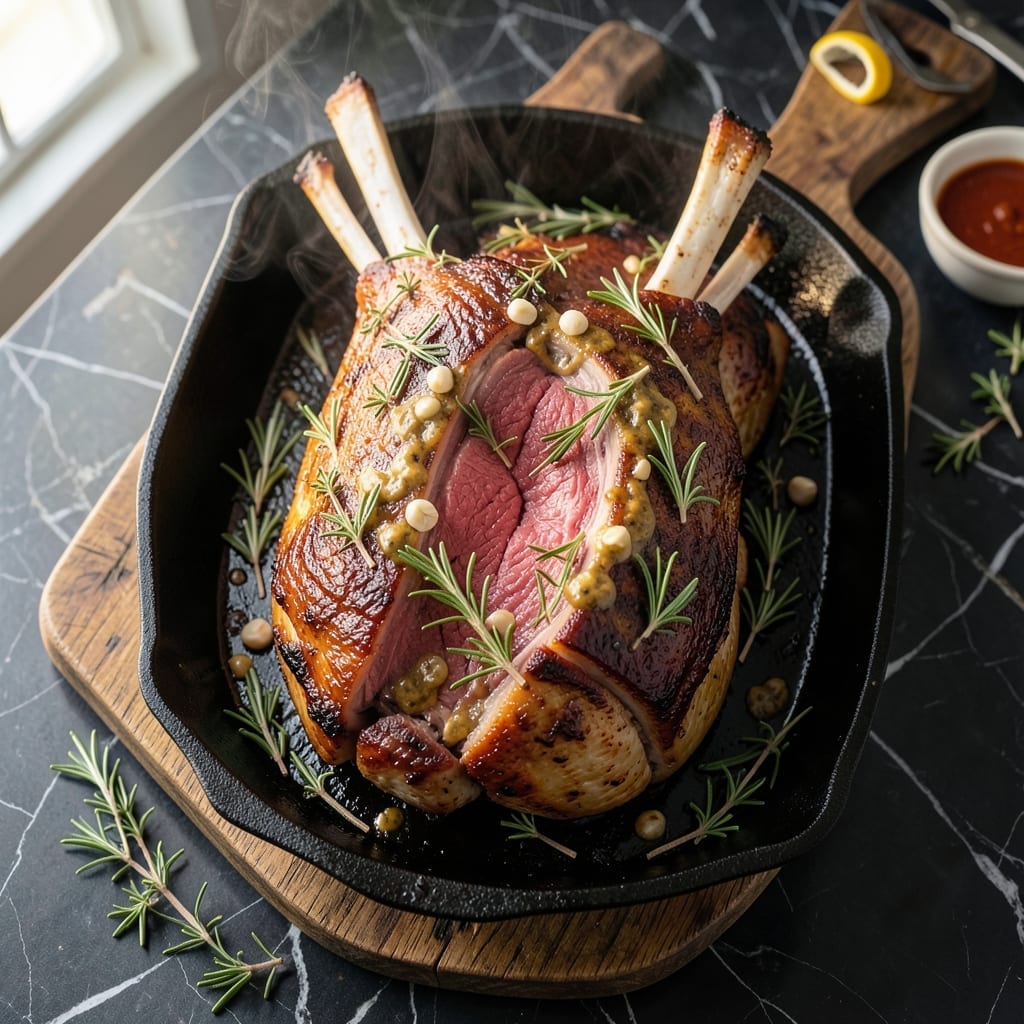
This standing rib roast delivers a holiday-worthy centerpiece with minimal effort and maximum flavor. The herb crust creates a fragrant seal that locks in juices while adding layers of aromatic complexity to every bite.
I’ve adapted classic techniques to ensure foolproof results, focusing on even cooking and a perfectly crispy exterior. A meat thermometer is your best tool here, guaranteeing precision without guesswork.
The roast emerges from the oven with a golden-brown crust and tender, juicy meat that slices beautifully. Serve it with pan juices for a rich, savory finish that elevates the entire meal.
Ideal for special occasions, this dish combines tradition with reliability. The results speak for themselves.
Ingredients for Foolproof Standing Rib Roast Recipe Paula Deen
Prime rib, fresh herbs, and a few pantry staples create this showstopping centerpiece.
| Ingredient | Amount | Notes |
|---|---|---|
| Standing Rib Roast 🥩 | 4 lb | Bone-in, prime grade preferred |
| Kosher Salt 🧂 | 2 tbsp | Diamond Crystal brand recommended |
| Freshly Ground Black Pepper 🌶️ | 1 tbsp | Coarse grind preferred |
| Fresh Rosemary 🌿 | 3 tbsp | Finely chopped, stems discarded |
| Fresh Thyme 🍃 | 2 tbsp | Leaves stripped from stems |
| Garlic Cloves 🧄 | 6 cloves | Minced for herb crust |
| Dijon Mustard 🟡 | 3 tbsp | For crust adhesion |
| Unsalted Butter 🧈 | 4 tbsp | Softened to room temperature |
| Red Wine 🍷 | 1 cup | Dry variety for pan sauce |
| Beef Stock 💧 | 2 cups | Low-sodium preferred |
| Shallots 🧅 | 2 whole | Finely diced for sauce |
| All-Purpose Flour 🌾 | 1 tbsp | For sauce thickening |
| Olive Oil 🫒 | 2 tbsp | Extra-virgin for searing |
[recipe_ingredient_scaler]
The roast is the star here. Prime grade from Whole Foods or a trusted butcher gives you the best marbling (that fat = flavor). Bone-in stands up better during cooking and adds richness to the pan juices. If you’re serving a crowd, ask for a 7-bone roast—it’s impressive and feeds 12-14. Let it sit at room temp for 2 hours before cooking—don’t skip this (cold meat cooks unevenly).
No prime grade at your store? Choice grade works too—just don’t overcook it. Fresh herbs are non-negotiable here (dried won’t give you that vibrant crust), but you can swap rosemary for sage if that’s what’s fresh. Out of Dijon? Whole-grain mustard adds a nice texture. For the wine, any dry red works—Cabernet or Merlot are safe bets (or whatever you’d drink).
Leftovers? They make killer sandwiches. Wrap the roast tightly—keeps 4-5 days in the fridge, freezes beautifully for 3 months. The pan sauce is gold—strain it and freeze in ice cube trays for future use (trust me, you’ll want extra).
Why You’ll Love This Recipe
- Set It & Forget: I rub the roast with salt, pepper, rosemary, and thyme, then let the oven do all the work.
- Herb-Crusted Perfection: That mix of fresh rosemary and thyme with the beef’s natural richness? Ridiculously good.
- Holiday Hero: This is my go-to for Christmas, Easter, or even a fancy Sunday dinner with the in-laws.
- Leftovers for Days: One roast feeds us for two nights—sandwiches the next day taste even better.
Step-by-Step Instructions for Herb-Crusted Standing Rib Roast
Here’s my no-fail method for a showstopping roast that’ll impress your holiday guests.
Step 1: Prepare the Herb Crust and Season the Roast
Let the standing rib roast sit at room temperature for 2 hours before cooking—this ensures even roasting. Meanwhile, in a small bowl, combine the kosher salt, freshly ground black pepper, fresh rosemary, fresh thyme, minced garlic cloves, and dijon mustard to form a thick paste.
Rub this herb mixture all over the standing rib roast, pressing it into the meat so it adheres well. The dijon mustard acts as a glue, helping the crust stay put during cooking. Place the roast bone-side down on a rack in a roasting pan.
Step 2: Sear the Roast for a Flavorful Crust
Preheat your oven to 450°F. Heat the olive oil in a large skillet over high heat until shimmering. Sear the standing rib roast on all sides for 2-3 minutes per side until deeply browned. This step builds a flavorful crust and locks in juices.
Transfer the roast back to the roasting pan, fat-side up. The searing process should leave you with a beautifully caramelized exterior. Don’t skip this step—it’s what gives the roast its rich, complex flavor.
Step 3: Roast to Perfect Doneness
Place the roasting pan in the preheated oven. Roast for 15 minutes at 450°F, then reduce the heat to 325°F and continue roasting. For medium-rare (which I recommend), cook until an instant-read thermometer inserted into the thickest part of the meat registers 120-125°F.
This typically takes about 1.5 to 2 hours total, but start checking at the 1.5-hour mark since ovens vary. The bones act as a natural rack, allowing heat to circulate evenly around the roast.
Step 4: Rest and Make the Pan Sauce
Transfer the roast to a cutting board and tent loosely with foil. Let it rest for 20-30 minutes—this allows the juices to redistribute, ensuring every slice is moist and flavorful. Meanwhile, place the roasting pan on the stovetop over medium heat.
Add the diced shallots to the pan and cook for 2-3 minutes until softened. Stir in the all-purpose flour to create a roux, then gradually whisk in the red wine and beef stock. Simmer for 5-7 minutes until the sauce thickens slightly. Finish by whisking in the unsalted butter for a glossy, rich pan sauce.
Step 5: Carve and Serve
After resting, carve the roast between the ribs into thick slices. The meat should be rosy pink in the center with a beautifully browned crust. Arrange the slices on a platter and spoon some of the pan sauce over the top, reserving the rest to serve on the side.
This roast is ready to take center stage at your holiday table. Each slice should be tender, juicy, and packed with herby, garlicky flavor, perfectly complemented by the rich red wine pan sauce.
Pro Tips For Making Foolproof Standing Rib Roast Recipe Paula Deen
- Dry the Roast: Pat the rib roast completely dry with paper towels before seasoning—I learned this the hard way after my first few attempts had a steamed, pale crust instead of that perfect brown sear.
- Season Overnight: Rub the roast with kosher salt, pepper, rosemary, and thyme the night before cooking. Sounds weird, but it works: the flavors penetrate deeper and the salt draws out moisture for a better crust.
- Start Hot, Finish Low: Sear the roast at 450°F for 20 minutes, then drop the heat to 325°F to finish. My grandmother swore by this, and she was right: it locks in juices while building a rich, dark crust.
- Rest Under Foil: Let the roast rest for at least 15-20 minutes under foil after pulling it from the oven—this isn’t the prettiest method, but it’s the tastiest, as it redistributes the juices.
Health Benefits of This Dish
Rich in Protein
This roast delivers a substantial 40-50 grams of protein per serving, supporting muscle repair and growth. High-quality protein like this helps keep you feeling full and energized, making it perfect for special occasions and hearty family meals. 💪
Iron and Zinc Boost
Beef is an excellent source of heme iron, which your body absorbs more efficiently than plant-based iron. A single serving provides about 20% of your daily iron needs, along with immune-supporting zinc. This helps maintain energy levels and overall vitality.
B Vitamin Powerhouse
This dish is packed with B vitamins, including B12, B6, and niacin, which are essential for energy metabolism and brain function. These nutrients help convert food into energy and support a healthy nervous system.
Healthy Fats
The marbling in prime rib provides monounsaturated fats similar to those in olive oil. While it’s still important to enjoy in moderation, these fats contribute to heart health and provide a rich, satisfying flavor that makes the dish so indulgent. 💛
Low-Carb Option
With virtually no carbohydrates, this roast fits perfectly into low-carb or keto diets. It’s a great way to enjoy a celebratory meal without the carb-heavy sides, letting the rich, meaty flavors shine on their own.
Collagen and Amino Acids
Connective tissues in the roast break down during cooking, releasing collagen and essential amino acids. These support skin health, joint function, and overall wellness, making every bite as nourishing as it is delicious.
Nutrition Facts
Frequently Asked Questions
What internal temperature should I aim for?
For perfect medium-rare, remove the roast when it hits 120-125°F. The temperature will rise to 130-135°F during resting. Use a meat thermometer for accuracy—it’s the only way to guarantee foolproof results.
Can I prepare this a day ahead?
Yes! Season and crust the roast up to 24 hours in advance. Keep it uncovered in the fridge to dry the surface for better browning. Let it sit at room temp for 2 hours before cooking.
Why is my roast unevenly cooked?
Uneven cooking usually means the roast was cold when it went in. Always let it temper at room temp first. Also, ensure your oven rack is centered and the pan isn’t overcrowded.
How do I store leftovers?
Wrap slices tightly in foil or place in an airtight container. They’ll keep in the fridge for 4-5 days or freeze for up to 3 months. Reheat gently in the oven with a splash of beef stock.

Trained in classic French technique but raised on slow-cooked ribs and spicy rubs, she blends culinary skill with smoke and soul.
- Recipe for Boneless Pork Chops in Cast Iron Skillet: Sear and Baste to Juicy Perfection - October 3, 2026
- Recipe for Boneless Cross Rib Roast: Slow-Roasted Beef with Herb Crust - October 3, 2026
- Hamburgers in Sauce Recipe Crock Pot: Slow-Cooked Savory Delight - October 3, 2026