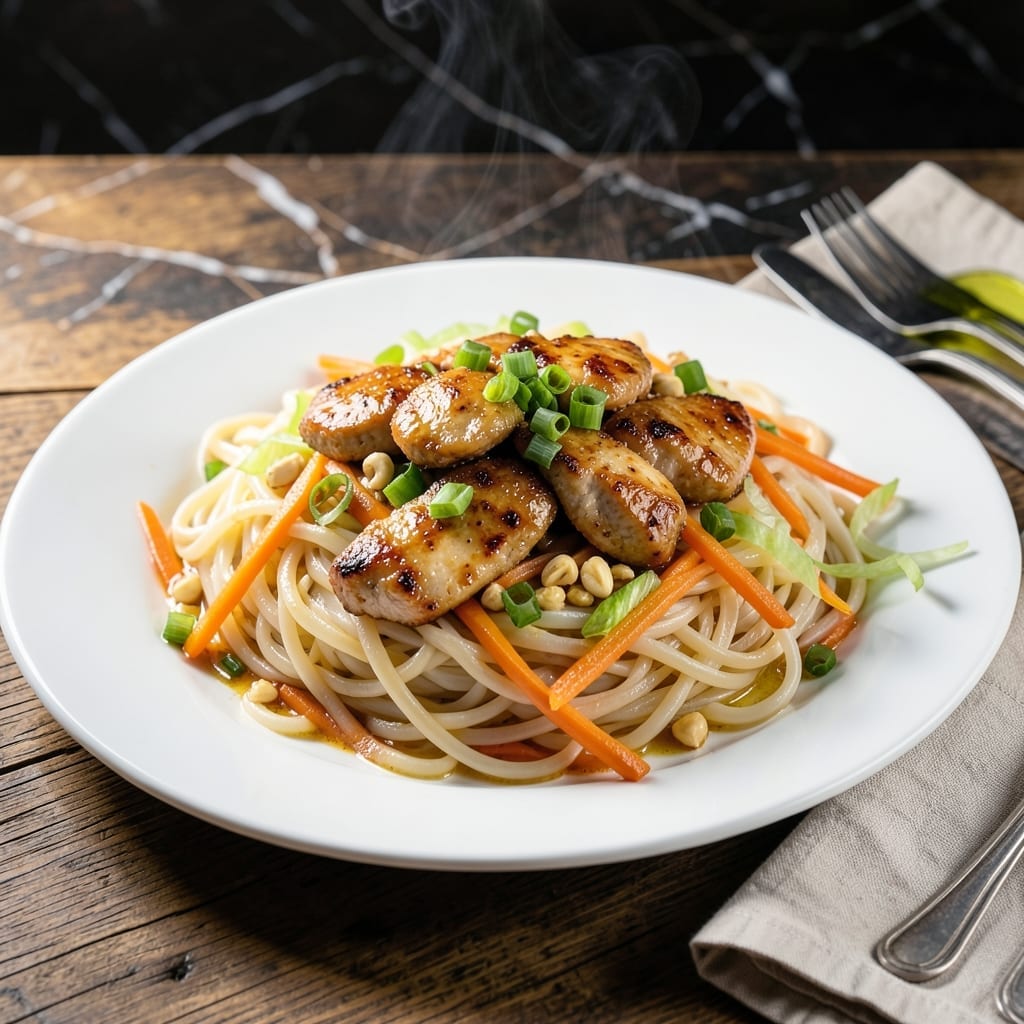
This streamlined approach brings authentic Filipino flavors to your kitchen without the complexity. I’ve refined the traditional method to maintain rich taste while simplifying the process for home cooks.
The dish combines thin rice noodles with vegetables, protein, and a savory sauce that captures the essence of classic pancit. Each bite delivers a balance of textures and authentic flavors that honor the original.
With easy steps and accessible ingredients, you’ll achieve restaurant-quality results at home. The noodles absorb the sauce beautifully, creating a satisfying and flavorful dish.
Perfect for gatherings or a comforting weeknight meal. Here’s how to make it.
Ingredients for Easy Pancit Recipe Filipino
Accessible ingredients deliver authentic Filipino flavors in every bite of this noodle dish.
| Ingredient | Amount | Notes |
|---|---|---|
| Rice Stick Noodles 🍜 | 8 oz | Thin variety, also called pancit canton |
| Chicken Breast 🍗 | 1 lb | Boneless, skinless, thinly sliced |
| Carrots 🥕 | 2 whole | Julienne cut for texture |
| Green Cabbage 🥬 | 2 cups | Thinly shredded for quick cooking |
| Green Onions 🧅 | 4 whole | Thinly sliced, whites and greens separated |
| Garlic Cloves 🧄 | 4 cloves | Minced for aromatic base |
| Soy Sauce 🫒 | ⅓ cup | Low-sodium preferred for balance |
| Oyster Sauce 🫒 | 3 tbsp | Vegetarian oyster sauce works too |
| Chicken Broth 🥫 | 2 cups | Low-sodium for controlled seasoning |
| Calamansi or Lime 🍋 | 2 whole | Juiced for bright acidity |
| Vegetable Oil 🫒 | 3 tbsp | High smoke point for stir-frying |
| Ground Black Pepper 🌶️ | ½ tsp | Freshly ground for best flavor |
[recipe_ingredient_scaler]
The rice noodles are non-negotiable—look for the thin variety labeled pancit canton at any Asian market or the international aisle. Chicken breast gives lean protein, but thighs stay juicier if you don’t mind a bit more fat. For the oyster sauce, Maekrua or Lee Kum Kee are solid brands you’ll find at most grocery stores. Fresh calamansi is ideal (that tiny Filipino citrus), but lime works perfectly fine if you can’t source it.
No chicken? Shrimp or thinly sliced pork are classic alternatives. Skip the meat entirely for a veggie version—just add extra cabbage and carrots. Low-sodium soy sauce is key here since the dish reduces; regular can get too salty. Vegetarian oyster sauce (made from mushrooms) keeps it meat-free but still packed with umami. The green onions add freshness—don’t skip them, even if you’re tempted.
Noodles cook fast once soaked, so prep everything first (that’s the French term ‘mise en place’—fancy, but useful). Leftovers keep 3-4 days in the fridge and actually taste better the next day. Reheat with a splash of water to loosen the sauce.
Why You’ll Love This Recipe
- One Pot Wonder: I can soak the rice noodles while prepping the chicken and veggies—no extra pots, no fuss.
- Savory Umami Bomb: The chicken soaks up the soy-garlic sauce, and those crisp cabbage edges? Pure comfort in every bite.
- Crowd-Pleasing Flexibility: I’ve served this at potlucks and weeknight dinners—always a hit, and the leftovers taste even better the next day.
- Budget-Friendly Feast: A pound of noodles and a couple of chicken breasts stretch to feed six, and honestly, it feels like a steal.
Step-by-Step Instructions for Pancit Noodle Stir-Fry
Here’s my tested method for creating this Filipino classic with minimal effort and maximum flavor.
Step 1: Prep the Noodles and Protein
Soak the 8 oz Rice Stick Noodles in warm water for 10-15 minutes until pliable but still slightly firm. This prevents them from turning mushy during stir-frying. Drain well and set aside.
Meanwhile, slice the 1 lb Chicken Breast into thin strips. Season lightly with 0.5 tsp Ground Black Pepper—I’ve found this small amount enhances the chicken flavor without overpowering the dish.
Step 2: Stir-Fry the Aromatics and Vegetables
Heat 3 tbsp Vegetable Oil in a large wok or skillet over medium-high heat. Add the minced 4 cloves Garlic Cloves and the white parts of the 4 whole Green Onions. Sauté for 30 seconds until fragrant.
Toss in the 2 whole Carrots (julienned) and 2 cups Green Cabbage (shredded). Stir-fry for 3-4 minutes until the cabbage wilts slightly but retains its bright color. The carrots should soften but keep a slight crunch for texture contrast.
Step 3: Cook the Chicken and Combine
Push the vegetables to one side and add the seasoned chicken. Cook for 4-5 minutes until the pieces are no longer pink and just cooked through. Then combine everything in the pan.
Pour in the 0.33 cup Soy Sauce, 3 tbsp Oyster Sauce, and 2 cups Chicken Broth. Bring to a gentle simmer—this creates the savory base that defines authentic pancit flavor.
Step 4: Finish with Noodles and Final Touches
Add the drained noodles to the pan. Using tongs, gently toss everything together for 2-3 minutes until the noodles absorb most of the liquid and become tender. Avoid over-stirring to prevent breaking the noodles.
Squeeze the juice from 2 whole Calamansi or Lime over the pancit. This adds the bright, citrusy note that balances the rich sauces. Toss once more to distribute the juice evenly.
Step 5: Garnish and Serve
Transfer the pancit to a serving platter. Top with the green parts of the 4 whole Green Onions you set aside earlier. The vibrant green color makes the dish visually appealing.
Serve immediately while hot. The noodles should be tender with a slight chew, the vegetables crisp-tender, and the chicken perfectly cooked. Each bite delivers that signature mix of savory, slightly sweet, and tangy flavors that makes pancit so beloved.
Pro Tips For Making Easy Pancit Recipe Filipino
- Soak Noodles First: Cover rice sticks in warm water for 8-10 minutes until pliable but still firm—I learned this the hard way after ending up with mushy noodles that turned to paste in the wok.
- Slice Chicken Thin: Cut the breast into ¼-inch strips so it cooks through in under 3 minutes; any thicker and it’ll dry out before the veggies are ready.
- Cabbage Last: Add the green cabbage in the final 2 minutes of stir-frying—it wilts fast and stays crisp if you don’t crowd it early.
- Use Chicken Stock: Swap plain water for 1 cup of chicken stock when tossing everything together; it adds depth without extra effort.
Perfect Pairings for This Dish
Traditional Sides
Serve with steamed white rice to soak up the flavorful sauce. I love adding at least ½ cup per person for a hearty meal. The rice balances the dish’s savory notes beautifully.
Filipino Favorites
Lumpia (Filipino spring rolls) make an excellent crispy companion. I recommend serving 2-3 pieces per person with a sweet chili dipping sauce for contrast.
Fresh Accompaniments
A simple cucumber and tomato salad with calamansi dressing cuts through the richness. Toss 1 cup diced cucumber with 1 cup cherry tomatoes and a squeeze of lime. 🥗
Beverage Pairings
Calamansi juice is the classic choice—mix ¼ cup calamansi juice with 1 cup cold water and 2 tbsp sugar. For beer lovers, a crisp San Miguel Light complements the savory flavors perfectly. 🍺
Dessert Options
End with leche flan or halo-halo for a true Filipino feast. The creamy flan contrasts nicely with the stir-fry’s textures, while halo-halo offers a refreshing, colorful finish.
Quick Garnishes
Top with extra calamansi wedges or a sprinkle of toasted garlic for added aroma. These simple touches elevate the dish with minimal effort and maximum flavor impact.
Nutrition Facts
Frequently Asked Questions
What noodles work best for this dish?
Use thin rice stick noodles labeled pancit canton. Soak them in warm water for 10-15 minutes before cooking. Substitutes like vermicelli can work but may alter the texture slightly.
Can I make this vegetarian?
Replace chicken with tofu or mushrooms and use vegetarian oyster sauce. Add extra veggies like bell peppers or snap peas for more texture and color.
What if my noodles turn out mushy?
This usually happens if they’re soaked too long or overcooked. Drain them well after soaking and stir-fry just until tender, about 2-3 minutes. Keep them slightly firm for best results.
How do I store leftovers?
Keep in an airtight container in the fridge for up to 3-4 days. Reheat with a splash of water or broth to refresh the noodles and prevent drying out.

Trained in classic French technique but raised on slow-cooked ribs and spicy rubs, she blends culinary skill with smoke and soul.
- Recipe for Boneless Pork Chops in Cast Iron Skillet: Sear and Baste to Juicy Perfection - October 3, 2026
- Recipe for Boneless Cross Rib Roast: Slow-Roasted Beef with Herb Crust - October 3, 2026
- Hamburgers in Sauce Recipe Crock Pot: Slow-Cooked Savory Delight - October 3, 2026