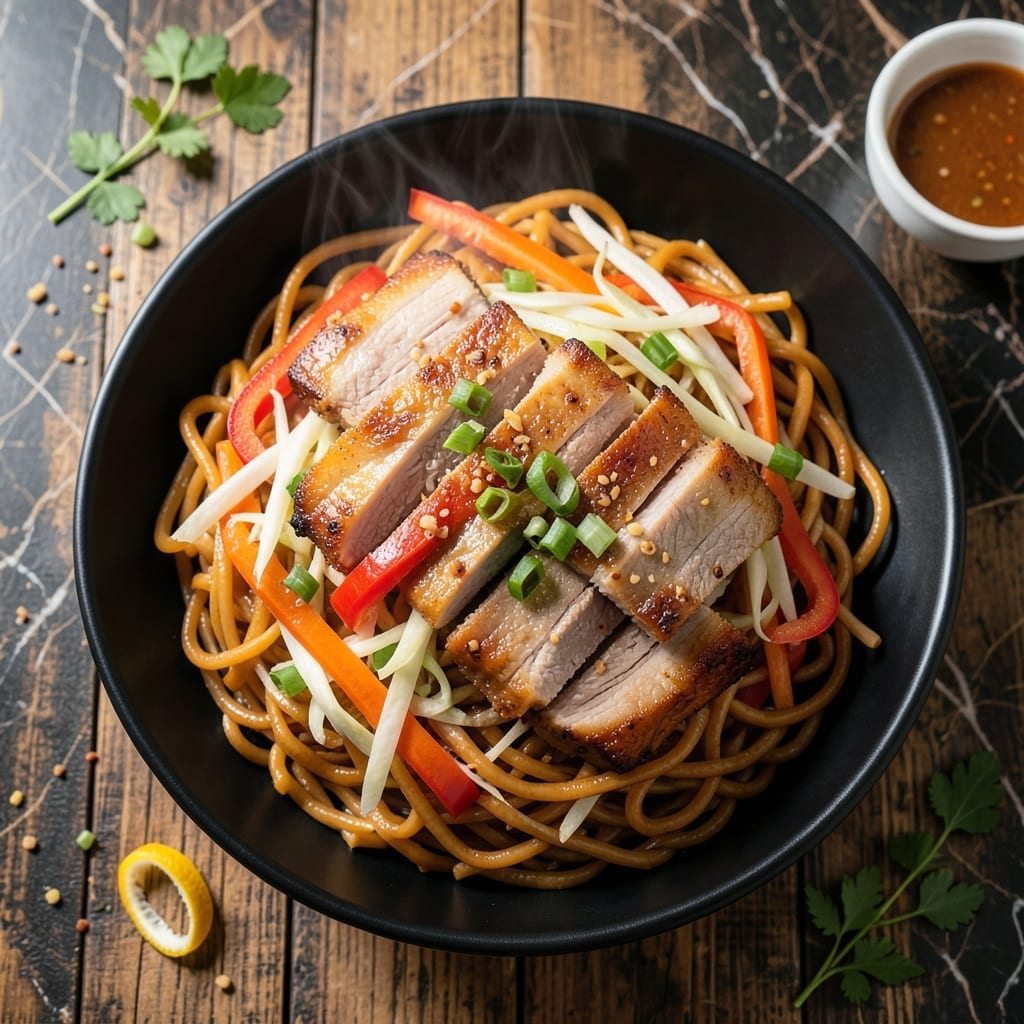
I developed this method after years of takeout disappointments and too many greasy pans. The secret lies in proper prep—everything ready before the wok hits the heat.
This approach delivers restaurant-quality results without the complexity. Thinly sliced pork, fresh vegetables, and chewy noodles come together in minutes when you follow the sequence precisely.
You’ll achieve that signature smoky wok flavor with perfectly tender pork and vegetables that retain their crispness. The sauce coats every strand of noodle without turning soggy.
No special equipment required—just a hot pan and a willingness to move quickly. The process is straightforward, but the results taste anything but simple.
Ingredients for Easy Pork Chow Mein Recipe with Noodles
Thinly sliced pork, crisp veggies, and chewy noodles ready for the wok.
| Ingredient | Amount | Notes |
|---|---|---|
| Pork Shoulder 🐖 | 1 lb | Thinly sliced, boneless |
| Chow Mein Noodles 🍜 | 8 oz | Fresh or dried, cooked |
| Napa Cabbage 🥬 | 2 cups | Thinly shredded |
| Carrots 🥕 | 2 whole | Julienned or thinly sliced |
| Bell Peppers 🌶️ | 2 whole | Red or green, sliced |
| Green Onions 🧅 | 4 whole | Sliced, white and green parts separated |
| Garlic Cloves 🧄 | 3 cloves | Minced finely |
| Fresh Ginger 🌿 | 1 tbsp | Grated or minced |
| Soy Sauce 🫒 | ⅓ cup | Low-sodium preferred |
| Oyster Sauce 🫒 | 2 tbsp | Vegan oyster sauce if needed |
| Sesame Oil 🫒 | 1 tbsp | Toasted, for finishing |
| Vegetable Oil 🫒 | 2 tbsp | High smoke point, for stir-frying |
| Cornstarch 🌾 | 1 tbsp | For velveting pork |
| Salt 🧂 | ½ tsp | Adjust to taste |
| Black Pepper 🌶️ | ¼ tsp | Freshly ground |
[recipe_ingredient_scaler]
The pork is key here. Pork shoulder stays juicy even when sliced thin—avoid lean cuts like tenderloin (they dry out fast). Most Asian markets will slice it paper-thin for you if you ask. Costco has great pre-sliced pork for stir-fry too. Look for marbling—that fat keeps it tender. For the noodles, fresh chow mein noodles (in the refrigerated section) cook in 2 minutes, but dried works just as well (boil first, then stir-fry).
No oyster sauce? Hoisin plus a dash of soy gets you close, but it’s sweeter. Vegetable swap: snow peas or bean sprouts add great crunch. Short on time? Pre-shredded coleslaw mix works for cabbage and carrots. The ginger and garlic are non-negotiable though—fresh only, no powdered versions. If your soy sauce is too salty, dilute it with a little water.
Prep everything before heating the wok—this moves fast. Leftovers keep 3-4 days in the fridge, but the noodles soften. Freezing? Not recommended (they turn mushy). Reheat in a dry pan to crisp back up. Always taste before serving—add a final splash of sesame oil if needed.
Why You’ll Love This Recipe
- One Pan Wonder: I toss everything in a single skillet—pork shoulder, cabbage, and those chewy chow mein noodles—so cleanup’s a breeze.
- Umami Bomb: The pork soaks up all the garlic and soy, while the bell peppers add this sweet crunch that makes every bite ridiculous.
- Weeknight Hero: I make a double batch on Sunday, and it reheats beautifully for lunches all week.
- Budget Stretcher: Pork shoulder is cheap, and with all the veggies, it feeds my whole family without breaking the bank.
Step-by-Step Instructions for Wok-Tossed Pork Chow Mein
Here’s my no-fail method for achieving that perfect restaurant-style texture at home.
Step 1: Velvet the Pork for Maximum Tenderness
Slice the 1 lb Pork Shoulder into thin strips against the grain. In a bowl, toss the pork with 1 tbsp Cornstarch, 0.5 tsp Salt, and 0.25 tsp Black Pepper until evenly coated. This velveting technique ensures the pork stays juicy and tender during high-heat cooking.
Let the pork marinate for 15 minutes while you prep the remaining ingredients. The cornstarch creates a protective layer that locks in moisture, and you’ll notice the pork becomes slightly opaque as it absorbs the starch.
Step 2: Stir-Fry Aromatics and Vegetables
Heat 2 tbsp Vegetable Oil in a wok or large skillet over high heat until shimmering. Add the 3 cloves Garlic Cloves and 1 tbsp Fresh Ginger, stirring constantly for 30 seconds until fragrant but not browned. I always mince the garlic finely to prevent burning.
Immediately add the 2 whole Bell Peppers and 2 whole Carrots, stir-frying for 3-4 minutes until the vegetables are crisp-tender and the carrots begin to soften. The bell peppers should retain some bite—this provides the perfect contrast to the tender pork.
Step 3: Cook Pork and Combine with Vegetables
Add the velveted pork to the wok, spreading it in a single layer. Let it sear undisturbed for 1-2 minutes until the edges turn white and begin to brown. Stir-fry for another 2-3 minutes until the pork is cooked through and no longer pink.
Push the pork and vegetables to one side of the wok. Add the 2 cups Napa Cabbage and 4 whole Green Onions (white parts) to the empty space, stir-frying for 1-2 minutes until the cabbage wilts slightly but retains its vibrant color.
Step 4: Sauce and Noodle Integration
Pour the 0.33 cup Soy Sauce and 2 tbsp Oyster Sauce over the pork and vegetables. Stir everything together, coating evenly. The sauce should sizzle and thicken slightly as it hits the hot wok.
Add the 8 oz Chow Mein Noodles, tossing gently with tongs to combine without breaking the noodles. Cook for 2-3 minutes until everything is heated through and the noodles absorb the sauce. The noodles should be glossy and coated, not dry or sticking together.
Step 5: Finish and Serve with Freshness
Remove from heat and drizzle with 1 tbsp Sesame Oil. Toss one final time to distribute the aromatic oil. The sesame oil adds a nutty depth that ties all the flavors together.
Garnish with the reserved green onion tops. Serve immediately while hot—the noodles are best right after cooking when they’re at their most tender and the flavors are most vibrant.
Pro Tips For Making Easy Pork Chow Mein Recipe With Noodles
- Parboil the Noodles: Cook the chow mein noodles for just 2 minutes in boiling water before stir-frying—I learned this the hard way after ending up with gummy, overcooked strands. They’ll finish perfectly in the wok with the other ingredients.
- Slice Pork Thin: Cut the pork shoulder into ¼-inch strips against the grain. This makes a real difference in tenderness and ensures quick, even cooking when tossed with the veggies.
- Skip the Overcrowding: Stir-fry in batches if your wok isn’t huge—steer clear of dumping everything in at once, or you’ll steam the pork and noodles instead of searing them.
- Prep Veggies First: Have your napa cabbage, carrots, and bell peppers all sliced and ready before you start cooking. Sounds obvious, but after burning two batches while chopping mid-process, I finally got the message.
Pro Cooking Tips for Perfect Results
Wok Heat Control
Your wok needs to be screaming hot before anything touches it—heat 2 tbsp vegetable oil until it shimmers and a drop of water dances. I learned the hard way that medium heat just steams your ingredients. High heat creates that signature wok hei flavor. 🔥
Prep Everything First
Chow mein moves fast. Have every ingredient prepped and within reach before lighting the burner. I use small bowls for garlic, ginger, and sauces. This is my grandmother’s “mise en place” lesson that saved me from countless burned dinners.
Velveting Technique
The cornstarch coating on pork isn’t just for thickening—it creates a protective barrier that keeps the meat juicy. Toss 1 lb pork shoulder with 1 tbsp cornstarch and let sit 15 minutes. You’ll see the difference in tenderness immediately.
Stir-Fry Sequence
Cook aromatics first, then vegetables, then pork. This builds layers of flavor. I always add napa cabbage last since it wilts quickly. The 3-4 minutes for bell peppers and carrots gives them perfect crisp-tender texture.
Sauce Timing
Add soy sauce and oyster sauce only after pork is cooked through. Pouring them earlier can cause steaming instead of searing. The sauce should sizzle and reduce slightly, coating every noodle perfectly.
No Crowding
Work in batches if needed—overcrowding lowers wok temperature and steams food. I use a 14-inch wok for this recipe. Spread ingredients in a single layer for proper browning and that elusive smoky flavor. 💡
Nutrition Facts
Frequently Asked Questions
Can I use chicken instead of pork?
Substitute 1 lb boneless chicken thighs for pork. Slice thinly and velvet with cornstarch just like the pork. Chicken cooks faster, so reduce stir-fry time to 2-3 minutes total.
How do I prevent soggy noodles?
Cook noodles al dente first, then rinse under cold water to stop cooking. Stir-fry them last with just enough sauce to coat. Keep heat at high to evaporate excess moisture quickly.
What if I don’t have a wok?
A large, heavy skillet works fine. Use high heat and cook in batches to avoid crowding. A 12-inch skillet is ideal for this quantity. The flavor will still be delicious!
Can I make this ahead of time?
Prep all ingredients the night before, but cook just before serving. Leftovers keep 3-4 days in the fridge. Reheat in a dry pan to restore some crispness.

Trained in classic French technique but raised on slow-cooked ribs and spicy rubs, she blends culinary skill with smoke and soul.
- Recipe for Boneless Pork Chops in Cast Iron Skillet: Sear and Baste to Juicy Perfection - October 3, 2026
- Recipe for Boneless Cross Rib Roast: Slow-Roasted Beef with Herb Crust - October 3, 2026
- Hamburgers in Sauce Recipe Crock Pot: Slow-Cooked Savory Delight - October 3, 2026