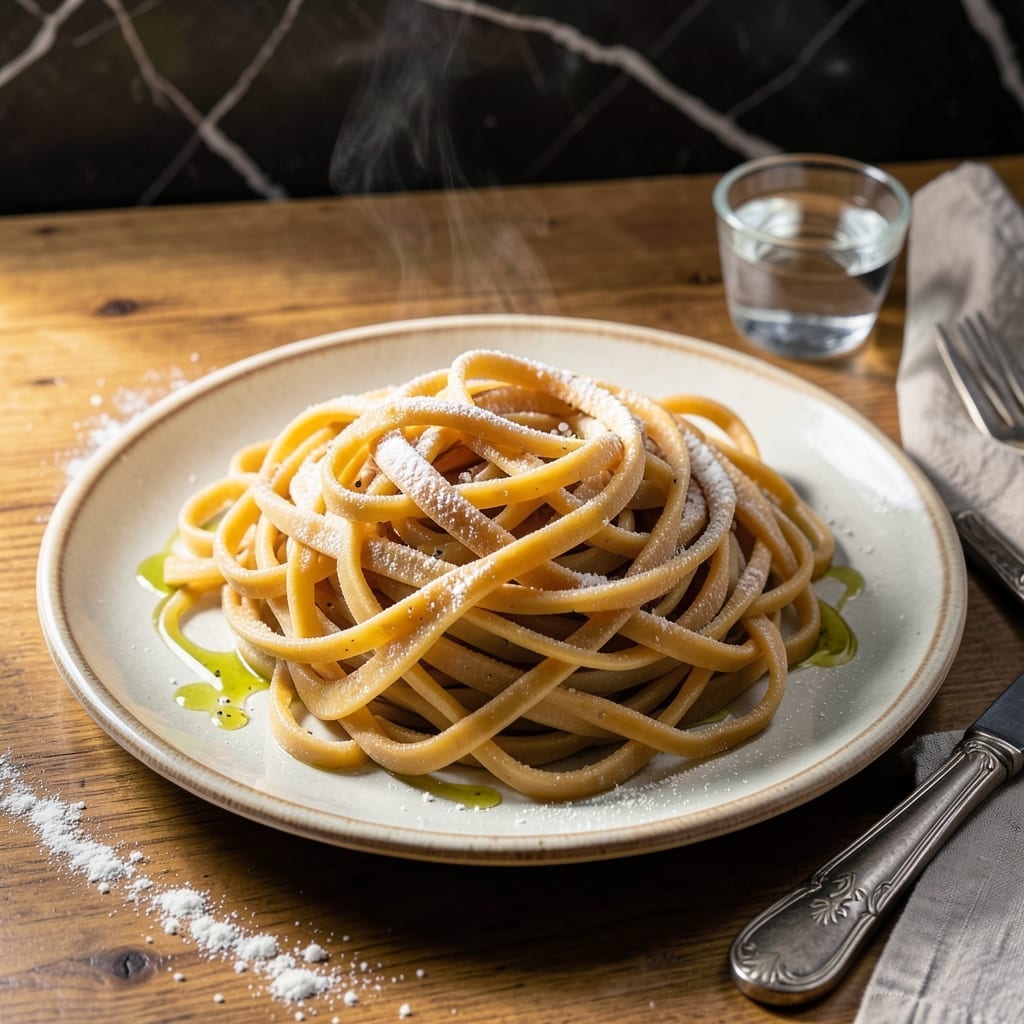
There’s an art to making silky egg noodles at home, and a pasta machine makes it achievable for anyone. This method delivers consistent, uniform ribbons that cook evenly and taste far superior to store-bought versions.
The key is the dough ratio—just flour and eggs—kneaded until smooth and elastic. Letting it rest for 30 minutes relaxes the gluten, ensuring it rolls through the machine without springing back or tearing.
With precise machine settings, you’ll create paper-thin sheets ready for cutting into perfect noodles. The result is tender yet sturdy pasta that holds sauce beautifully, with a texture that’s impossible to replicate by hand.
Once mastered, this technique opens endless possibilities for fresh pasta dishes. The process is straightforward, rewarding, and well worth the minimal effort.
Ingredients for Egg Noodle Recipe for Pasta Machine
Just five ingredients transform into silky ribbons with pasta machine precision. Simple yet extraordinary.
| Ingredient | Amount | Notes |
|---|---|---|
| All-Purpose Flour 🌾 | 2 cups | Plus extra for dusting |
| Large Eggs 🥚 | 4 whole | Room temperature preferred |
| Sea Salt 🧂 | ½ tsp | Fine grain for even distribution |
| Olive Oil 🫒 | 1 tsp | Light for dough elasticity |
| Water 💧 | 1 tbsp | As needed for consistency |
[recipe_ingredient_scaler]
The flour is the foundation—King Arthur or Bob’s Red Mill deliver consistent results. Room temperature eggs incorporate more smoothly into the dough, preventing a dense texture. A fine grain sea salt, like Diamond Crystal, dissolves evenly. Use a light olive oil to avoid overpowering the delicate egg flavor. This is a minimalist recipe where quality matters.
No all-purpose flour? 00 flour at half the amount plus half bread flour works, though the texture will differ slightly. Out of eggs? Not much to swap here—this is an egg noodle after all. The olive oil can be replaced with another neutral oil like avocado or vegetable. If the dough feels too dry, add water 1 tsp at a time until it comes together.
Rest the dough 30 minutes before rolling—this is non-negotiable for silky results. Fresh noodles cook in 2-3 minutes once rolled, so have your sauce ready. Store uncooked dough wrapped tightly in plastic for up to 24 hours in the fridge, or freeze for 1 month.
Why You’ll Love This Recipe
- Roll and Cut: The pasta machine does half the work—just feed the dough through and watch perfect noodles form in seconds.
- Rich Egg Flavor: The large eggs give these noodles a deep, buttery taste that store-bought just can’t match.
- Freezer Friendly: I double the batch and freeze half for lazy days. Honestly, they reheat like fresh.
- Pantry Staples: All-purpose flour, eggs, and a pinch of salt—nothing fancy, just what I already have on hand.
Step-by-Step Instructions for Egg Noodles for Pasta Machine
Master the technique for creating perfectly smooth, elastic dough that rolls through your machine with precision.
Step 1: Combine Dry and Wet Ingredients
On a clean work surface, create a mound with the 2 cups All-Purpose Flour and make a well in the center. Add the 4 whole Large Eggs, 0.5 tsp Sea Salt, 1 tsp Olive Oil, and 1 tbsp Water to the well. This traditional method ensures even distribution of liquids throughout the flour.
Using a fork, gradually incorporate the flour into the wet ingredients, starting from the inner rim of the well and working outward. The mixture will transform from a sticky batter to shaggy clumps. Stop when the dough becomes too stiff for the fork—this prevents overworking at this early stage.
Step 2: Knead to Develop Gluten Structure
Dust your hands and work surface with additional all-purpose flour as needed. Transfer the shaggy dough to the floured surface and begin kneading. Push the dough away with the heel of your hand, fold it over, and rotate a quarter turn. Repeat this process for 8-10 minutes.
The dough will initially appear rough and dry, but as you work it, the gluten will develop, creating a smooth, elastic texture. You’ll know it’s ready when the surface feels silky and springs back when pressed with your finger. If it feels too dry, wet your hands slightly and continue kneading.
Step 3: Rest the Dough for Optimal Elasticity
Shape the kneaded dough into a ball and wrap it tightly in plastic wrap. Let it rest at room temperature for 30 minutes. This resting period allows the gluten strands to relax, making the dough more pliable and easier to roll thin without springing back.
During this time, the flour fully hydrates, and the dough’s consistency improves significantly. Don’t skip this step—resting is crucial for achieving those paper-thin sheets that are the hallmark of exceptional homemade pasta.
Step 4: Roll and Cut Using the Pasta Machine
Divide the rested dough into four equal portions. Flatten one portion with your hands and set your pasta machine to its widest setting. Pass the dough through, then fold it in thirds like a letter and repeat this process 2-3 times at the widest setting.
Gradually decrease the machine setting and pass the dough through once at each level until you reach your desired thickness (typically the second-to-last setting for egg noodles). Finally, run the sheet through the noodle cutter attachment. Dust the cut noodles lightly with flour to prevent sticking and repeat with the remaining dough portions.
Pro Tips For Making Egg Noodle Recipe For Pasta Machine
- Rest the Dough: After kneading, wrap the dough in plastic and let it sit at room temperature for at least 30 minutes—I learned this the hard way when my first batch kept springing back in the machine.
- Use Room Temp Eggs: Pull your eggs out of the fridge an hour before starting, or soak them in warm water for 10 minutes. Cold eggs make the dough fight you when rolling thin.
- Dust Lightly: Resist the urge to dump flour on your work surface. A light dusting is enough, or you’ll end up with dry, tough noodles instead of tender ones.
- Fold Before Thinning: Run the dough through the widest setting first, then fold it like a letter and repeat twice. Sounds tedious, but it guarantees smooth sheets every time—no more ragged edges.
Wine and Beer Pairings for This Dish
White Wine Harmony
A crisp Pinot Grigio from Northern Italy pairs beautifully with fresh egg noodles. The bright acidity cuts through the richness of the pasta while complementing its delicate egg flavor. I prefer Santa Margherita for its consistent quality. 🍷
Rich Red Options
For heartier preparations like beef stroganoff over your noodles, try a medium-bodied Chianti. Its cherry notes and earthy undertones balance the dish perfectly. Ruffino Aziano offers excellent value at around $15.
Sparkling Surprise
Prosecco’s light effervescence cleanses your palate between bites of buttery noodles. The subtle apple and pear flavors won’t overpower the pasta. Look for La Marca Prosecco at most grocery stores.
Beer Pairings
A crisp Pilsner like Stella Artois works wonderfully with egg noodles. The clean finish and mild bitterness complement the pasta’s richness without competing. For craft beer lovers, try Allagash Saison with its peppery notes. 🍺
Light Lager Choice
Peroni is my go-to Italian lager for pasta nights. Its light body and subtle hop character make it incredibly versatile. Serve it ice-cold to enhance the contrast with warm noodles.
Dessert Wine Twist
For an unexpected pairing, try a chilled glass of Moscato d’Asti with lightly sweetened noodle dishes. The gentle fizz and stone fruit flavors create a delightful contrast. 💫
Nutrition Facts
Frequently Asked Questions
Do I need special flour for pasta machine noodles?
All-purpose flour works perfectly for this recipe. For a slightly silkier texture, you can use half 00 flour and half bread flour, but it’s not required. The key is proper kneading and resting.
How thin should I roll the dough?
Most pasta machines have settings from 1 (thickest) to 8 (thinnest). For egg noodles, aim for setting 6 or 7 for that perfect balance of tenderness and sturdy texture.
Why does my dough keep springing back?
This usually means the gluten needs more resting time. If it’s still springy after 30 minutes, let it rest another 15-20 minutes. Also, ensure you’re not overworking the dough during kneading.
Can I make these noodles without a machine?
Yes, but it’s challenging to get uniform thickness. Use a rolling pin on a floured surface, rolling as thin as possible before cutting into strips. The texture won’t be quite as consistent.

Trained in classic French technique but raised on slow-cooked ribs and spicy rubs, she blends culinary skill with smoke and soul.
- Recipe for Boneless Pork Chops in Cast Iron Skillet: Sear and Baste to Juicy Perfection - October 3, 2026
- Recipe for Boneless Cross Rib Roast: Slow-Roasted Beef with Herb Crust - October 3, 2026
- Hamburgers in Sauce Recipe Crock Pot: Slow-Cooked Savory Delight - October 3, 2026