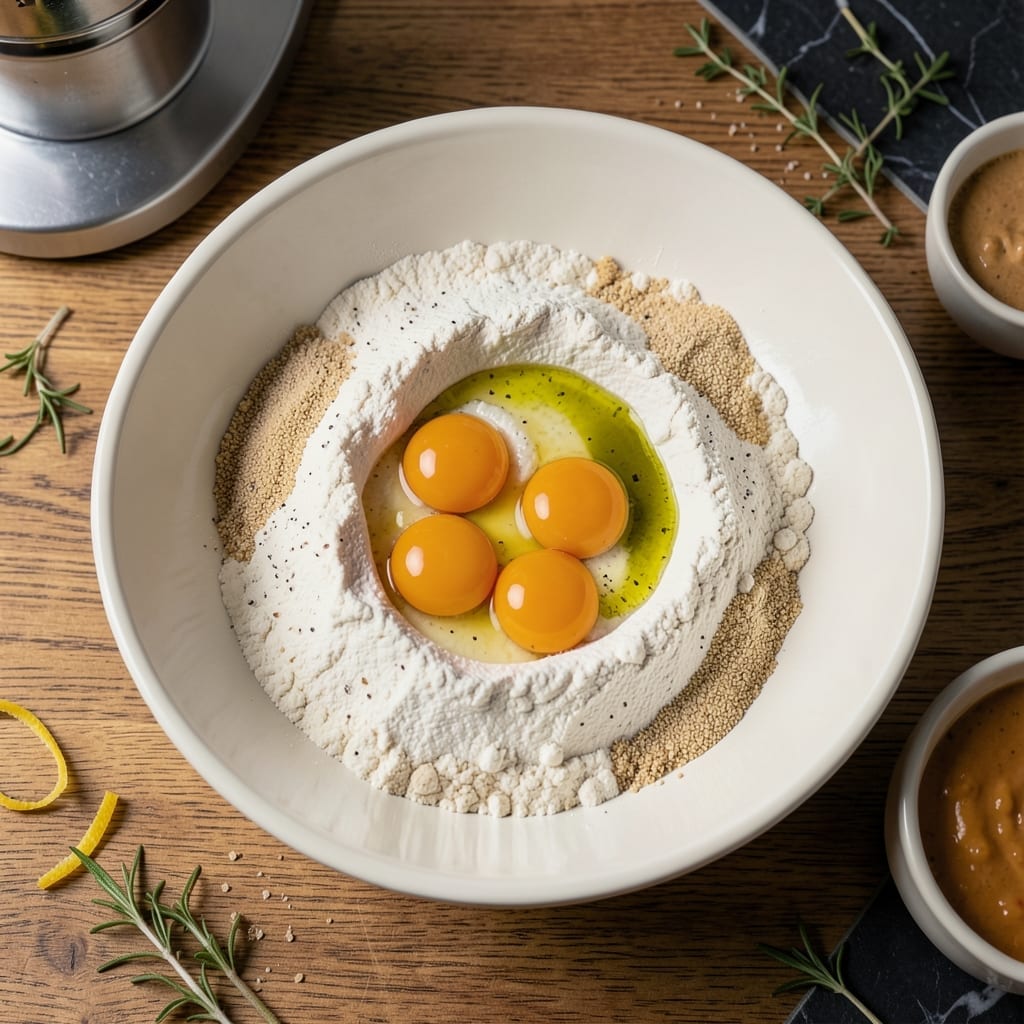
Making fresh egg pasta at home transforms any meal into something extraordinary. Your KitchenAid stand mixer does the heavy lifting, creating silky dough with minimal effort on your part.
The process is surprisingly simple: combine eggs and flour, let the mixer work its magic, then rest the dough. This method guarantees consistent results every time, with pasta that’s tender yet sturdy.
What you get is restaurant-quality pasta with that perfect bite, ready for any sauce or preparation. The dough comes together in minutes, then rests while you prep the rest of your meal.
No special skills required—just your stand mixer and a little patience. Here’s how to make it happen.
Ingredients for Egg Pasta Dough Recipe Kitchenaid
Six simple ingredients transform into silky, restaurant-quality pasta dough with your stand mixer.
| Ingredient | Amount | Notes |
|---|---|---|
| All-Purpose Flour 🌾 | 3 cups | 00 flour preferred for silkier texture |
| Large Eggs 🥚 | 4 whole | Room temperature for even mixing |
| Semolina Flour 🌾 | ½ cup | Adds authentic texture to dough |
| Sea Salt 🧂 | 1 tsp | Fine grain for even distribution |
| Extra-Virgin Olive Oil 🫒 | 1 tbsp | Adds subtle richness to dough |
| Water 💧 | 1 tbsp | For adjusting dough consistency |
[recipe_ingredient_scaler]
The flour is everything here. 00 flour is the gold standard (find it at Eataly or Amazon), but good old King Arthur all-purpose works beautifully too. Semolina adds that authentic pasta texture—don’t skip it. Eggs should be room temp (just set them out 30 minutes before starting). The olive oil isn’t traditional but makes the dough more forgiving (worth the extra minute).
No 00 flour? All-purpose is totally fine—just don’t overwork the dough. Fresh eggs make a difference, but store-bought work. The semolina can be swapped for more all-purpose in a pinch (texture will be slightly softer). If your dough feels dry, add water 1 tsp at a time. Too sticky? Dust with flour as you knead.
Dough rests best at room temp, covered with a damp towel. Use within 24 hours or freeze for 1 month (portion into balls first). Fresh pasta cooks in 2-3 minutes—watch it closely. The semolina flour keeps indefinitely in a cool, dark place (perfect pantry staple).
Why You’ll Love This Recipe
- Knead-Free Magic: I let my KitchenAid do the hard work—just toss in the flour, eggs, and semolina, then walk away.
- Rich, Earthy Depth: The semolina adds this nutty backbone that makes every bite taste handcrafted.
- Freezer-Friendly Staple: I double the batch, freeze half, and pull it out for lazy Sunday dinners or surprise guests.
- Budget Luxury: Honestly, five ingredients and pennies per serving beats any store-bought pasta I’ve tried.
Step-by-Step Instructions for Egg Pasta Dough Kitchenaid
Here’s the method. Straightforward, tested, works every time.
Step 1: Combine Dry Ingredients in Mixer Bowl
Attach the dough hook to your stand mixer. In the mixer bowl, combine the 3 cups All-Purpose Flour, 0.5 cup Semolina Flour, and 1 tsp Sea Salt.
Mix on low speed for about 30 seconds until the dry ingredients are evenly distributed. This step ensures the salt and semolina are incorporated throughout the flour, which prevents uneven texture in your final pasta.
Step 2: Add Wet Ingredients Gradually
Create a well in the center of the flour mixture. Add the 4 whole Large Eggs, 1 tbsp Extra-Virgin Olive Oil, and 1 tbsp Water to the well. I always use room temperature eggs for even mixing and better dough consistency.
Start the mixer on the lowest speed and let the dough hook incorporate the wet ingredients into the flour. After about 1 minute, you’ll see the mixture begin to come together into shaggy clumps. Resist the urge to increase the speed too early—this prevents flour from flying out of the bowl.
Step 3: Knead Until Smooth and Elastic
Increase the mixer speed to medium (setting 4-6 on most KitchenAid models) and let it knead the dough for 6-8 minutes. The dough will start to pull away from the sides of the bowl and form a smooth, elastic ball around the dough hook.
You’ll know it’s ready when the dough feels slightly tacky but not sticky, and springs back when you press it with your finger. If it feels too dry, add water 1 teaspoon at a time; if too wet, add all-purpose flour 1 tablespoon at a time.
Step 4: Rest the Dough for Optimal Texture
Turn the dough out onto a clean work surface and shape it into a ball. Wrap it tightly in plastic wrap and let it rest at room temperature for 30 minutes. This resting period allows the gluten to relax, making the dough easier to roll out.
The dough should feel smooth and pliable after resting. If it springs back when you try to roll it, it needs more resting time—give it another 10-15 minutes.
Step 5: Roll and Cut Your Pasta
Divide the dough into 4 equal portions for easier handling. Flatten each portion slightly with your hands before feeding it through your pasta roller on the widest setting. Fold the dough in thirds after each pass through the first two settings, like a letter, to develop strength and elasticity.
Gradually decrease the roller setting and pass the dough through once at each setting until you reach the desired thickness. For most pasta shapes, setting 5 or 6 works well. Cut into your preferred shape immediately after rolling to prevent the sheets from drying out and becoming brittle.
Pro Tips For Making Egg Pasta Dough Recipe Kitchenaid
- Knead Slowly: Let the KitchenAid do the work on low speed for 8-10 minutes—rushing it with high speed overheats the dough and makes it tough.
- Use Room Temp Eggs: I learned this the hard way—cold eggs straight from the fridge make the dough seize up and take forever to come together.
- Skip Over-Flouring: Resist the urge to dump in extra flour when the dough seems sticky; it often absorbs the last bit during kneading.
- Rest the Dough: After kneading, wrap it in plastic and give it a solid 30 minutes on the counter—this relaxes the gluten and makes rolling a breeze.
Common Mistakes When Making Great egg pasta dough recipe kitchenaid
Overmixing the Dough
Let your KitchenAid do the work, but don’t overdo it. Kneading beyond 8 minutes can overdevelop the gluten, making your pasta tough instead of tender. I stop the mixer as soon as the dough forms a smooth, elastic ball.
Using Cold Eggs
Room temperature eggs incorporate evenly into the flour. Cold eggs can cause the dough to seize up, creating a lumpy texture. I set my eggs out 30 minutes before starting to avoid this issue.
Skipping the Rest
Resting the dough for 30 minutes is non-negotiable. It relaxes the gluten, making the dough easier to roll out thinly. Without this step, you’ll fight the dough the entire time. 💡
Incorrect Flour Ratio
Too much flour makes dry, crumbly dough. Stick to 3 cups all-purpose and ½ cup semolina for the perfect balance. If your dough feels dry, add water 1 tsp at a time instead of more flour.
Wrong Mixer Attachment
Always use the dough hook, not the paddle or whisk. The hook’s shape is designed to knead dough effectively. Using the wrong attachment can lead to uneven mixing and a poor texture.
Rushing the Rolling
Thin pasta requires patience. Start on the widest setting and gradually decrease, folding the dough like a letter between passes. Skipping settings or rushing this process can tear your dough. 🔥
Nutrition Facts
Frequently Asked Questions
Do I need a special attachment for the stand mixer?
Always use the dough hook for this recipe. It’s designed to knead dough properly, while the paddle or whisk won’t give you the right texture.
Can I make this without a KitchenAid mixer?
Yes! Mix by hand on a clean surface, then knead for 8-10 minutes until smooth. It’s more work but just as effective.
Why does my dough keep springing back when rolling?
It needs more rest time. Let it sit covered for an extra 10-15 minutes to relax the gluten. This makes rolling much easier.
How thin should I roll the pasta?
For most shapes, setting 5 or 6 on a pasta machine works well. Go thinner for delicate pastas like angel hair, or slightly thicker for hearty shapes like pappardelle.

Trained in classic French technique but raised on slow-cooked ribs and spicy rubs, she blends culinary skill with smoke and soul.
- Recipe for Boneless Pork Chops in Cast Iron Skillet: Sear and Baste to Juicy Perfection - October 3, 2026
- Recipe for Boneless Cross Rib Roast: Slow-Roasted Beef with Herb Crust - October 3, 2026
- Hamburgers in Sauce Recipe Crock Pot: Slow-Cooked Savory Delight - October 3, 2026