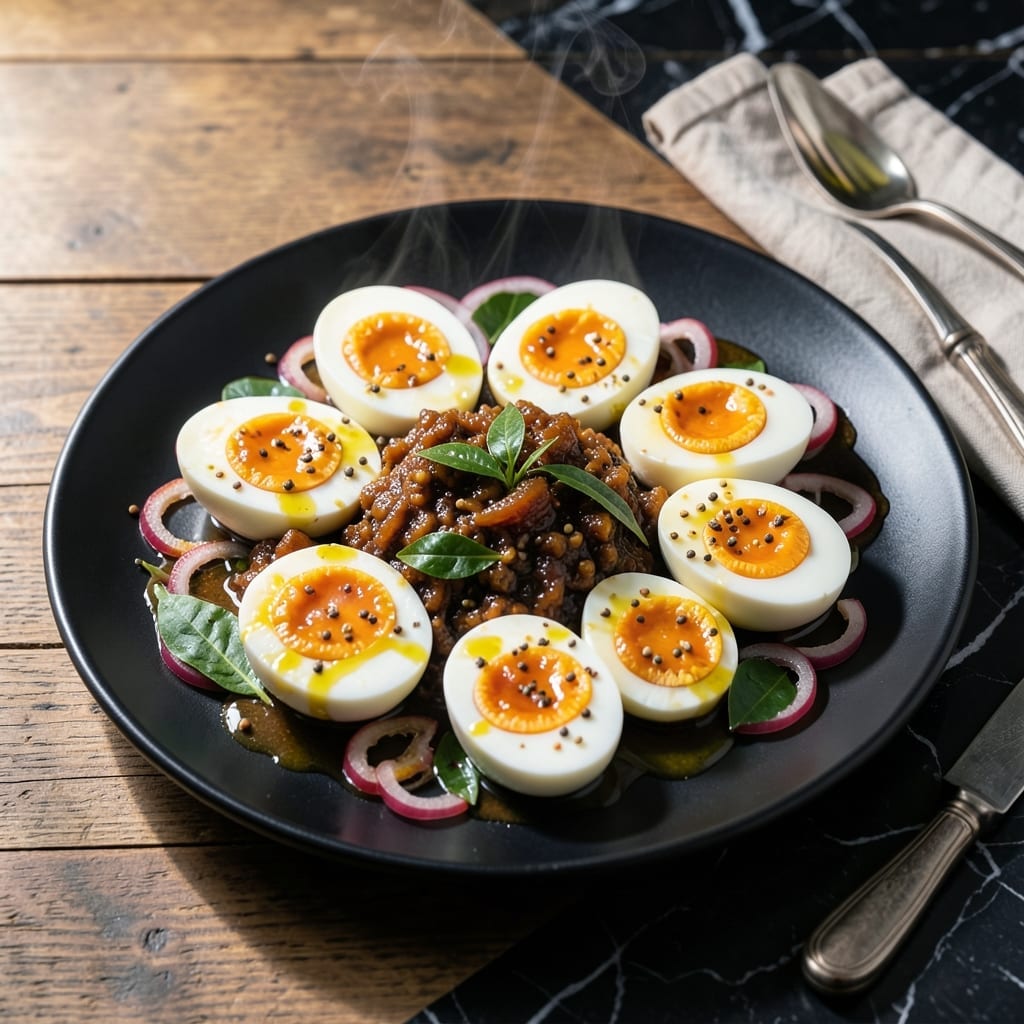
This Kerala-style egg roast brings authentic South Indian flavors to your kitchen with a rich blend of coconut and traditional spices. The dish captures the essence of homemade comfort, balancing bold spices with creamy coconut undertones.
I developed this recipe to simplify the process without compromising on taste. The eggs are hard-boiled, then coated in a thick, aromatic gravy that clings perfectly to each piece. It’s a foolproof method for achieving restaurant-quality results at home.
What makes this dish special is the combination of mustard seeds, curry leaves, and freshly grated coconut. These ingredients create a complex flavor profile that’s both earthy and aromatic, with just the right amount of heat.
Serve it with appam, dosa, or steamed rice for a complete meal. Here’s how to make it.
Ingredients for Egg Roast Recipe Kerala Style
Authentic South Indian spices and fresh coconut create this rich, aromatic dish.
| Ingredient | Amount | Notes |
|---|---|---|
| Large Eggs 🥚 | 6 whole | Hard-boiled and peeled |
| Coconut Oil 🥥 | 3 tbsp | Or vegetable oil |
| Mustard Seeds 🌿 | 1 tsp | Black or brown variety |
| Curry Leaves 🍃 | 12 pieces | Fresh preferred |
| Red Onion 🧅 | 1 whole | Finely chopped |
| Garlic Cloves 🧄 | 4 cloves | Minced for flavor base |
| Ginger 🌿 | 1 tbsp | Freshly grated |
| Green Chili 🌶️ | 2 whole | Slit lengthwise |
| Turmeric Powder 🌿 | ½ tsp | Ground for color |
| Red Chili Powder 🌶️ | 1 tsp | Adjust to taste |
| Coriander Powder 🌿 | 1 tsp | Ground for aroma |
| Garam Masala 🌶️ | ½ tsp | Freshly ground preferred |
| Fresh Coconut 🥥 | ½ cup | Grated or shredded |
| Tomatoes 🍅 | 2 whole | Finely chopped |
| Salt 🧂 | 1 tsp | Adjust to taste |
[recipe_ingredient_scaler]
The coconut is key here. Freshly grated gives the best texture and flavor, but unsweetened desiccated coconut works in a pinch (rehydrate it first). Mustard seeds and curry leaves are non-negotiable for authentic Kerala flavor—find them at Indian grocery stores or online. The tomatoes should be ripe but firm, and don’t skip the ginger-garlic base. It builds the foundation for the entire dish.
No fresh coconut? Coconut milk powder mixed with a little water can substitute. Out of curry leaves? Dried leaves at half the amount work, but fresh is far superior. For heat control, reduce the red chili powder or remove the green chili seeds. The garam masala can be swapped with a mix of cinnamon, cardamom, and cloves if needed—just keep the ratio light.
This tastes even better the next day as the flavors meld. Store in an airtight container in the fridge for up to 3 days. Reheat gently on the stove with a splash of water to prevent drying. The gravy thickens as it cools, so thin it out as needed when reheating.
Why You’ll Love This Recipe
- One Pan Magic: I just toss everything into a single pan—coconut oil, mustard seeds, curry leaves, and onions—and let it work its magic.
- That Kerala Crunch: The mustard seeds popping in hot coconut oil with curry leaves? It’s the kind of aroma that makes my kitchen smell like a Malayali home.
- Weeknight Hero: Honestly, this is my go-to when I need something hearty but don’t want to spend hours cooking.
- Stretches Far: One batch feeds us for two meals, and the leftovers taste even better the next day with some appam or bread.
Step-by-Step Instructions for Egg Roast Kerala Style
This method delivers authentic coconut-spiced eggs with a rich, fragrant sauce every time.
Step 1: Hard-Boil and Peel the Eggs
Place the 6 whole Large Eggs in a saucepan and cover with cold water by 1 inch. Bring to a boil over high heat, then reduce to a simmer.
Cook for 9-10 minutes until fully set. Drain immediately and transfer to an ice bath for 5 minutes to stop the cooking process. Peel the eggs carefully under running water to remove all shell fragments. Set aside while you prepare the spice mixture.
Step 2: Temper the Spices in Coconut Oil
Heat the 3 tbsp Coconut Oil in a heavy-bottomed pan over medium heat. Add the 1 tsp Mustard Seeds and let them sizzle for 30 seconds until they begin to pop.
Immediately add the 12 pieces Curry Leaves, 4 cloves Garlic Cloves, 1 tbsp Ginger, and 2 whole Green Chili. Sauté for 1-2 minutes until the garlic turns light golden brown and the aroma becomes fragrant. Stir constantly to prevent burning.
Step 3: Build the Masala Base
Add the 1 whole Red Onion and cook for 4-5 minutes until it turns translucent and golden. Stir in the 0.5 tsp Turmeric Powder, 1 tsp Red Chili Powder, 1 tsp Coriander Powder, and 1 tsp Salt.
Cook for 1 minute to toast the spices, then add the 2 whole Tomatoes. Simmer for 5-6 minutes until the tomatoes soften and the oil begins to separate at the edges. This creates a thick, aromatic base for the sauce.
Step 4: Finish with Coconut and Garam Masala
Stir in the 0.5 cup Fresh Coconut and cook for 2 minutes to combine the flavors. The coconut should absorb some of the liquid while retaining its texture.
Sprinkle the 0.5 tsp Garam Masala over the mixture and stir well. Gently add the peeled eggs and coat them thoroughly in the sauce. Simmer for 3-4 minutes on low heat, allowing the flavors to meld without breaking the eggs.
Remove from heat and let it rest for 5 minutes before serving. The sauce should thicken slightly, creating a glossy coating on each egg.
Pro Tips For Making Egg Roast Recipe Kerala Style
- Boil Eggs Firm: Hard-boil the eggs for exactly 9-10 minutes in salted water—any less and the yolks stay too soft, any more and they turn that unappetizing greenish-gray.
- Heat Coconut Oil High: Get the coconut oil smoking hot before adding mustard seeds; I learned this the hard way after three batches where the seeds just sat there like sad little pebbles.
- Slice Onions Thin: Red onions should be paper-thin, almost translucent. Sounds tedious, but it actually changes the outcome—thick slices stay crunchy and ruin the texture.
- Toast Spices First: Toss the mustard seeds and curry leaves into the hot oil for 20-30 seconds before adding onions—skipping this step leaves the spices tasting raw and bitter.
Creative Variations of egg roast recipe kerala style
Chettinad Spice Twist
For a bolder flavor, add 1 tsp fennel seeds and ½ tsp black peppercorns when tempering the mustard seeds. This Chettinad variation deepens the aroma. I also add 2 tbsp crushed roasted peanuts at the end for crunch. 🌶️
Coconut Milk Gravy
Replace the fresh coconut with ½ cup coconut milk for a creamier, sauce-heavy version. Simmer the eggs in this rich gravy for 5-6 minutes longer. The result is a luxurious, spoonable curry perfect with appam.
Mangalore-Style Tang
Add 1 tbsp tamarind paste and ½ tsp jaggery along with the tomatoes. This Mangalore twist balances sweet, sour, and spicy flavors beautifully. The tamarind cuts through the richness of the coconut.
Quick Weeknight Version
Use 1 tsp ready-made garam masala and ½ cup desiccated coconut to save time. Skip the fresh ginger-garlic and use 1 tbsp paste instead. It’s still delicious and ready in under 30 minutes. ⚡
Eggless Coconut Curry
Omit the eggs entirely and add 2 cups cubed potatoes or paneer after the masala base is ready. Simmer until tender. This vegetarian adaptation keeps all the authentic Kerala flavors intact.
Spice It Up
For extra heat, add 1 chopped bird’s eye chili with the green chilies. Or finish with ½ tsp Kashmiri chili powder for vibrant color and mild heat. Adjust to your preference—Kerala cuisine loves its spice! 🔥
Nutrition Facts
Frequently Asked Questions
Can I use desiccated coconut instead of fresh?
Yes, but rehydrate ½ cup desiccated coconut in ¼ cup warm water first. Fresh is preferred for texture, but this works in a pinch. The flavor will be slightly less vibrant.
How do I prevent the eggs from cracking while cooking?
Use eggs at room temperature and simmer gently. Shock in ice water immediately after boiling. Handle carefully when adding to the masala to avoid breaks.
What if I don’t have curry leaves?
Use ½ tsp dried curry leaves or skip entirely. The dish will still taste good, but lacks authentic Kerala aroma. Fresh leaves are worth seeking out.
Can I make this ahead of time?
Store in an airtight container in the fridge for up to 3 days. Reheat gently with a splash of water to thin the gravy.

Trained in classic French technique but raised on slow-cooked ribs and spicy rubs, she blends culinary skill with smoke and soul.
- Recipe for Boneless Pork Chops in Cast Iron Skillet: Sear and Baste to Juicy Perfection - October 3, 2026
- Recipe for Boneless Cross Rib Roast: Slow-Roasted Beef with Herb Crust - October 3, 2026
- Hamburgers in Sauce Recipe Crock Pot: Slow-Cooked Savory Delight - October 3, 2026