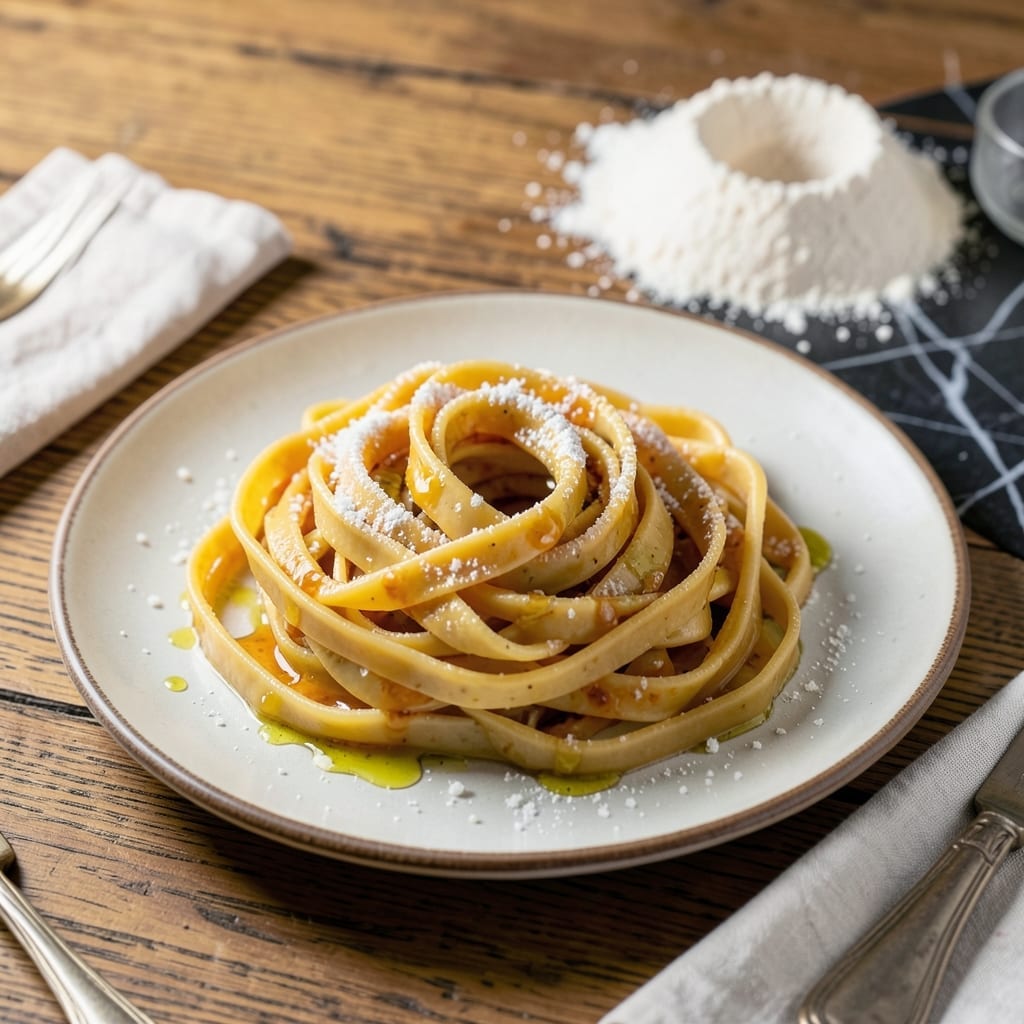
There’s nothing quite like the satisfaction of making fresh pasta from scratch, especially when it yields rich golden strands with that signature Italian bite. My grandmother’s handwritten notes guided this method, refined through years of trial and error.
This approach stays true to tradition, using a simple ratio of egg yolks to flour that creates a dough both tender and sturdy. The key is patience—letting the dough rest properly before rolling it paper-thin.
What emerges is pasta that cooks in minutes but tastes like it took hours to perfect. Each strand holds its shape beautifully, with a texture that’s simultaneously delicate and resilient.
Whether you’re making tagliatelle or fettuccine, this foundation guarantees authentic results every time. The process is as rewarding as the final dish.
Ingredients for Egg Yolk Pasta Recipe Italian
Simple yet precise ingredients create authentic Italian pasta with rich golden color and perfect bite.
| Ingredient | Amount | Notes |
|---|---|---|
| All-Purpose Flour 🌾 | 2 cups | Plus extra for dusting |
| Semolina Flour 🌾 | ½ cup | For authentic texture |
| Large Egg Yolks 🥚 | 6 whole | Room temperature preferred |
| Large Whole Eggs 🥚 | 2 whole | Room temperature preferred |
| Extra-Virgin Olive Oil 🫒 | 1 tbsp | For dough elasticity |
| Fine Sea Salt 🧂 | ½ tsp | Dissolved in water |
| Lukewarm Water 💧 | 2 tbsp | As needed for consistency |
[recipe_ingredient_scaler]
The flour quality matters significantly. King Arthur all-purpose is ideal for its consistent protein content, while Bob’s Red Mill semolina provides that authentic Italian texture. Use fresh eggs—local farm eggs yield the most vibrant yolks. Room temperature eggs incorporate more evenly into the flour, creating a smoother dough without overworking.
No semolina? Replace with additional all-purpose flour (the texture will be slightly less rustic). Out of whole eggs? Use 8 yolks total—the dough will be richer but slightly more delicate. The olive oil can be omitted, but it adds elasticity. If your dough feels dry, add water 1 tsp at a time—don’t rush this process.
Fresh pasta dough keeps 24 hours wrapped tightly in plastic in the fridge. For longer storage, freeze the dough ball for up to 1 month. Bring to room temperature before rolling. Cooked pasta holds 3 days refrigerated in airtight containers with a drizzle of olive oil.
Why You’ll Love This Recipe
- I’ll be real: I double the batch and freeze half for busy nights when I crave fresh pasta but don’t have the time.
- Five Ingredients Only: I love that this comes together with just flour, semolina, egg yolks, whole eggs, and a drizzle of olive oil—no fancy shopping required.
- Rich, Silky Bite: Honestly, the extra yolks make the texture so velvety it’s almost ridiculous how good it tastes with just butter and Parmesan.
- Freezer Friendly: I’ll be real: I double the batch and freeze half for busy nights when I crave fresh pasta but don’t have the time.
Step-by-Step Instructions for Egg Yolk Pasta
Master the traditional technique that produces silky, golden strands with perfect al dente texture.
Step 1: Form the Well and Combine Wet Ingredients
On a clean work surface, mound the 2 cups all-purpose flour and 0.5 cup semolina flour together. Create a deep well in the center large enough to hold all your wet ingredients. This traditional method ensures even distribution without overworking the dough.
Into the well, add the 6 large egg yolks, 2 large whole eggs, and 1 tbsp extra-virgin olive oil. In a small cup, dissolve the 0.5 tsp fine sea salt in the 2 tbsp lukewarm water and pour this into the well as well. The salt water helps bind the dough while adding subtle seasoning.
Step 2: Gradually Incorporate the Flours
Using a fork, begin whisking the wet ingredients in a circular motion, gradually pulling in the flour from the inner rim of the well. Continue this process patiently—it should take about 3-4 minutes to fully incorporate. The mixture will transform from liquid to a shaggy dough.
Watch for the moment when the dough starts to come together and resist the fork. At this point, discard the fork and use your hands to finish the incorporation. The dough should feel slightly sticky but not wet. If it seems too dry, add lukewarm water 1 tsp at a time; if too sticky, add a sprinkle of all-purpose flour.
Step 3: Knead to Develop Gluten Structure
Begin kneading the dough with the heels of your hands, pushing forward and folding back in a rhythmic motion. This process develops the gluten that gives pasta its characteristic bite. Knead for 8-10 minutes until the dough becomes smooth, elastic, and slightly tacky but not sticky.
You’ll know it’s ready when you can press your finger into the dough and it springs back slowly, leaving only a slight indentation. The surface should have a satiny sheen, and the dough should feel supple. This is the hallmark of properly developed pasta dough.
Step 4: Rest the Dough for Optimal Texture
Shape the dough into a ball and wrap it tightly in plastic wrap. Let it rest at room temperature for 30 minutes. This resting period allows the gluten strands to relax, making the dough easier to roll out thinly without springing back.
During this time, the hydration will also distribute evenly throughout the dough. The finished pasta will have a more uniform texture and better bite. Don’t skip this step—it’s as crucial as the kneading itself for achieving authentic results.
Step 5: Roll and Cut the Pasta
Divide the rested dough into 4 equal portions. Working with one portion at a time (keep the rest covered), flatten it with your hands and pass it through a pasta machine at the widest setting. Fold the sheet in thirds and repeat this process 2-3 times at the widest setting to ensure even thickness.
Gradually reduce the thickness setting, passing the sheet through once at each level without folding, until you reach your desired thickness. For authentic Italian pasta, aim for a setting that produces sheets about 1-2mm thick. Cut the sheets into your preferred shape—tagliatelle, fettuccine, or pappardelle—and cook immediately or dust with flour to prevent sticking.
Pro Tips For Making Egg Yolk Pasta Recipe Italian
- Knead Longer: I learned this the hard way—if the dough feels stiff at first, keep kneading for at least 8-10 minutes until it’s silky smooth. The gluten needs time to relax, especially with the semolina in there.
- Use Room Temp Eggs: Sounds weird, but it works: take your eggs out of the fridge 30 minutes before mixing. Cold yolks make the dough seize up, and you’ll fight it the whole way.
- Skip the Over-Flouring: Resist the urge to dump extra flour on the counter—too much makes the pasta tough. Dust lightly, and if it sticks, just scrape it up and keep going.
- Rest Before Rolling: After kneading, wrap the dough in plastic and let it sit for 20-30 minutes. My grandmother swore by this, and she was right: it rolls out thinner and doesn’t spring back.
Best Sauces and Condiments for This egg yolk pasta recipe italian
Classic Carbonara
The richness of this pasta begs for a creamy carbonara. Whisk 3 egg yolks with ½ cup grated Pecorino Romano and ¼ cup Parmigiano-Reggiano. Toss hot pasta with ½ cup reserved pasta water and the egg mixture off heat to create a silky sauce.
Simple Cacio e Pepe
Sometimes less is more. Toast 1 tsp black peppercorns in a dry pan, then grind coarsely. Toss hot pasta with ¼ cup pasta water, ½ cup grated Pecorino Romano, and the pepper. The starchy water creates a beautiful, glossy emulsion. 💡
Add a splash of pasta water as needed to reach your desired consistency.
Brown Butter Sage
Brown 6 tbsp unsalted butter in a saucepan with 8 fresh sage leaves until nutty and fragrant. Pour over cooked pasta and toss with ¼ cup toasted pine nuts and ¼ cup grated Parmigiano-Reggiano. The nutty butter complements the egg richness perfectly.
Lemon Garlic Cream
For a lighter option, sauté 3 minced garlic cloves in 2 tbsp olive oil until fragrant. Add ½ cup heavy cream, zest of 1 lemon, and 2 tbsp lemon juice. Toss with pasta and finish with fresh parsley.
This bright sauce cuts through the pasta’s richness beautifully. 🌟
Nutrition Facts
Frequently Asked Questions
Why use only yolks in pasta dough?
Egg yolks create a richer, more tender pasta with a golden color and better flavor. They contain fat that makes the dough more pliable and the final product more luxurious.
Can I make this without a pasta machine?
Yes! Roll the dough by hand with a rolling pin until it’s 1-2mm thick. It takes more effort but produces equally delicious results. A wine bottle works in a pinch.
How do I prevent the dough from sticking?
Dust your work surface and rolling pin with flour. If using a machine, lightly flour the rollers between passes. Keep unused dough covered to prevent drying.
What’s the ideal cooking time for fresh pasta?
Fresh pasta cooks much faster than dried – typically 2-4 minutes in boiling salted water. Test frequently and stop when it floats to the surface and is al dente.

Trained in classic French technique but raised on slow-cooked ribs and spicy rubs, she blends culinary skill with smoke and soul.
- Recipe for Boneless Pork Chops in Cast Iron Skillet: Sear and Baste to Juicy Perfection - October 3, 2026
- Recipe for Boneless Cross Rib Roast: Slow-Roasted Beef with Herb Crust - October 3, 2026
- Hamburgers in Sauce Recipe Crock Pot: Slow-Cooked Savory Delight - October 3, 2026