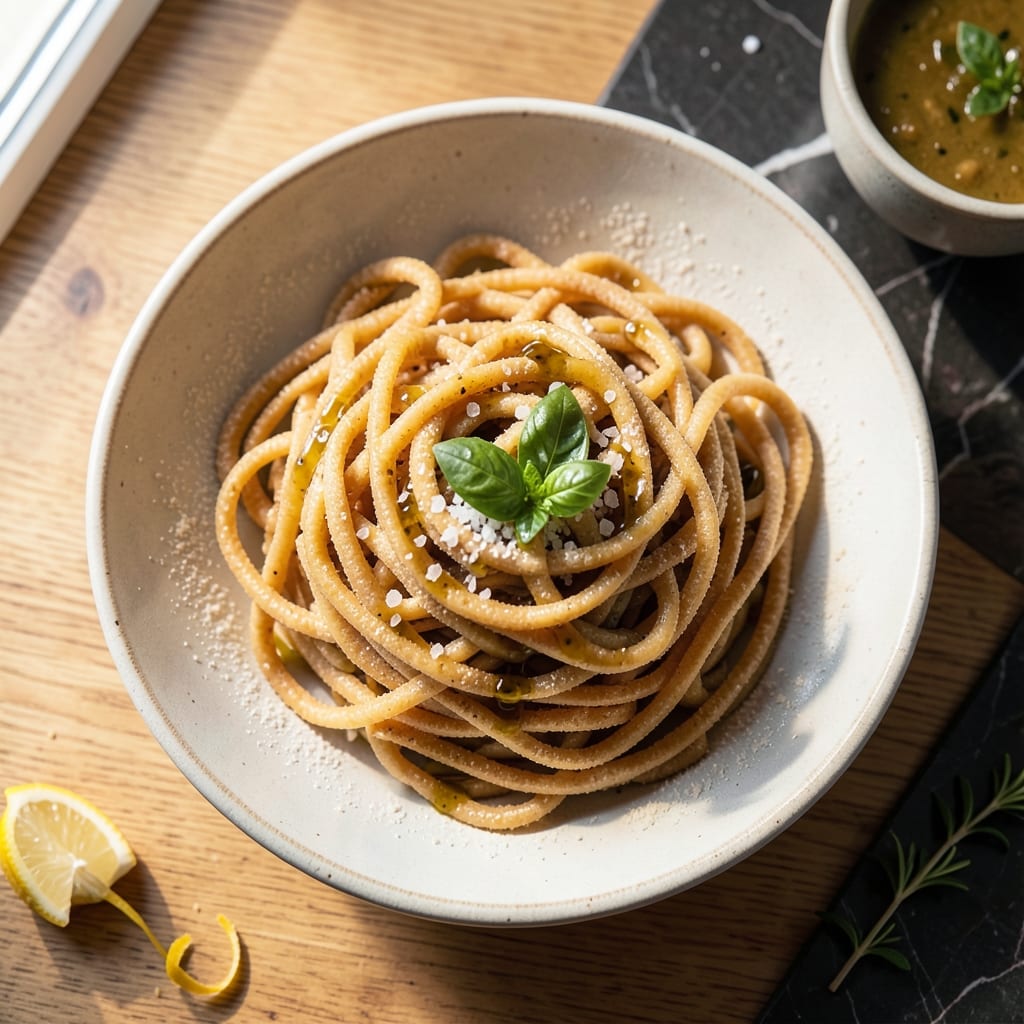
Creating perfect eggless pasta from scratch is simpler than you think. My grandmother made semolina dough without eggs, relying on just flour, water, and technique to achieve that signature Italian bite.
This method transforms basic ingredients into silky, elastic dough that rolls out beautifully. The key is proper hydration and resting time, which develops the gluten for al dente texture without any animal products.
The resulting pasta holds sauce wonderfully and delivers the authentic taste of traditional Italian cooking. It’s a foolproof technique that proves you don’t need eggs for restaurant-quality results at home.
With just a rolling pin and patience, you’ll produce strands that rival any fresh pasta you’ve tasted. This vegan approach maintains all the satisfaction of classic homemade noodles.
Ingredients for Eggless Pasta Recipe Semolina
Six simple ingredients. No eggs. Just like Nonna used to make.
| Ingredient | Amount | Notes |
|---|---|---|
| Semolina Flour 🌾 | 2 cups | Fine grind, durum wheat |
| All-Purpose Flour 🌾 | 1 cup | For elasticity and structure |
| Warm Water 💧 | ¾ cup | Divided, as needed for hydration |
| Extra-Virgin Olive Oil 🫒 | 1 tbsp | For smooth dough texture |
| Sea Salt 🧂 | 1 tsp | Fine grain for even distribution |
| Semolina Flour 🌾 | ½ cup | For dusting surfaces |
[recipe_ingredient_scaler]
The semolina is non-negotiable here. Bob’s Red Mill or King Arthur brands are my go-to—look for fine grind, not coarse. Most grocery stores stock it in the baking aisle. All-purpose flour adds elasticity, but don’t skip the semolina for that authentic bite. I grab mine from Whole Foods bulk bins when I’m making a big batch (it’s cheaper that way).
No semolina? Bread flour at a 1:1 ratio gets close, though the texture won’t be quite the same. Short on time? Pre-mixed pasta flour (like Antimo Caputo’s 00) works too. The olive oil can be swapped for any neutral oil (avocado, grapeseed), but extra-virgin adds flavor. Skip the salt if using salted water for boiling later (or don’t—your call).
Dough rests best covered at room temp for 30 minutes. Wrap unused portions tightly in plastic—they’ll keep in the fridge for 2 days or freeze for 1 month. Dust with extra semolina to prevent sticking.
Why You’ll Love This Recipe
- No Fuss Dough: I just mix semolina, all-purpose flour, water, and olive oil—no eggs, no waiting, no stress.
- Rich Nutty Flavor: The semolina gives it this warm, toasty depth that plain pasta just can’t match.
- Meal Prep Hero: I make a big batch on Sunday and it keeps beautifully for quick weeknight dinners.
- Pantry Friendly: Honestly, I always have these ingredients on hand—no special trips to the store.
Step-by-Step Instructions for Eggless Semolina Pasta
Here’s how to create perfectly al dente pasta without eggs every time.
Step 1: Combine the Dry Ingredients
On a clean work surface or in a large mixing bowl, create a mound with the 2 cups Semolina Flour and 1 cup All-Purpose Flour. I prefer the work surface method—it gives you better control over the hydration process and lets you feel the dough’s texture as it develops.
Make a well in the center of the flour mound that’s large enough to hold all your wet ingredients. This traditional technique helps gradually incorporate the flour into the liquids, preventing lumps and ensuring an even distribution throughout the dough.
Step 2: Incorporate Wet Ingredients Gradually
Pour the 0.75 cup Warm Water, 1 tbsp Extra-Virgin Olive Oil, and 1 tsp Sea Salt into the well you created. Using a fork, begin whisking the wet ingredients in a circular motion while gradually pulling flour from the inner walls of the well into the mixture.
Continue this process until the liquid has absorbed enough flour to form a thick, shaggy dough. At this point, I switch from the fork to my hands—it’s messy but necessary. The dough will feel slightly sticky at first, but resist the urge to add more flour right away.
Real talk: if the dough seems too dry, add warm water 1 teaspoon at a time. If it’s too sticky, dust with some of the 0.5 cup Semolina Flour reserved for dusting. The ideal consistency should be firm but pliable, not crumbly or gummy.
Step 3: Knead to Develop Gluten
Once the dough comes together, begin kneading it on your work surface. Push the dough away from you with the heel of your hand, then fold it back toward you and rotate a quarter turn. Repeat this motion for 8-10 minutes until the dough becomes smooth and elastic.
Here’s the thing—this process develops the gluten strands that give pasta its structure and chew. You’ll know it’s ready when you can stretch a small piece thin enough to see light through it without tearing (the windowpane test). The dough should spring back slightly when pressed with your finger.
If at any point the dough starts sticking to your hands or the surface, dust lightly with more of the reserved 0.5 cup Semolina Flour. Just remember that too much additional flour can make your pasta tough, so use a light hand.
Step 4: Rest and Roll the Dough
Shape the dough into a ball, wrap it tightly in plastic wrap, and let it rest at room temperature for 30 minutes. This relaxation period allows the gluten to relax and the flour to fully hydrate, making the dough much easier to roll out thinly.
After resting, divide the dough into 4 equal portions (since this makes 4 servings). Working with one portion at a time (keep the others covered), flatten it slightly with your hand and begin rolling it through a pasta machine on the widest setting.
Fold the sheet in thirds like a letter after each pass and repeat 3 times on the widest setting. Then, gradually decrease the setting and roll the sheet through once at each level until you reach your desired thickness (usually setting 5 or 6 for most pasta shapes).
Step 5: Cut and Cook Immediately
Once you’ve rolled out your pasta sheets to the desired thickness, you can cut them into your preferred shape. For simple fettuccine, I roll each sheet into a loose cylinder and slice it crosswise into ¼-inch wide strips. Unfurl each nest and dust with the remaining 0.5 cup Semolina Flour to prevent sticking.
Cook the fresh pasta in a large pot of boiling salted water for 2-3 minutes (it cooks much faster than dried pasta). You’ll know it’s done when it floats to the surface and has a slight bite when tasted. The texture should be tender but still firm to the bite—that perfect al dente we’re after.
Pro Tips For Making Eggless Pasta Recipe Semolina
- Knead Longer: I learned this the hard way—semolina dough needs a solid 8-10 minutes of kneading to develop the gluten properly, otherwise your pasta will crumble when rolled.
- Use Warm Water: Cold water makes the dough stiff and hard to work with; warm water (about 105°F) blends better with the semolina and olive oil for a smoother texture.
- Skip Extra Flour: Resist the urge to dust your work surface with too much all-purpose flour—it makes the pasta dry and tough. Just a light sprinkle is enough.
- Rest the Dough: After kneading, wrap the dough in plastic and let it rest for 30 minutes—this relaxes the gluten so it rolls out thin without springing back.
Common Mistakes When Making eggless pasta recipe semolina
Overworking the Dough
I learned the hard way that kneading beyond 10 minutes makes pasta tough, not better. The gluten overdevelops, turning your silky strands into rubbery disappointment. Trust the windowpane test—when you can stretch a piece thin enough to see light, you’re done. 💪
Skipping the Rest
Rushing the 30-minute rest is a rookie mistake. The gluten needs this time to relax, or your dough will spring back like a stubborn mule when you try to roll it. My grandmother never skipped this step, and neither should you.
Inconsistent Thickness
Uneven rolling leads to some strands cooking faster than others. Always roll each portion through the pasta machine 3 times on the widest setting before thinning. This ensures uniform thickness for perfect al dente results every time.
Too Much Dusting
While semolina flour prevents sticking, overdoing it makes your dough dry and crumbly. Use a light hand when dusting your work surface and pasta sheets. I find a teaspoon per portion is plenty.
Improper Hydration
Adding all the 0.75 cup warm water at once can create a sticky mess. Start with ½ cup, then add more as needed. The dough should feel firm but pliable, not wet or gummy.
Cutting Before Cooking
Fresh pasta cooks in 2-3 minutes, so cut shapes just before boiling. Cutting ahead causes the edges to dry out, leading to uneven cooking. I keep my shapes dusted with semolina until the water’s ready. 🔥
Nutrition Facts
Frequently Asked Questions
Why does the dough need to rest for 30 minutes?
Resting allows gluten strands to relax and flour to fully hydrate. This makes the dough easier to roll thinly and prevents it from springing back. Without this step, you’ll struggle to achieve that perfect thin sheet.
Can I use all-purpose flour instead of semolina?
Semolina gives the authentic texture and bite, but bread flour works in a pinch at a 1:1 ratio. The pasta won’t be identical, but it’ll still be delicious. Avoid using only all-purpose—it lacks the durumn wheat’s structure.
What if my dough is too sticky?
Dust lightly with reserved semolina flour. Add just 1 teaspoon at a time—too much makes the dough dry. If it’s still sticky, your hands or surface may need more dusting, not the dough itself.
How can I tell when the pasta is done?
Fresh pasta cooks in 2-3 minutes. It’s ready when it floats to the top and has a slight bite. Taste test frequently—it should be tender but still firm to the bite.

Trained in classic French technique but raised on slow-cooked ribs and spicy rubs, she blends culinary skill with smoke and soul.
- Recipe for Boneless Pork Chops in Cast Iron Skillet: Sear and Baste to Juicy Perfection - October 3, 2026
- Recipe for Boneless Cross Rib Roast: Slow-Roasted Beef with Herb Crust - October 3, 2026
- Hamburgers in Sauce Recipe Crock Pot: Slow-Cooked Savory Delight - October 3, 2026