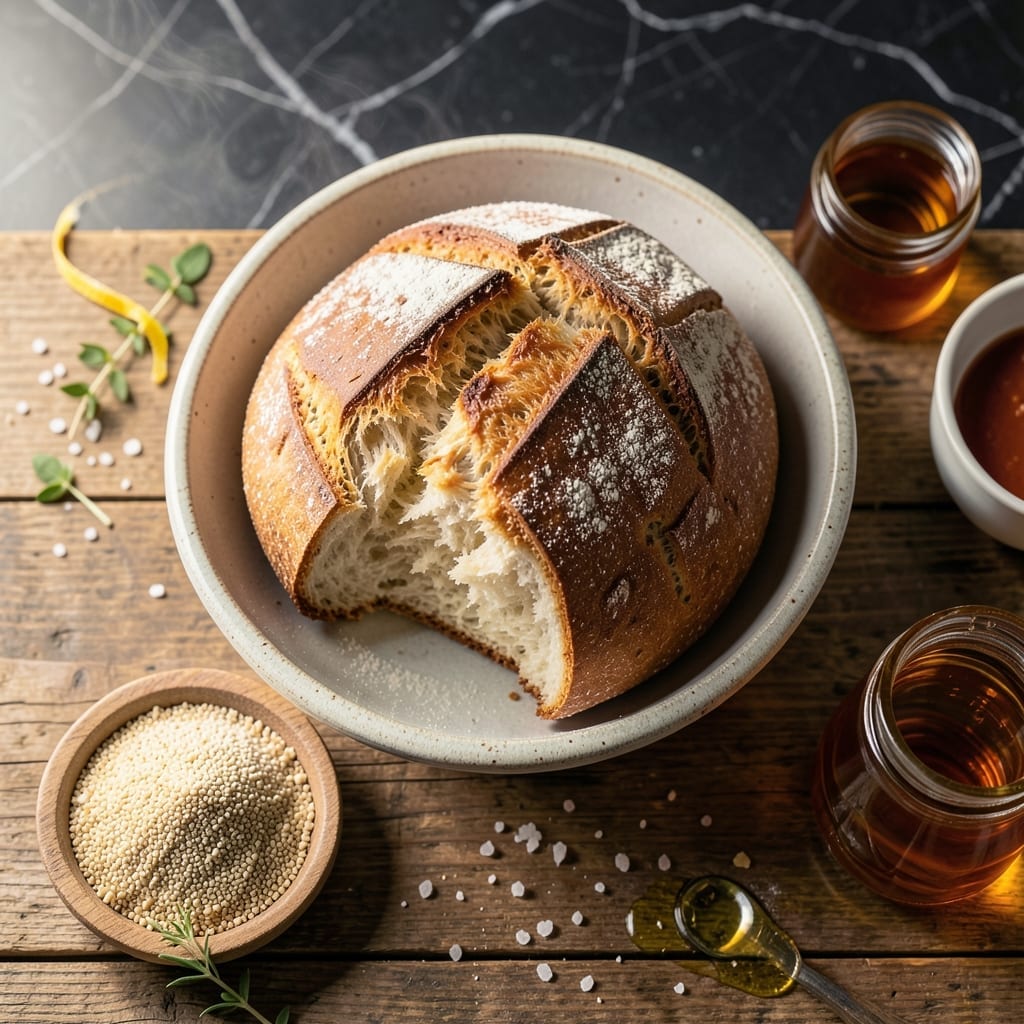
Working with einkorn flour transformed my approach to bread baking, revealing flavors that modern wheat can’t match. This ancient grain creates a loaf with a tender, slightly sweet crumb and rustic crust that’s both beautiful and delicious.
The process is straightforward yet rewarding. With just a few simple ingredients and proper rising time, you’ll achieve a bread that tastes as good as it looks. The yeast works its magic slowly, developing complex flavors that make this worth the wait.
What emerges from the oven is a golden loaf with a crisp exterior and soft interior. The aroma alone will have your kitchen smelling like a professional bakery, and the first slice reveals that perfect open crumb structure.
Serve warm with butter for the full experience. This is bread as it was meant to be.
Ingredients for Einkorn Bread Recipe with Yeast
Just a handful of ingredients unlocks ancient grain magic in this loaf.
| Ingredient | Amount | Notes |
|---|---|---|
| Einkorn Flour 🌾 | 4 cups | Ancient grain, all-purpose type |
| Active Dry Yeast 🍞 | 2 ¼ tsp | One packet, proofed in warm water |
| Warm Water 💧 | 1 ½ cups | 110°F for yeast activation |
| Sea Salt 🧂 | 1 ½ tsp | Fine grain for even distribution |
| Honey 🍯 | 2 tbsp | Natural sweetener for yeast |
| Olive Oil 🫒 | 2 tbsp | For dough softness and crust |
| Unsalted Butter 🧈 | 2 tbsp | For serving, optional |
| Large Egg 🥚 | 1 whole | Optional for egg wash |
[recipe_ingredient_scaler]
The einkorn flour is non-negotiable here—Jovial or Young Living brands are widely available and reliable. Most natural food stores carry it in the baking aisle, or order online if your local grocery doesn’t stock it. Look for all-purpose einkorn rather than whole grain for this recipe. The yeast needs to be fresh (check the expiration date), and warm water at just the right temp (not hot enough to kill the yeast) makes all the difference.
No honey? Maple syrup or agave works just as well. Out of sea salt? Kosher salt at half the amount. If you’re skipping the egg wash, a quick brush with water or milk gives a similar sheen. The olive oil can be any neutral oil in a pinch, but the flavor won’t be as rich. For a vegan version, swap the honey for agave and skip the egg wash entirely.
Dough rises best in a warm, draft-free spot—1-2 hours for the first rise. Baked loaf stays fresh wrapped in a towel for 2 days, or slice and freeze for up to 3 months. Always cool completely before slicing to avoid a gummy texture.
Why You’ll Love This Recipe
- I’ll be real: this bread stays soft for days, so I can bake once and enjoy all week.
- One Bowl Wonder: I just dump the einkorn flour, yeast, honey, and warm water in a single bowl—no fancy mixing, no mess.
- Nutty Sweetness: The einkorn flour gives this loaf a rich, buttery depth, while the honey adds the perfect subtle sweetness.
- Breakfast to Dinner: Honestly, it’s my go-to for toast in the morning and the ideal side for soup at night.
Step-by-Step Instructions for Einkorn Bread With Yeast
This method brings out the nutty flavor of ancient grain while keeping the process simple and rewarding.
Step 1: Activate the Yeast and Mix Wet Ingredients
In a small bowl, whisk together the 2.25 tsp Active Dry Yeast, 2 tbsp Honey, and 1.5 cups Warm Water until the honey dissolves. Let it sit for 5-7 minutes until the mixture becomes frothy and bubbly—this confirms your yeast is active and ready to work.
Once the yeast is activated, stir in the 2 tbsp Olive Oil. The oil will help create a soft, tender crumb in your finished loaf. I always check the temperature of my water first; it should feel warm to the touch but not hot, around 110°F.
Step 2: Combine Dry Ingredients and Form the Dough
In a large mixing bowl, combine the 4 cups Einkorn Flour and 1.5 tsp Sea Salt. Einkorn flour behaves differently than modern wheat, so don’t be surprised if the dough feels slightly stickier at first. Create a well in the center of the dry ingredients.
Pour the yeast mixture into the well and use a wooden spoon or your hands to combine everything into a shaggy dough. You’ll notice the dough comes together quickly but may stick to your fingers—that’s normal with einkorn’s unique protein structure.
Step 3: Knead and First Rise
Turn the dough out onto a lightly floured surface and knead for 8-10 minutes until smooth and elastic. Einkorn dough requires a bit more patience than standard bread dough. You’ll know it’s ready when it springs back slightly when pressed with your finger.
Place the dough in a lightly oiled bowl, cover with a damp towel, and let it rise in a warm place for 1-2 hours or until doubled in size. I like to place mine near a sunny window or on top of the fridge where it’s slightly warmer.
Step 4: Shape, Second Rise, and Bake
Punch down the risen dough and shape it into a round loaf. Place it on a parchment-lined baking sheet. For a beautiful finish, you can brush the top with the 1 whole Large Egg beaten with a tablespoon of water—this creates that coveted golden crust.
Let the shaped loaf rise again for 30-45 minutes while you preheat your oven to 375°F. When ready to bake, use a sharp knife to score the top of the loaf. Bake for 35-40 minutes until the crust is deep golden brown and the loaf sounds hollow when tapped on the bottom.
Step 5: Cool and Serve
Remove the bread from the oven and immediately brush the crust with the 2 tbsp Unsalted Butter for extra richness and shine. This step is optional but highly recommended for that bakery-style finish.
Let the loaf cool on a wire rack for at least 1 hour before slicing. I know it’s tempting to cut into it right away, but this resting period allows the crumb structure to set properly. The result will be a loaf with a crisp crust and a soft, slightly sweet interior that highlights einkorn’s natural nuttiness.
Pro Tips For Making Einkorn Bread Recipe With Yeast
- Check Yeast First: Always proof your active dry yeast in the warm water with honey for 5-10 minutes until foamy—I learned this the hard way after wasting two cups of einkorn flour on dead yeast.
- Handle Einkorn Gently: Einkorn flour is more delicate than modern wheat, so mix just until combined and resist the urge to over-knead, or your loaf will turn dense.
- Use Less Liquid: Einkorn absorbs water differently, so start with 25% less warm water than your recipe suggests, then add slowly—my first few loaves were gummy until I figured this out.
- Longer Proofing Time: Give it a full 2-3 hours for the first rise, even if it looks ready sooner—einkorn’s ancient gluten needs the extra time to develop properly.
Health Benefits of This Recipe
Ancient Grain Nutrition
Einkorn flour brings more than just great flavor—it’s packed with protein (about 14g per 100g) and dietary fiber that keeps you full longer. This ancient grain has a simpler gluten structure, which some people find easier to digest than modern wheat. I’ve noticed my family feels lighter after eating this bread. 💪
Rich in Micronutrients
This bread is loaded with B vitamins, especially thiamine and niacin, which support energy metabolism. You’ll also get a healthy dose of minerals like magnesium and zinc. The natural sweetness from einkorn means you can reduce added sugars in other meals.
Lower Glycemic Impact
Einkorn has a lower glycemic index than modern wheat, helping maintain steady blood sugar levels. The slow-digesting carbs in this loaf provide sustained energy without the spikes. David, my official taste-tester, swears his energy levels stay more consistent when we have this for breakfast.
Antioxidant Benefits
This ancient grain contains higher levels of carotenoids and polyphenols than conventional wheat. These antioxidants help combat oxidative stress in your body. The golden hue of einkorn flour comes from these beneficial compounds. 🌟
Heart-Healthy Fats
The olive oil in this recipe contributes monounsaturated fats that support heart health. Combined with einkorn’s natural nutrients, this bread offers more than just empty carbs. I always use Central Market’s cold-pressed olive oil for maximum benefit.
Gut-Friendly Properties
The natural fermentation process when making this bread creates beneficial compounds that may support gut health. The long rise time allows for pre-digestion of some starches, making the nutrients more accessible. This is bread that actually nourishes your body.
Nutrition Facts
Frequently Asked Questions
Can I use instant yeast instead of active dry?
Yes! Use 1.75 tsp instant yeast and skip the proofing step. Mix it directly with the dry ingredients. The rising time remains the same.
Why is my dough so sticky?
Einkorn flour has less gluten, so the dough stays stickier than regular bread dough. Resist adding extra flour—just knead with lightly oiled hands.
How do I know when it’s done baking?
Look for a deep golden brown crust and a hollow sound when tapping the bottom. An internal temperature of 190-200°F confirms it’s fully baked.
Can I make this in a bread machine?
Use the dough setting, then shape and bake manually for best texture. Add liquids first, then dry ingredients.

Trained in classic French technique but raised on slow-cooked ribs and spicy rubs, she blends culinary skill with smoke and soul.
- Recipe for Boneless Pork Chops in Cast Iron Skillet: Sear and Baste to Juicy Perfection - October 3, 2026
- Recipe for Boneless Cross Rib Roast: Slow-Roasted Beef with Herb Crust - October 3, 2026
- Hamburgers in Sauce Recipe Crock Pot: Slow-Cooked Savory Delight - October 3, 2026