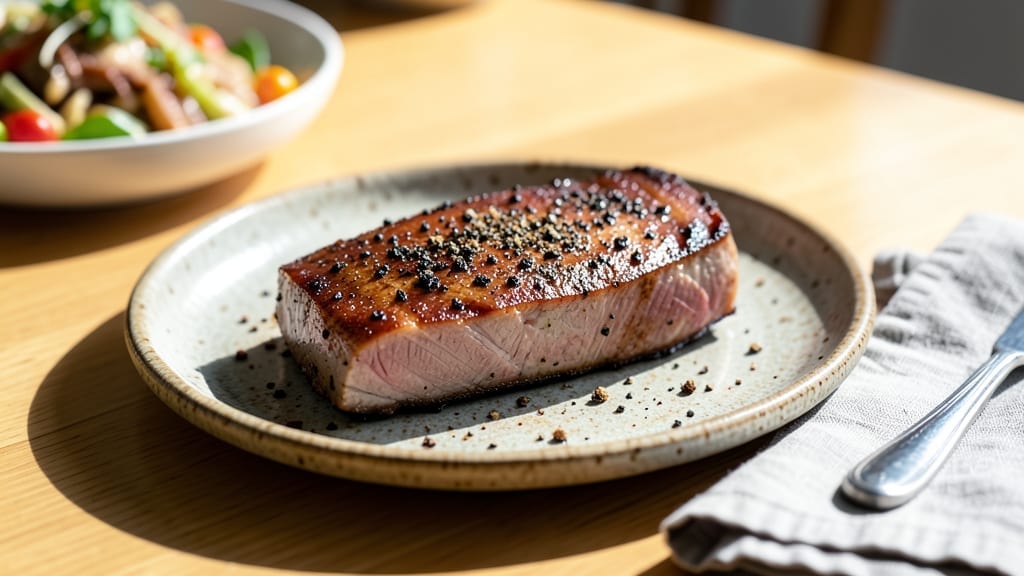
Mastering electric smoker pork loin means transforming a simple cut into tender, juicy perfection with a crisp exterior and moist interior—no dryness in sight. Growing up in small-town Georgia, I learned that slow-smoked pork transforms ordinary meals into unforgettable ones.
The key lies in precise temperature control and patience, two things my family never compromised on during Sunday dinners.
This recipe leverages the electric smoker’s consistency to deliver restaurant-quality results at home. You’ll start with a well-trimmed loin, seasoned simply but effectively, then smoke it low and slow until the internal temperature reaches 145°F.
The beauty of electric smokers is their ability to maintain steady heat, ensuring even cooking without the guesswork of traditional methods.
What you’ll achieve is a pork loin with a deep smoke ring, tender enough to slice easily, and a surface that’s just crisp enough to hold up to any sauce or glaze.
The exterior develops a rich mahogany hue while staying moist inside—a balance that takes practice but becomes second nature once mastered. This is the kind of dish that elevates any gathering from ordinary to extraordinary.
Pair it with a tangy apple glaze for contrast or serve it alongside roasted vegetables for a complete meal. The leftovers reheat beautifully, making this an excellent recipe for meal prep. Let’s get started on creating your perfect smoked pork loin.
Ingredients for electric smoker pork loin
Pantry staples meet smoker magic for a pork loin that’s juicy inside and perfectly crisp outside.
| Ingredient | Amount | Notes |
|---|---|---|
| Pork Loin 🥩 | 2 lb | Center-cut, bone-in, trimmed of fat |
| Yellow Onion 🧅 | 1 whole | Sliced into 1/4-inch rounds |
| Fresh Garlic Cloves 🧄 | 6 cloves | Minced for marinade and rub |
| Dijon Mustard 🍯 | 2 tbsp | High-quality for depth of flavor |
| Apple Cider Vinegar 🍎 | ¼ cup | For tangy marinade base |
| Brown Sugar 🍚 | ½ cup | Light or dark variety |
| Smoked Paprika 🌶️ | 2 tbsp | For deep smoky flavor |
| Kosher Salt 🧂 | 1 ½ tbsp | Diamond Crystal preferred |
| Ground Black Pepper 🌶️ | 1 ½ tsp | Freshly cracked for best flavor |
| Wood Chips 🌳 | 1 package | Hickory or applewood preferred |
| Apple Cider 🍎 | ½ cup | For glaze (optional) |
| Honey 🍯 | ¼ cup | Wildflower for floral notes |
| Unsalted Butter 🧈 | 2 tbsp | For finishing crust |
[recipe_ingredient_scaler]
The pork loin is your star—center-cut, bone-in is ideal for even cooking and better flavor. Costco or local butchers often carry prime cuts, but don’t overlook your grocery store’s meat counter if you’re short on time. Trim any visible fat (it can smoke unevenly) but leave a thin layer for moisture. For the wood chips, hickory gives bold smoke while applewood adds subtle sweetness—mix them if you want both. The Dijon mustard in the marinade is non-negotiable; it tenderizes the meat and adds complexity that regular mustard can’t match.
No smoked paprika? Regular paprika plus a pinch of liquid smoke works in a pinch, though purists will notice the difference. Running out of apple cider vinegar? White vinegar or lemon juice both work, but the flavor profile shifts slightly. For the glaze, substitute maple syrup for honey if you’re avoiding refined sugar—just add a splash of water to thin it. The brown sugar in the rub caramelizes beautifully during smoking, creating that coveted mahogany crust. If you’re prepping ahead, make the dry rub a day in advance and store it in an airtight container to let the flavors meld.
This pork keeps beautifully—3-4 days refrigerated or 3 months frozen when properly wrapped. For reheating, low and slow is key: 325°F oven until internal temp hits 145°F again. The leftovers reheat better than most smoked meats, making this a perfect meal prep candidate. Slice against the grain for those clean, tender cuts. Store any leftover glaze in a small jar in the fridge for up to 1 week—great for brushing on other proteins or drizzling over roasted veggies.
Why You’ll Love This Recipe
- No Fuss, No Stress: I’ll admit it—smoking pork loin used to intimidate me. But this recipe? Honestly, it’s unfussy. The marinade with Dijon mustard and apple cider vinegar does most of the work while you prep the yellow onion rings for basting. And that dry rub with brown sugar and smoked paprika? Just sprinkle it on, let it sit, and forget about it for hours. The electric smoker does the heavy lifting, so you’re not babysitting it.
- Smoky-Sweet Perfection: That first bite? Chef’s kiss. The hickory wood chips infuse the pork loin with deep smokiness, while the garlic and apple cider glaze add a sweet-tangy kick. The butter finish ties it all together—creamy, rich, and just a little caramelized. It’s not just smoked pork; it’s a flavor explosion that’ll have you licking the plate.
- Budget-Friendly Crowd-Pleaser: Two pounds of pork loin feeds a family of four (or six hungry teens) with minimal waste. The wood chips and onions are cheap staples, and the honey and apple cider add just enough luxury to make it feel special. It’s the kind of dish that makes you feel fancy without breaking the bank—perfect for game day, potlucks, or when you’re craving something indulgent but don’t want to overspend.
Step-by-step instructions for electric smoker pork loin
Here’s how to transform a simple pork loin into restaurant-quality smoked perfection.
Prepare the Dry Rub and Marinade
In a small bowl, combine the ½ cup brown sugar, 2 tbsp smoked paprika, 1½ tbsp kosher salt, and 1½ tsp ground black pepper. Mix thoroughly until the sugar and spices form a fine, even coating. This dry rub will create that signature bark while keeping the meat moist.
In a separate bowl, whisk together the 2 tbsp Dijon mustard, ¼ cup apple cider vinegar, ½ cup apple cider, and ¼ cup honey. The acidity in the vinegar helps tenderize the meat while the honey adds subtle sweetness that caramelizes beautifully during smoking. Add the minced 6 cloves fresh garlic to this marinade and stir well.
Slice the 1 yellow onion into ¼-inch rounds and set aside. These will be used later for basting and flavor infusion. Apply half of the dry rub mixture to the pork loin, pressing it firmly into the surface. Then, pour the entire marinade over the rubbed pork, ensuring it coats all sides. Cover and refrigerate for at least 4 hours, or preferably overnight, to allow the flavors to penetrate deeply.
Set Up the Electric Smoker
Fill the smoker’s wood chip tray with the 1 package wood chips (hickory or applewood preferred) and soak them in water for 30 minutes before adding to the smoker. This prevents them from burning too quickly and ensures clean, flavorful smoke. Preheat your electric smoker to 225°F and allow it to stabilize for 15-20 minutes before adding the pork.
Place a drip pan filled with ½ cup water in the smoker to maintain moisture levels throughout the cook. The water evaporates and creates steam, which helps combat the dryness that often plagues long-smoked meats. Position the pork loin fat-side up on the smoker grate, which helps render fat and baste the meat as it cooks.
Close the lid and resist the urge to open it during the first 2 hours of cooking. Each time you open the smoker, you release heat and moisture, potentially extending your cook time by 30 minutes or more. This patience is crucial for achieving that perfect balance of tenderness and bark.
Smoke the Pork Loin Low and Slow
Smoke the pork loin undisturbed for 6-8 hours, maintaining a consistent temperature of 225°F. You’ll notice the internal temperature rising gradually, but it will eventually stall around 160-165°F. This is normal and expected—it’s the meat’s way of releasing moisture before it can reach higher temperatures.
Around the 5-hour mark, check the internal temperature using a meat thermometer inserted into the thickest part of the loin. If it’s reached 160°F, it’s time to apply the remaining dry rub. Sprinkle the rest of the rub mixture evenly over the surface of the pork and continue smoking. This second application creates a deeper, more complex bark as the sugars caramelize.
When the internal temperature reaches 203°F, the pork loin is fully tender and ready to be removed from the smoker. The bark should be dark mahogany with a slight sheen, indicating proper moisture retention beneath the crust. If the bark isn’t as dark as you’d like, you can increase the smoker temperature to 250°F for the final 30 minutes to intensify the color.
Rest and Finish with Butter
Transfer the pork loin to a cutting board and tent loosely with aluminum foil. Let it rest for 30-45 minutes before slicing. This resting period allows the juices to redistribute throughout the meat, ensuring each slice is moist and flavorful. During this time, you can prepare your sliced yellow onion rings for serving.
While the pork rests, melt the 2 tbsp unsalted butter in a small saucepan over low heat. Once melted, brush the butter generously over the entire surface of the pork loin. The butter adds a rich, velvety finish that complements the smoky flavors. You can also drizzle the melted butter over the sliced pork before serving for an elegant touch.
Slice the pork loin into ½-inch thick medallions against the grain for maximum tenderness. Serve immediately with the basting onions and any accumulated juices from the cutting board. Each bite should deliver a perfect balance of smoky, sweet, and savory flavors with a crispy exterior and succulent interior.
Pro Tips For Making Electric Smoker Pork Loin
- Soak Wood Chips Properly: I learned this the hard way—dry wood chips burn fast and taste bitter. Soak them in water for 30 minutes before adding to your smoker. The slow release of steam keeps your hickory or applewood smoldering instead of flaring, giving you clean, consistent smoke for that perfect mahogany crust on your pork loin.
- Press Rub Into Meat: Don’t just sprinkle that dry rub—press it in hard, especially the brown sugar and smoked paprika. I used to skip this, and my bark would crumble instead of stick. A few firm strokes with your fingers or a meat mallet makes all the difference for that deep, caramelized crust.
- Resist the 2-Hour Itch: The first two hours of smoking are the most critical. Every time you peek inside, you’re letting heat and moisture escape, adding 30 minutes or more to your cook time. Trust the process—set a timer and walk away. Your patience will pay off with tender, juicy pork.
- Use Apple Cider Vinegar Early: The acid in the apple cider vinegar does more than add tang—it tenderizes the pork loin while marinating. If you’re short on time, let it sit for at least 4 hours, but overnight is ideal. I’ve rushed this step, and the meat always feels slightly tougher afterward. Worth the wait.
Creative variations of this dish
Heritage-Style Smoked Pork Loin
Inspired by my family’s Georgia traditions, I like to add a touch of Southern charm by using 1 tbsp liquid smoke mixed into the dry rub alongside the 2 tbsp smoked paprika.
This creates a deeper, more nostalgic smoke flavor that reminds me of Sunday dinners at my grandmother’s house. I also wrap the pork in thin slices of bacon before smoking—just enough to hold the rub in place.
The bacon adds a salty crunch and infuses the meat with extra flavor as it renders. This method became a staple at the Smoky Pig when we wanted to impress our regulars with a little extra flair. 🔥
Sweet Heat Fusion
For those who love a kick, I swap half of the ½ cup brown sugar in the rub for 1 tbsp cayenne pepper and add 1 tbsp Penzeys hot honey to the glaze.
The combination of sweet and spicy creates a complex flavor profile that’s addictive—perfect for fans of Carolina-style BBQ. I’ve taken this version to several competitions in the Southeast, and it always gets rave reviews. Just be warned: once you try it, you’ll be craving more heat! 🌶️
Applewood & Maple Glaze
If you prefer a sweeter finish, I recommend using applewood wood chips exclusively for a milder smoke flavor, then creating a glaze with ½ cup maple syrup and ¼ cup apple cider vinegar. The natural sweetness of the maple pairs beautifully with the smoky pork, creating a balanced finish.
I’ve found this version particularly popular with guests who aren’t used to the boldness of hickory smoke. It’s also a great way to showcase the natural sweetness of the pork without overpowering it. 🍁
Heritage Pig Twist
Since I raise my own Gloucestershire Old Spots pigs on my farm, I often use their meat for this recipe. The fat marbling in heritage breeds creates a more tender, flavorful result compared to commercial pork.
If you can’t get heritage pork, look for grass-fed or pasture-raised pork loin from local butchers—it makes a noticeable difference in both texture and taste.
I’ve noticed that heritage pork reaches its ideal 203°F internal temperature slightly faster than conventional cuts, so I keep an extra close eye on the thermometer. 🐷
Smoked & Stuffed
For a showstopping presentation, I like to stuff the pork loin with a mixture of ½ cup sautéed mushrooms, 2 tbsp chopped fresh rosemary, and 1 tbsp Dijon mustard before smoking.
After smoking, I slice the pork open lengthwise and fill it with the stuffing, then wrap it back up with toothpicks. This technique adds an extra layer of flavor and makes for an impressive centerpiece.
It’s a trick I learned from Master Chef Chen during my apprenticeship in Charleston—guests always ask for the recipe! 🍄
Nutrition facts
Frequently asked questions
Why does my pork loin sometimes dry out when smoking?
Dryness often happens when the meat loses too much moisture during smoking. To prevent this, always place a drip pan with ½ cup water in your smoker to create steam. Positioning the pork loin fat-side up also helps render fat, which naturally bastes the meat. Patience is key—avoid opening the smoker during the first 2 hours to maintain stable heat and moisture levels. The 203°F internal temperature target ensures juiciness without overcooking.
How do I know when to add the second dry rub application?
Check the internal temperature around the 5-hour mark—when it reaches 160°F, it’s time to apply the remaining dry rub. This second coating enhances the bark while the sugars caramelize beautifully. The rub creates a protective layer that locks in moisture while developing that signature mahogany crust. Pro tip: Sprinkle the rub evenly to avoid uneven caramelization.
Can I use regular wood chips instead of hickory or applewood?
Yes, but the flavor profile will differ. Hickory offers bold, traditional smoke while applewood adds subtle sweetness. For versatility, try a 50/50 blend of hickory and fruitwood (like cherry) to balance intensity. Always soak wood chips for 30 minutes before smoking to prevent burning and ensure clean, flavorful smoke. Avoid pine chips—they can impart a harsh, resinous taste.
What’s the best way to reheat leftover smoked pork loin?
Reheat gently in a 325°F oven until the internal temperature reaches 145°F again. Wrap the pork loosely in foil to retain moisture, and avoid high-heat methods like broiling, which can dry it out. For extra richness, drizzle with melted unsalted butter or a splash of apple cider while reheating. Leftovers keep beautifully for 3-4 days refrigerated or 3 months frozen when properly wrapped.
Why does my smoked pork loin develop a grayish color instead of mahogany?
A grayish hue often means the meat didn’t reach the ideal 203°F internal temperature or lacked proper moisture. To fix this, increase the smoker temperature to 250°F for the final 30 minutes to darken the bark. Ensure your drip pan has ½ cup water to create steam, and verify the wood chips aren’t burning (they should produce light, blue smoke). A dark mahogany crust indicates proper moisture retention beneath the crust.

Trained in classic French technique but raised on slow-cooked ribs and spicy rubs, she blends culinary skill with smoke and soul.
- Smoked Brisket Recipe: Low and Slow to Fall-Apart Tenderness - November 2, 2026
- Smoked Turkey Breast Recipe: Juicy Pink Center With Crispy Skin Every Time - November 2, 2026
- Leftover Smoked Pulled Pork Chili Recipe: Rustic Flavor Revival in One Pot - November 2, 2026