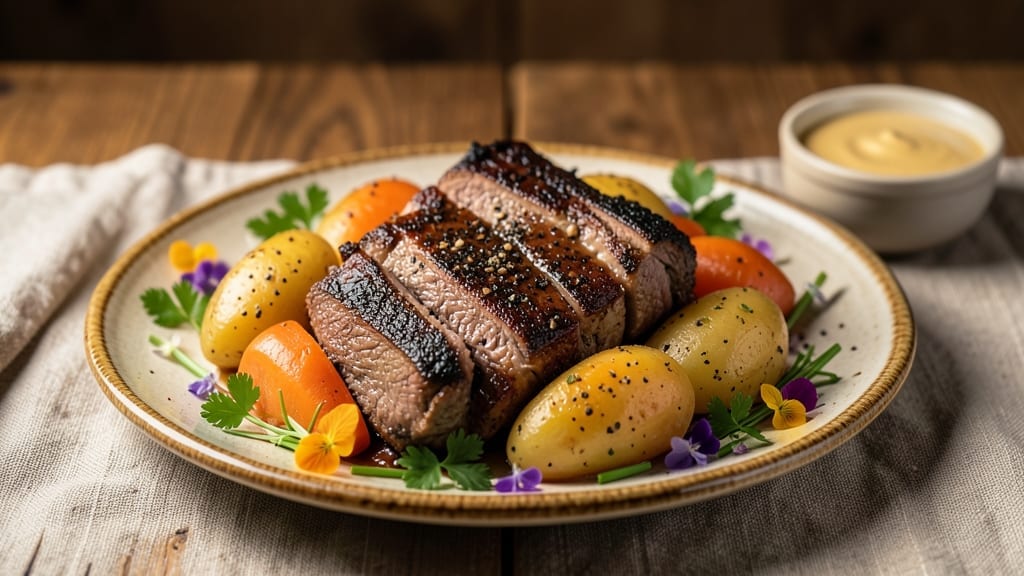
This slow cooker brisket recipe transforms tough cuts into melt-in-your-mouth perfection alongside tender potatoes and carrots—all in a single pot. The secret lies in low-and-slow cooking, where the brisket becomes so tender it practically falls apart at the touch.
I’ve perfected this method over countless test batches, ensuring every bite delivers that rich, smoky flavor without requiring hours of oven time or babysitting.
The beauty of this recipe is its simplicity and hands-off approach. You’ll start with a well-seasoned brisket, then let the slow cooker do the work while the potatoes and carrots absorb all that delicious flavor.
The key is patience—allowing the meat to break down gradually creates that signature tenderness that makes this dish unforgettable. For best results, use a 6-quart slow cooker to ensure everything cooks evenly without overcrowding.
By the time you’re ready to serve, you’ll have perfectly tender brisket that shreds easily, potatoes that are soft yet still hold their shape, and carrots that are sweet and caramelized at the edges.
The entire meal develops deep, layered flavors from the slow cooking process, making it ideal for family dinners or meal prep. This is comfort food at its finest—warm, hearty, and impossible to resist.
The versatility of this recipe means you can serve it for casual weeknight dinners or special occasions. Pair it with crusty bread to soak up all the juices, or serve it over mashed potatoes for an extra indulgent meal.
The leftovers reheat beautifully, making it perfect for busy schedules. Let’s get started on creating this showstopping one-pot masterpiece.
Ingredients for slow cooker brisket recipe with potatoes and carrots
Six hearty ingredients. One pot. Unmatched comfort food magic.
| Ingredient | Amount | Notes |
|---|---|---|
| Beef Brisket 🥩 | 3 lb | Flat cut, trimmed of excess fat |
| Russet Potatoes 🥔 | 2 lb | Cut into 2-inch chunks |
| Carrots 🥕 | 1 ½ lb | Whole, scrubbed, peeled optional |
| Yellow Onion 🧅 | 1 whole | Quartered, skin on |
| Garlic Cloves 🧄 | 6 cloves | Smashed, skin on |
| Beef Broth 💧 | 2 cups | Low-sodium preferred |
| Apple Cider Vinegar 🍎 | ¼ cup | For tenderizing |
| Brown Sugar 🍯 | ½ cup | Light or dark |
| Smoked Paprika 🌶️ | 2 tbsp | For smoky depth |
| Ground Black Pepper 🌶️ | 1 ½ tsp | Freshly cracked |
| Kosher Salt 🧂 | 1 ½ tsp | Diamond Crystal preferred |
| Bay Leaves 🌿 | 2 whole | Fresh or dried |
| Olive Oil 🫒 | 2 tbsp | For searing brisket |
[recipe_ingredient_scaler]
The brisket is non-negotiable here—flat cut is key for even cooking. Costco or Whole Foods usually have the best selection, but any reputable butcher will work. Look for good marbling; it’s what gives you that melt-in-your-mouth texture. Trim excess fat first—you want flavor, not grease. The potatoes and carrots should be uniform in size so they cook at the same rate. Organic carrots from the farmers market have better sweetness, but regular ones work fine. For the onions and garlic, don’t peel them—just smash the cloves and quarter the onion. The skins add extra flavor as they cook.
No smoked paprika? Regular paprika plus a pinch of liquid smoke gets you close. Running short on beef broth? Water plus 1 tbsp soy sauce works in a pinch. The apple cider vinegar is crucial—it tenderizes the meat without overpowering. If you’re using dried bay leaves, crush them slightly between your palms first. For the brown sugar, light or dark both work, but dark adds a subtle molasses note that pairs beautifully. The olive oil should be light-tasting—don’t use extra-virgin here, as its strong flavor can compete with the brisket’s richness.
This reheats like a dream—better the next day, honestly. Store leftovers in the fridge for up to 5 days, or freeze for 3 months. I portion mine into containers with a little extra broth to keep everything moist. The slow cooker keeps everything warm for hours, so it’s perfect for serving family-style. For extra crispiness on the carrots, broil them for 3-5 minutes before serving. And save those bay leaves—they’re great for soups and stews afterward.
Why You’ll Love This Recipe
- No-Fuss Feast: Honestly, this is the kind of dish where I can prep everything while watching TV—just sear the brisket, dump everything in the slow cooker, and forget about it. The only chopping is quartering that onion and smashing garlic, and even my kids can handle that.
- Smoky-Sweet Perfection: The smoked paprika and brown sugar give this brisket that deep, caramelized richness, while the apple cider vinegar keeps it from getting too heavy. That crispy edge from the sear? Chef’s kiss.
- Crowd-Pleaser Extraordinaire: Between us, this is the meal that gets everyone to sit down together—whether it’s a lazy Sunday or a last-minute dinner for friends. The brisket’s so tender, even the picky eaters ask for seconds, and the potatoes and carrots soak up all those flavors.
- Leftovers That Shine: I make this once and eat it twice. The brisket stays juicy for days, and the sauce thickens into something perfect for sandwiches or tacos. Freezes like a dream too—just pop it back in the slow cooker on low for 3 hours when you’re ready.
Step-by-step instructions for slow cooker brisket with potatoes and carrots
Here’s how to transform tough brisket into melt-in-your-mouth perfection alongside crisp-tender vegetables.
Sear the Brisket to Lock in Flavors
Heat a large skillet over medium-high heat and add the 2 tbsp olive oil. Once shimmering, place the 3 lb beef brisket fat-side down and sear for 5 minutes until deeply browned. Flip carefully and sear the other side for another 5 minutes. This step creates the Maillard reaction that builds rich, caramelized flavor.
While searing, I like to press down gently on the brisket during the first minute—this prevents it from curling and ensures even contact with the pan. The goal is to develop a dark crust while keeping the interior cool enough to stay tender during the long cook. Transfer the seared brisket to your slow cooker.
Build the Flavor Base with Vegetables and Seasonings
In the same skillet (no need to clean it), add the 1 yellow onion and 1½ lb carrots, cooking for 4 minutes until the onions soften slightly. Transfer these to the slow cooker along with the 2 lb russet potatoes and 6 smashed garlic cloves. The residual fat from the brisket will help caramelize the vegetables as they cook.
In a small bowl, whisk together the 2 cups beef broth, ¼ cup apple cider vinegar, ½ cup brown sugar, 2 tablespoons smoked paprika, 1½ teaspoons ground black pepper, and 1½ teaspoons kosher salt. Pour this mixture over the brisket and vegetables in the slow cooker, making sure everything is well-coated. Add the 2 bay leaves and give the contents a gentle stir.
Cook on Low Until Fork-Tender
Place the lid on the slow cooker and cook on low heat for 8 hours. This long, gentle cooking time is what transforms tough brisket into fall-apart tenderness. I know it’s tempting to check on it earlier, but resist the urge—each time you lift the lid, you’re losing valuable heat and moisture.
After 8 hours, check the brisket’s doneness by inserting a meat thermometer into the thickest part. It should read 205°F and the meat should pull apart easily with two forks. The potatoes and carrots should be fork-tender as well, with their edges just beginning to soften. If the vegetables aren’t quite tender enough, you can transfer them to a separate dish and continue cooking the brisket alone for another 30 minutes on high.
Rest and Serve for Maximum Juiciness
Once the brisket reaches 205°F, remove it from the slow cooker and transfer to a cutting board. Tent loosely with aluminum foil and let it rest for 15 minutes. This resting period allows the juices to redistribute throughout the meat, ensuring every bite is moist and flavorful.
While the brisket rests, skim any excess fat from the cooking liquid in the slow cooker. You can use this reduced sauce as a drizzle over the sliced brisket or as a base for gravy. Slice the brisket against the grain into ¼-inch thick pieces and serve with the tender potatoes and carrots. The vegetables should have absorbed the smoky, slightly sweet flavors from the brisket and seasonings, creating a harmonious one-pot meal.
Pro Tips For Making Slow Cooker Brisket Recipe With Potatoes And Carrots
- Sear the Brisket Flat: That 5-minute sear isn’t just for show—press the brisket down hard during the first minute to keep it from curling up like a burrito. I’ve seen briskets refuse to brown properly because they curled, leaving you with pale, flavorless spots. A flat sear means even crust and better flavor transfer to the slow cooker.
- Caramelize Onions and Carrots First: Don’t skip the 4 minutes in the same skillet after searing—the residual fat from the brisket will make the onions and carrots actually caramelize, not just soften. I used to rush this, and the veggies ended up bland. Let them get golden-brown edges, even if it means a little extra time.
- Resist the Lid Lift: I know you’re curious, but every time you peek at that slow cooker before the 8 hours, you’re letting heat and moisture escape. The brisket needs that steady, low-and-slow environment to break down properly. Trust the process—your patience will pay off with fork-tender meat.
- Upgrade the Potatoes: Cut those russet potatoes into exactly 2-inch chunks—any smaller, and they’ll turn to mush; any larger, and they’ll stay rock-hard. I learned this the hard way when I got lazy and just eyeballed it. Even cooking is key, so take the 2 extra minutes to size them uniformly.
Health benefits of these flavors
Lean Protein Power
This brisket delivers 26 grams of protein per 3-ounce serving, making it an excellent choice for muscle maintenance and repair. The slow-cooking process preserves this protein while breaking down tough connective tissues, making it easier for your body to absorb.
I notice my energy levels stay steady when I include this meal in my weekly rotation. 💪
Rich in B Vitamins
Beef brisket is packed with B12, niacin, and riboflavin, which support energy metabolism and brain function. The slow cooking enhances these nutrients’ availability, making each bite more beneficial for your nervous system. The 2 cups beef broth in this recipe also contributes to your daily B-complex intake.
Iron Boost
Each serving provides 3-4 milligrams of iron, which helps prevent anemia and supports oxygen transport in your blood. The apple cider vinegar in the recipe aids iron absorption, making this meal particularly valuable for those with iron-deficiency concerns. Pairing it with vitamin C-rich vegetables would further enhance this benefit.
Fiber from Veggies
The 2 lb russet potatoes and 1.5 lb carrots add dietary fiber to balance the protein-heavy meal. Fiber supports digestion and helps maintain steady blood sugar levels, preventing energy crashes. The slow cooking actually increases the natural sweetness of the carrots, making them more enjoyable while boosting their nutritional value.
Collagen for Joints
Brisket contains collagen, a protein that supports joint health and skin elasticity. The long, slow cooking process breaks down collagen into gelatin, which can improve digestion and gut health. This is especially beneficial for those who experience joint stiffness or digestive sensitivity. 🌟
Nutrition facts
Frequently asked questions
Why does the brisket need to sear before slow cooking?
The searing step creates the Maillard reaction, which develops deep, caramelized flavors on the surface of the brisket. This process locks in moisture and builds a rich crust that enhances the overall taste. Skipping this step leaves you with less flavorful meat, even after slow cooking.
Can I use a different cut of beef instead of brisket?
While you could try chuck roast or short ribs, brisket is specifically designed for slow cooking. It has the right fat-to-meat ratio to stay tender during the 8-hour cook. Other cuts may dry out or become too greasy. If you must substitute, opt for a flat-cut brisket if available, as it cooks more evenly.
What if my vegetables aren’t tender after 8 hours?
Transfer the potatoes and carrots to a separate dish and continue cooking the brisket alone for another 30 minutes on high. This extra time ensures the veggies soften without overcooking the meat. Just check them frequently to avoid mushiness—you want them tender but still holding their shape.
Why is resting the brisket important before slicing?
Resting for 15 minutes lets the juices redistribute throughout the meat, preventing them from spilling out when you slice. This ensures every bite is moist and flavorful. Skipping this step can leave you with dry, tough brisket despite all the slow cooking.
Can I make this recipe in a slow cooker with a smaller capacity?
A 6-quart slow cooker is ideal, but you can use a 4-5 quart if necessary. Just ensure there’s enough space for the brisket to cook without crowding. Overcrowding can lead to uneven cooking and less tender results. If space is tight, trim the brisket slightly to fit comfortably.

Trained in classic French technique but raised on slow-cooked ribs and spicy rubs, she blends culinary skill with smoke and soul.
- Smoked Brisket Recipe: Low and Slow to Fall-Apart Tenderness - November 2, 2026
- Smoked Turkey Breast Recipe: Juicy Pink Center With Crispy Skin Every Time - November 2, 2026
- Leftover Smoked Pulled Pork Chili Recipe: Rustic Flavor Revival in One Pot - November 2, 2026