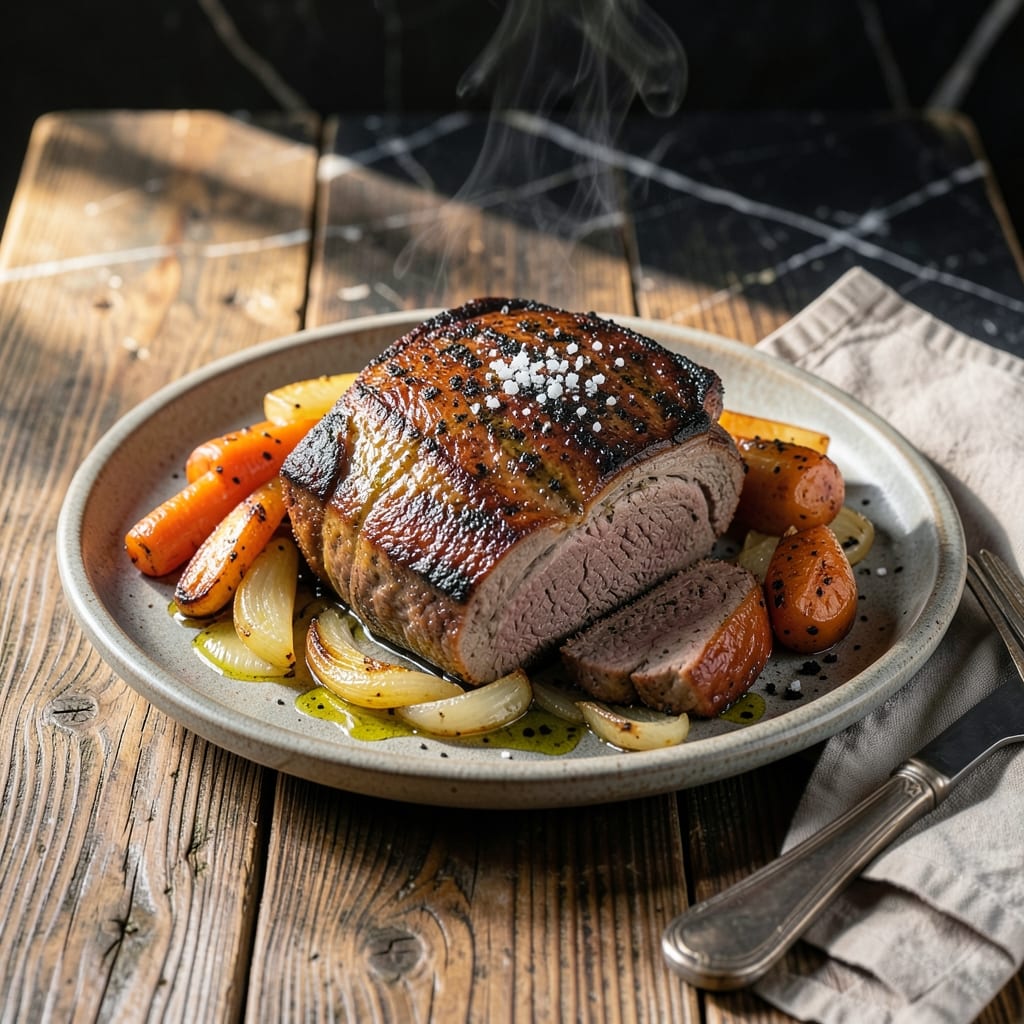
Wild game cooking requires patience, and this elk chuck roast rewards every minute of slow braising. The lean meat transforms into fall-apart tender perfection when given proper time and gentle heat.
I developed this method after several attempts to coax maximum flavor from elk’s naturally mild profile. A rich red wine and herb braising liquid builds complexity that complements rather than overpowers the meat.
The result is a restaurant-quality main course with deep, savory notes and meat so tender it barely needs a knife. The braising liquid reduces to a velvety sauce that begs for crusty bread.
Serve with mashed potatoes or roasted root vegetables to soak up every drop of the richly flavored sauce. This dish proves wild game deserves a place at your dinner table.
Ingredients for Elk Chuck Roast
Pantry staples plus a few fresh herbs bring out the best in this wild game.
| Ingredient | Amount | Notes |
|---|---|---|
| Elk Chuck Roast 🥩 | 2 ½ lb | Well-marbled, trimmed of excess fat |
| Kosher Salt 🧂 | 2 tsp | Divided for seasoning meat and sauce |
| Black Pepper 🌶️ | 1 tsp | Freshly ground preferred |
| Olive Oil 🫒 | 2 tbsp | For searing roast |
| Yellow Onion 🧅 | 1 whole | Large, diced into chunks |
| Carrots 🥕 | 3 whole | Peeled, cut into 2-inch pieces |
| Celery Stalks 🥬 | 3 whole | Cut into 2-inch pieces |
| Garlic Cloves 🧄 | 5 cloves | Smashed, peeled |
| Dry Red Wine 🍷 | 2 cups | Bold variety like Cabernet Sauvignon |
| Beef Stock 🥘 | 2 cups | Low-sodium preferred |
| Tomato Paste 🍅 | 2 tbsp | For depth of flavor |
| Fresh Rosemary 🌿 | 2 whole | Sprigs, 4-inches long |
| Fresh Thyme 🍃 | 4 whole | Sprigs, stems intact |
| Bay Leaves 🌿 | 2 whole | Dried or fresh |
| All-Purpose Flour 🌾 | 2 tbsp | For thickening sauce |
[recipe_ingredient_scaler]
The elk is the star here. Source it from a reputable butcher or specialty meat shop—look for good marbling (wild game can be lean, so this matters). I get mine from Wild Fork Foods when local options are limited. The roast should be deep red with minimal odor. For the wine, any bold dry red works—Cabernet, Merlot, or even a hearty Zinfandel.
No red wine? Beef broth plus 1 tbsp balsamic vinegar works in a pinch. Out of fresh herbs? Dried rosemary and thyme at one-third the amount gets the job done. If you can’t find elk, beef chuck roast is the closest substitute (reduce braising time by an hour). The tomato paste can be from a can or those handy squeeze tubes.
This tastes even better the next day once flavors meld. Keeps in the fridge for 4-5 days or freezes for 3 months. I always make extra sauce—it’s too good to waste. Reheat gently to keep that velvety texture intact (don’t boil it).
Why You’ll Love This Recipe
- Set It and Forget: I just season the elk chuck with salt, pepper, and a quick sear in olive oil, then let the oven do the work.
- Rich and Earthy: The slow-roasted elk with caramelized onion delivers a deep, wild flavor that beef just can’t match.
- Feeds the Freezer: One roast makes enough for tacos, stew, and sandwiches—honestly, it’s my weekly meal prep hack.
- Budget Stretcher: Elk chuck is leaner and often cheaper than beef, and a little goes a long way in hearty meals.
Step-by-Step Instructions for Elk Chuck Roast
Here’s my tested method for turning tough wild game into fall-apart tender perfection.
Step 1: Season and Sear the Elk Chuck Roast
Pat the 2.5 lb elk chuck roast dry with paper towels—this is non-negotiable for a good sear. Season generously with 1 tsp black pepper and half the 2 tsp kosher salt (save the rest for later). The salt should stick to the meat like a light crust.
Heat 2 tbsp olive oil in a Dutch oven over medium-high heat until it shimmers. Add the roast and sear for 4-5 minutes per side until deeply browned. You’re looking for a dark, caramelized crust—this builds the flavor foundation for your braise. Don’t rush this step; if it sticks, let it release naturally.
Step 2: Sauté the Aromatics
Remove the seared roast and set aside. In the same pot, add the diced yellow onion, chopped carrots, and chopped celery stalks. Cook for 5-6 minutes until the onions soften and start to brown at the edges.
Add the 5 cloves garlic cloves, 2 tbsp tomato paste, 2 whole fresh rosemary, 4 whole fresh thyme, and 2 whole bay leaves. Stir for 1-2 minutes until the tomato paste darkens slightly—this removes its raw edge and deepens the flavor. The kitchen should smell incredible right about now.
Step 3: Deglaze and Braise
Pour in 2 cups dry red wine and scrape up all the browned bits from the bottom of the pot with a wooden spoon. This is where the magic happens—those stuck-on bits dissolve into the liquid, packing it with rich, meaty flavor.
Return the roast to the pot. Add 2 cups beef stock and the remaining kosher salt. Bring to a simmer, then cover tightly. Reduce heat to low and cook for 2.5-3 hours, turning the roast every 45 minutes. You’ll know it’s done when the meat shreds easily with a fork.
Step 4: Thicken and Finish
Remove the roast and set aside. Skim excess fat from the braising liquid, then bring it to a boil over medium-high heat. Whisk in 2 tbsp all-purpose flour and cook for 3-4 minutes until the sauce thickens enough to coat the back of a spoon.
Return the roast to the pot, spoon the sauce over it, and let it rest for 10 minutes off heat. The sauce should be rich, glossy, and deeply flavorful—perfect for soaking into mashed potatoes or crusty bread. Serve the roast whole or shredded, with plenty of that braising liquid spooned over the top.
Pro Tips For Making Elk Chuck Roast
- Sear It Hot: I learned this the hard way—crank the heat to medium-high and get a deep brown crust on that elk chuck before braising. A pale sear means weak flavor, and elk deserves better.
- Salt Aggressively: Elk is leaner than beef, so don’t be shy with the kosher salt—go heavier than you think, especially if you’re not using a brine. The seasoning needs to penetrate that dense muscle.
- Don’t Rush the Rest: After searing, let the roast sit for 10 minutes before adding liquids. Skipping this makes the juices retreat, and you’ll end up with a dry, sad piece of meat.
- Use the Onion Twice: Sear the onion halves cut-side down in the same pan after the roast, then use them in the braise. It adds a caramelized depth that raw onion just can’t match.
Regional Styles of This Dish
Rocky Mountain Style
In Colorado, they keep it simple and bold. I learned from a Denver chef to add 2 chopped chipotle peppers and 1 tbsp adobo sauce to the braising liquid for a smoky kick. The elk’s natural richness stands up beautifully to this Southwestern twist. 🌶️
Pacific Northwest
Seattle cooks love incorporating local flavors. I swap the red wine for 1 cup dry porter beer and add ½ cup huckleberry jam to the sauce. The berry’s tartness cuts through the meat’s richness, creating a perfect balance.
Texas Hill Country
Everything’s bigger in Texas, including the flavor. I’ve seen them add 2 tbsp molasses and 1 tbsp apple cider vinegar to the braising liquid. The result is a sticky, tangy glaze that clings to the meat. Serve with cornbread to soak up every drop.
New England Comfort
Back home in Boston, we’d make this more like a pot roast. I add 1 lb baby potatoes and 2 chopped parsnips to the pot for the last 1 hour of cooking. The vegetables soak up the sauce beautifully. ❄️
Southwest Fusion
For a Mexican-inspired version, I stir in 1 tbsp ground cumin and 1 tbsp chili powder when browning the meat. Then I add 1 cup crushed tomatoes with the braising liquid. Top with fresh cilantro before serving.
French Technique
Channel your inner Julia Child by adding 8 oz mushrooms when you sauté the aromatics. Then finish the sauce with 2 tbsp cold butter whisked in off heat. This creates a velvety texture that’s pure restaurant quality. 💫
Nutrition Facts
Frequently Asked Questions
How long should I sear the elk chuck roast?
Sear for 4-5 minutes per side over medium-high heat. This creates a deep, caramelized crust that builds the flavor foundation for your braise.
Can I substitute beef for elk in this recipe?
Yes, use beef chuck roast as a substitute. Since beef is fattier, reduce the braising time by about 1 hour. The technique remains the same.
What if I don’t have red wine for the braise?
Replace with 2 cups beef broth plus 1 tbsp balsamic vinegar. This maintains the acidity and depth needed for the sauce.
How do I know when the elk is done?
The meat is ready when it shreds easily with a fork after 2.5-3 hours of braising. Check by inserting a fork and twisting gently.

Trained in classic French technique but raised on slow-cooked ribs and spicy rubs, she blends culinary skill with smoke and soul.
- Recipe for Boneless Pork Chops in Cast Iron Skillet: Sear and Baste to Juicy Perfection - October 3, 2026
- Recipe for Boneless Cross Rib Roast: Slow-Roasted Beef with Herb Crust - October 3, 2026
- Hamburgers in Sauce Recipe Crock Pot: Slow-Cooked Savory Delight - October 3, 2026