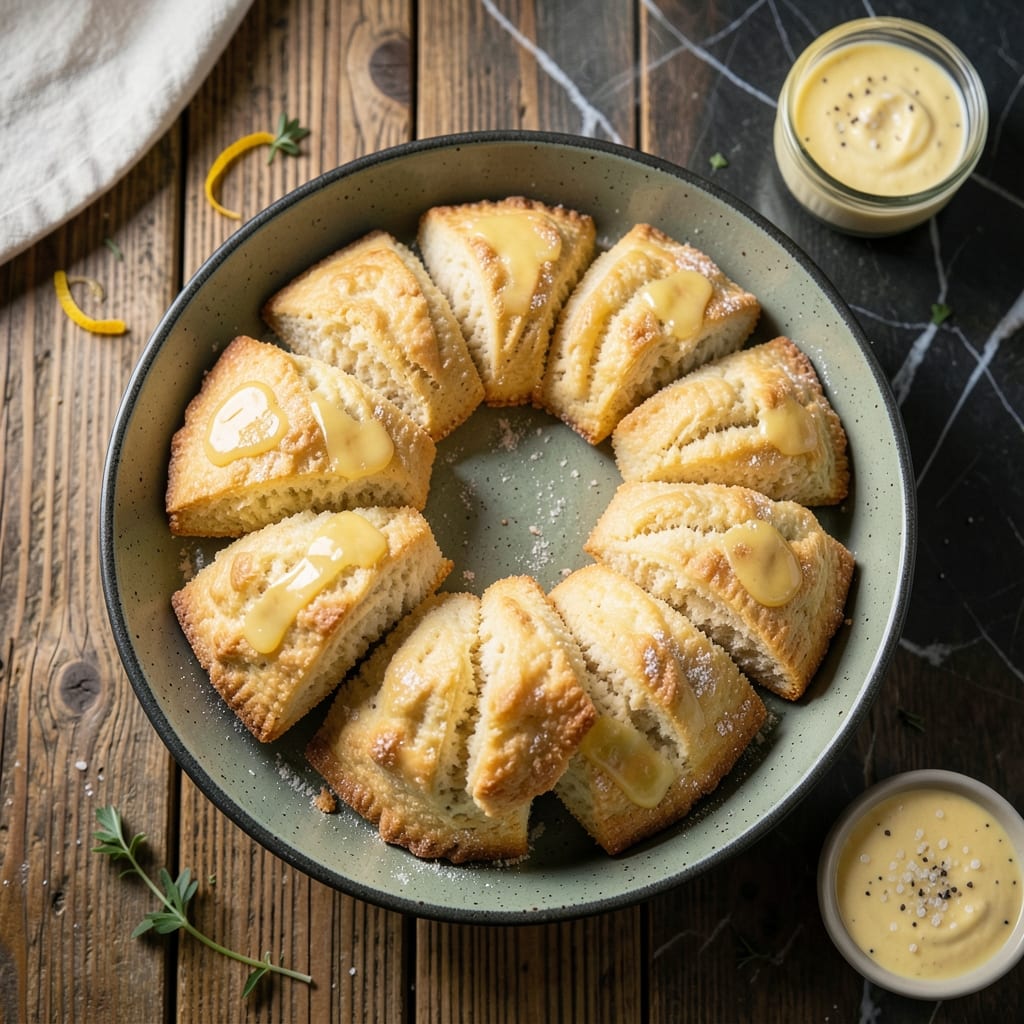
I’ve tested this biscuit recipe more times than I care to admit in my tiny Boston kitchen. The secret to those flaky layers lies in cold butter and a gentle touch with the dough.
This method creates towering biscuits with crisp, golden tops and tender, buttery interiors. The technique is simple but requires precision—overworking the dough is the fastest way to tough biscuits.
What emerges from the oven are perfect, split-open biscuits ready for butter, jam, or gravy. The aroma alone will have everyone gathering around the table before they’re even cool enough to handle.
These deliver the kind of flaky, buttery depth that makes them disappear faster than I can bake them. The process is worth every minute of care.
Ingredients for Erin French Biscuit
Cold butter and a light hand turn basic pantry staples into towering, flaky perfection.
| Ingredient | Amount | Notes |
|---|---|---|
| All-Purpose Flour 🌾 | 2 cups | Plus extra for dusting |
| Baking Powder 🧂 | 1 tbsp | Fresh for best rise |
| Granulated Sugar 🍚 | 1 tbsp | Balances the saltiness |
| Salt 🧂 | 1 tsp | Fine sea salt preferred |
| Unsalted Butter 🧈 | ½ cup | Cold and cubed (the good stuff, not margarine) |
| Buttermilk 🥛 | ¾ cup | Full-fat for richness |
| Baking Soda 🧂 | ½ tsp | Helps with browning |
[recipe_ingredient_scaler]
The butter is non-negotiable here. Use unsalted, high-fat European-style if you can find it—it’s got that extra richness that takes these over the top. Keep it ice cold, and cube it yourself (pre-cut butter can get greasy before you even start). King Arthur Flour is my go-to for the base—consistent results every time, and the protein content is just right for those layers.
No buttermilk on hand? Whole milk plus a splash of lemon juice or vinegar works in a pinch—let it sit 5 minutes to curdle. If you’re out of baking powder, double the baking soda and add a teaspoon of cream of tartar (but fresh baking powder is ideal). The sugar can be skipped, but it adds a subtle sweetness that balances the butter.
The dough keeps in the fridge for 2 days (wrapped tight), but it’s best baked fresh. Leftovers? Reheat in a 350°F oven for 5 minutes to crisp the edges. Freeze unbaked biscuits on a tray, then transfer to a bag for up to 3 months.
Why You’ll Love This Recipe
- One Bowl Wonder: I just dump the flour, baking powder, sugar, salt, and cold butter into a single bowl—no fancy tools, no fuss.
- Buttery Layers: That flaky, golden crust from the cold butter folded in? It melts in your mouth every single time.
- Breakfast to Dinner: Honestly, these biscuits work with jam at sunrise or soaked in gravy at dinner.
- Pennywise Perfection: A bag of flour and some butter make a dozen biscuits—my wallet’s never complained.
Step-by-Step Instructions for Flaky Buttermilk Biscuits
Here’s my method for achieving those coveted flaky layers with minimal effort.
Step 1: Mix Dry Ingredients and Cut in Cold Butter
In a large bowl, whisk together the 2 cups All-Purpose Flour, 1 tbsp Baking Powder, 1 tbsp Granulated Sugar, 1 tsp Salt, and 0.5 tsp Baking Soda. Make sure the baking powder is fresh—that’s the secret to a good rise.
Add the 0.5 cup Unsalted Butter (cold and cubed) to the dry mix. Use a pastry cutter or your fingers to work the butter into the flour until the mixture resembles coarse crumbs with pea-sized butter pieces visible. This is key—those butter chunks create the flaky layers when they melt during baking.
Step 2: Add Buttermilk and Form Dough
Make a well in the center of the flour mixture and pour in the 0.75 cup Buttermilk. Use a wooden spoon to gently stir until the dough just comes together. It will look shaggy—that’s perfect. Don’t overmix or you’ll end up with tough biscuits.
Turn the dough out onto a lightly floured surface (use some of the extra flour from your ingredients). Gently pat it into a 1-inch thick rectangle. The less you handle the dough, the more tender your biscuits will be.
Step 3: Fold and Cut for Layers
Fold the dough in half like a book, then gently pat it back down to 1-inch thickness. Repeat this fold-and-pat process 2 more times. This creates those beautiful flaky layers that make these biscuits special.
After the final fold, pat the dough to ¾-inch thickness. Use a 2.5-inch biscuit cutter (or a glass) to cut out biscuits. Press straight down—don’t twist or you’ll seal the edges and prevent rising. Gather scraps and repeat until all dough is used.
Step 4: Bake to Golden Perfection
Preheat your oven to 425°F. Place the biscuits on a baking sheet lined with parchment paper, touching slightly so they support each other as they rise. Brush the tops with a little extra buttermilk for browning.
Bake for 15-18 minutes until the biscuits are tall and golden brown on top. Don’t open the oven early—you want that full rise. The bottoms should be a deep golden color when done.
Pro Tips For Making Erin French Biscuit
- Chill the Butter: Cut your unsalted butter into small cubes and freeze for 10 minutes before mixing—this keeps it cold so it doesn’t melt into the flour, giving you flaky layers.
- Don’t Overmix: Stir the dough just until it comes together, even if it looks shaggy. I learned this the hard way after my first few batches turned out tough and dense.
- Use Cold Flour: Measure your all-purpose flour, then pop it in the fridge for 15 minutes. Sounds weird, but it works to keep the butter from softening too fast.
- Bake Immediately: Get the biscuits in the oven as soon as they’re shaped—any delay lets the baking powder lose its lift, and your biscuits won’t rise as high.
Regional Styles of This Recipe
Southern Style
In the South, biscuits are a way of life. I learned from a Georgia friend to add a pinch of extra sugar to the dough, making them slightly sweeter to balance savory dishes like fried chicken or sausage gravy. They also prefer a thicker cut—about 1.25 inches—for a more substantial bite. 💛
New England Tradition
Back in Boston, we often make biscuits with a touch of sharp cheddar folded into the dough—about ½ cup grated. It’s a nod to our love of all things cheesy and hearty. The cheese melts into the layers, adding a subtle tang that pairs perfectly with clam chowder.
Appalachian Approach
In the mountains, biscuits are often made with lard instead of butter for a flakier texture. I’ve tested this in my kitchen, and while it’s not my usual go-to, the result is undeniably tender. If you try it, keep the lard just as cold as you would butter. ✨
Texas Twist
Everything’s bigger in Texas, including biscuits. They often add 1 tbsp of cornmeal to the flour mix for a bit of crunch. The texture is slightly grittier but in the best way—it holds up well to hearty stews and barbecue.
Midwest Comfort
In the Midwest, biscuits are often served with honey butter or as the base for breakfast sandwiches. I like to make mine slightly smaller—about 2 inches in diameter—so they fit perfectly in a toaster for quick reheating.
Nutrition Facts
Frequently Asked Questions
Can I use milk instead of buttermilk?
Yes! Mix ¾ cup milk with 1 tsp vinegar or lemon juice, let sit for 5 minutes to curdle. This creates a buttermilk substitute that works just as well.
Why are my biscuits flat instead of tall?
This usually happens if the butter was too warm or the dough was overworked. Keep butter ice-cold and handle the dough minimally for maximum rise. Also, press the cutter straight down—no twisting!
How do I get extra flaky layers?
Fold the dough like a book 3 times before cutting. Each fold creates more layers, and cold butter between them steams during baking, making them flaky.
Can I make these ahead?
Shape and cut the biscuits, then freeze on a tray. Transfer to a bag and store for up to 3 months. Bake straight from frozen, adding 2-3 minutes to the time.

Trained in classic French technique but raised on slow-cooked ribs and spicy rubs, she blends culinary skill with smoke and soul.
- Recipe for Boneless Pork Chops in Cast Iron Skillet: Sear and Baste to Juicy Perfection - October 3, 2026
- Recipe for Boneless Cross Rib Roast: Slow-Roasted Beef with Herb Crust - October 3, 2026
- Hamburgers in Sauce Recipe Crock Pot: Slow-Cooked Savory Delight - October 3, 2026