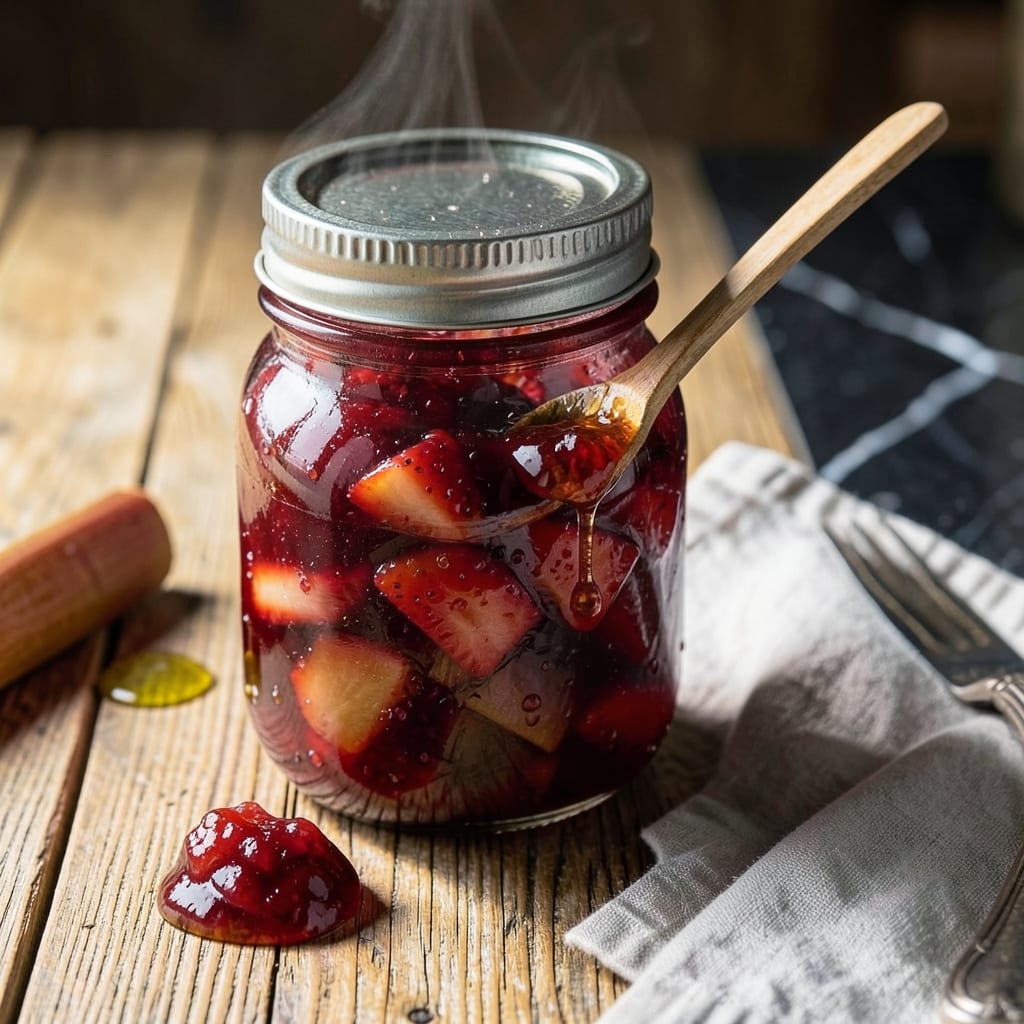
There’s a special satisfaction in making jam from scratch, especially when it captures the perfect balance of sweet and tart. This strawberry rhubarb combination delivers bright flavors without artificial thickeners.
Natural pectin in the fruit does the work, creating a thick spread with minimal effort. The process requires just 4 ingredients and basic kitchen tools, making it accessible for any home cook.
What emerges is a vibrant jam with visible fruit pieces, ideal for toast, yogurt, or gift-giving. The tartness of rhubarb complements the strawberries beautifully.
Store properly canned jars in a cool, dark place for up to a year. Refrigerate after opening for best quality.
Ingredients for Strawberry Rhubarb Jam Recipe Without Pectin
Four simple ingredients create this vibrant, naturally thickened fruit spread with no artificial additives.
| Ingredient | Amount | Notes |
|---|---|---|
| Fresh Strawberries 🍓 | 4 cups | Hulled and chopped |
| Fresh Rhubarb 🌿 | 2 cups | Trimmed and diced |
| Granulated Sugar 🍚 | 3 cups | Adjust to taste preference |
| Lemon Juice 🍋 | ¼ cup | Freshly squeezed preferred |
[recipe_ingredient_scaler]
The strawberries should be ripe but firm (overripe berries turn mushy). Farmers markets often have the best selection in late spring. For rhubarb, look for crisp stalks with vibrant pink or red hues—avoid any with wilted leaves or soft spots. Organic isn’t necessary, but wash both fruits thoroughly. The sugar acts as both sweetener and preservative, so don’t skimp unless you’re making a small test batch.
No fresh strawberries? Frozen works in a pinch—thaw and drain first. Swap rhubarb for green apples if unavailable (adds pectin naturally). The lemon juice is non-negotiable—it brightens the flavor and aids in thickening. For a less sweet jam, reduce sugar by one-third but expect a softer set. Coconut sugar can substitute, but it changes the color.
This keeps 1 year when properly canned. Once opened, refrigerate and use within 3 weeks. For small batches, store in airtight containers in the fridge for up to 1 month. The color deepens over time but flavor stays bright.
Why You’ll Love This Recipe
- No Fuss Cooking: That lemon juice does all the work—no pectin, no stress, just stir and simmer.
- Sweet-Tart Magic: The rhubarb’s tang cuts through the strawberries’ sweetness like a dream.
- Spreads Everywhere: Slather it on toast, swirl into yogurt, or gift jars to neighbors.
- Pantry Hero: Honestly, it keeps for months and costs pennies compared to store-bought.
Step-by-Step Instructions for Strawberry Rhubarb Jam Without Pectin
This method ensures a perfectly set jam with natural pectin from the fruit and proper cooking technique.
Step 1: Prepare the Fruit Base
Combine the 4 cups Fresh Strawberries and 2 cups Fresh Rhubarb in a large, heavy-bottomed pot. I use a Dutch oven for even heat distribution. The rhubarb’s natural pectin will help thicken the jam without additives.
Mash the fruit mixture lightly with a potato masher or fork to release some juices. This initial breakdown helps the fruit cook down faster and more evenly. You should have about 6 cups of fruit mixture at this stage.
Step 2: Incorporate Sugar and Lemon Juice
Add all 3 cups Granulated Sugar and the 0.25 cup Lemon Juice to the pot. The lemon juice provides essential acidity that helps with preservation and balance the sweetness. Stir well to combine, ensuring the sugar begins to dissolve into the fruit juices.
Let the mixture sit for 10-15 minutes before cooking. This waiting period allows the sugar to fully penetrate the fruit, preventing crystallization during cooking. You’ll notice the mixture becoming more liquid as the sugar draws out the fruit’s natural juices.
Step 3: Cook to the Proper Consistency
Place the pot over medium-high heat and bring to a full rolling boil, stirring frequently. Once boiling, reduce heat to medium and maintain a steady boil. Use a wooden spoon to stir occasionally, scraping the bottom to prevent sticking.
Cook for 20-25 minutes until the mixture thickens. To test for doneness, place a small spoonful on a chilled plate. When pushed with a finger, it should wrinkle and hold its shape. The jam should reach 220°F on a candy thermometer at this stage.
Step 4: Jar and Preserve
Remove the pot from heat and let the jam cool for 5 minutes. Skim off any foam that has risen to the top with a metal spoon. This foam is harmless but affects the jam’s appearance in the jar.
Ladle the hot jam into sterilized jars, leaving ¼-inch headspace. Process in a water bath for 10 minutes for proper sealing and shelf stability. The jam will continue to thicken slightly as it cools, reaching its final consistency within 24 hours.
Pro Tips For Making Strawberry Rhubarb Jam Recipe Without Pectin
- Cook Low and Slow: Keep the heat at medium-low—any higher and the fruit will burn before the jam thickens. I learned this the hard way after scorching a batch that smelled like heaven but tasted like regret.
- Dice Evenly: Cut strawberries and rhubarb into uniform, small pieces (about ½-inch) so they break down at the same rate. Sounds tedious, but it prevents half your jam from turning to mush while the other half stays stubbornly chunky.
- Skip the Over-Stirring: Resist the urge to stir constantly once the mixture starts boiling—it can break the natural pectin forming. A gentle swirl every few minutes is all you need to keep it from sticking.
- Test with a Chill: To check doneness, spoon a bit onto a chilled plate and let it sit for 30 seconds—if it wrinkles when pushed, it’s ready. My grandmother swore by this, and she was right: the spoon test lies.
Essential Equipment for This Dish
Heavy Pot Essentials
A heavy-bottomed pot or Dutch oven is non-negotiable for even heat distribution. I swear by my Le Creuset 5.5-quart—it prevents scorching while the fruit breaks down. Thin pots create hot spots that burn the sugar. 🔥
Wooden Spoon Tradition
Use a wooden spoon for stirring, just like Nonna taught me. It won’t scratch your pot and handles high heat beautifully. The flat surface helps mash fruit against the bottom for faster cooking.
Precision Thermometer
A candy thermometer clipped to the pot takes the guesswork out of doneness. Look for one that reads up to 250°F. I use Taylor’s classic model—affordable and reliable for jam-making.
Jarring Supplies
Invest in Ball Mason jars with new lids for safe canning. A jar lifter and canning funnel make filling hot jars safer. Farmers markets often sell these in kits—perfect for beginners.
Testing Tools
Keep a small white plate in your freezer for the gel test. The cold surface helps determine set point accurately. Also have a ladle and metal spoon ready for skimming foam.
Optional Upgrades
For serious jam makers, a wide-mouth canning funnel and magnetic lid lifter save time. But honestly, you can start with just the pot and spoon—Nonna did for years. 💛
Nutrition Facts
Frequently Asked Questions
Can I reduce the sugar content?
You can reduce sugar by up to 1/3 but expect a softer set. Sugar acts as a preservative and thickener, so less means shorter shelf life and thinner texture. For best results, use the full 3 cups as written.
How do I know when it’s done?
Test by placing a spoonful on a chilled plate. When pushed with a finger, it should wrinkle and hold its shape. The jam should reach 220°F on a candy thermometer for perfect thickness.
Why did my jam not thicken?
Undercooking is the most common reason. Cook until it passes the plate test, about 20-25 minutes. Also, ensure you’re using ripe strawberries and fresh rhubarb for natural pectin.
Can I use frozen fruit?
Yes, thaw and drain frozen strawberries first. Frozen rhubarb works too—just adjust cooking time as it may release more liquid. The texture will be slightly softer than fresh.

Trained in classic French technique but raised on slow-cooked ribs and spicy rubs, she blends culinary skill with smoke and soul.
- Recipe for Boneless Pork Chops in Cast Iron Skillet: Sear and Baste to Juicy Perfection - October 3, 2026
- Recipe for Boneless Cross Rib Roast: Slow-Roasted Beef with Herb Crust - October 3, 2026
- Hamburgers in Sauce Recipe Crock Pot: Slow-Cooked Savory Delight - October 3, 2026