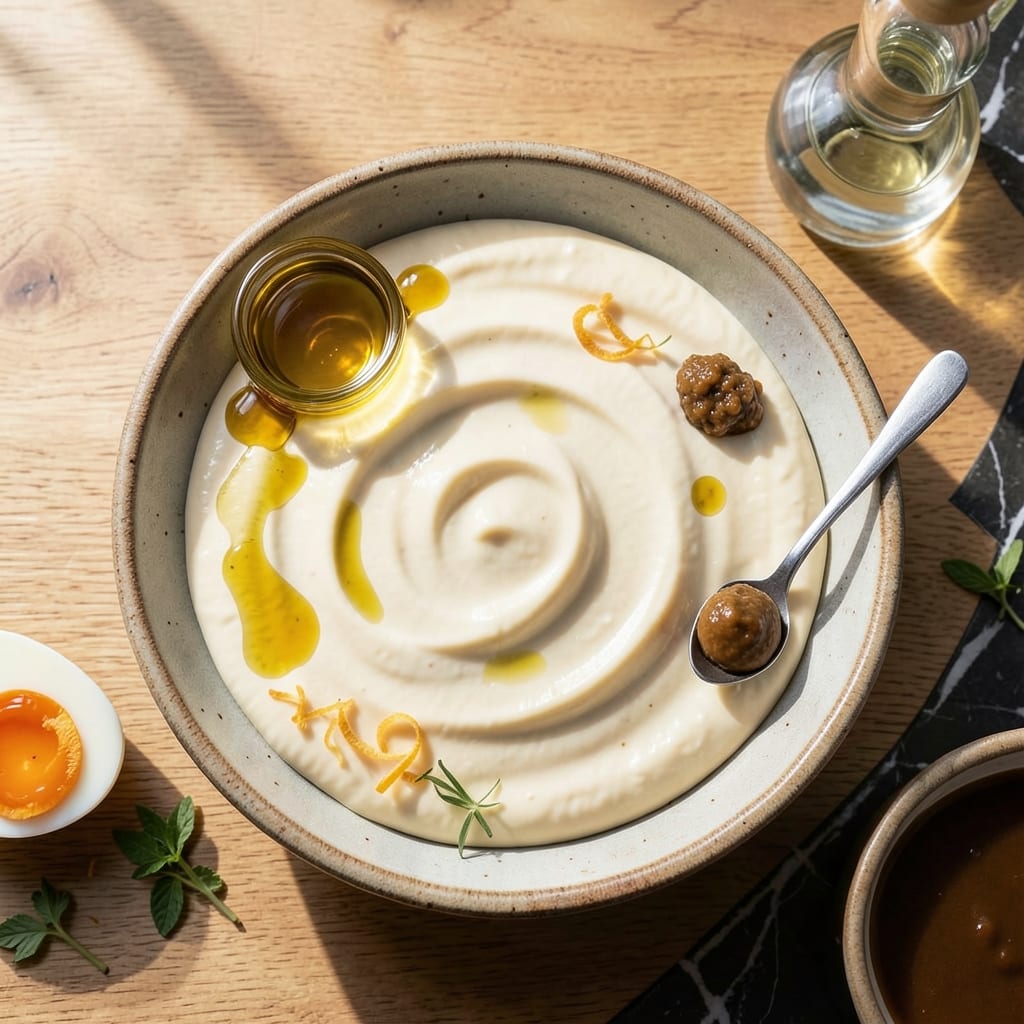
There’s a world of difference between store-bought mayonnaise and the velvety richness of a homemade version made with extra virgin olive oil.
This recipe transforms simple ingredients into a smooth, emulsified sauce that elevates sandwiches, salads, and dips. The key lies in slow, steady whisking to create a stable, creamy texture.
What you get is a mayonnaise with depth of flavor, thanks to the fruity notes of quality olive oil. It’s fresher, more vibrant, and free from preservatives.
Once you try this, you’ll never go back to the jarred version. Store it in the fridge for up to a week.
Ingredients for Extra Virgin Olive Oil Mayonnaise
Seven simple ingredients transform into rich, velvety homemade mayo with extra virgin olive oil.
| Ingredient | Amount | Notes |
|---|---|---|
| Extra Virgin Olive Oil 🫒 | 1 cup | Fruity, high-quality for best flavor |
| Large Egg 🥚 | 1 whole | Room temperature for better emulsification |
| Dijon Mustard 🟡 | 1 tbsp | Smooth variety preferred |
| White Wine Vinegar 💧 | 1 tbsp | Or substitute lemon juice |
| Salt 🧂 | ½ tsp | Sea salt or kosher salt |
| White Pepper 🌶️ | ¼ tsp | Freshly ground preferred |
| Sugar 🍬 | ½ tsp | Optional, balances acidity |
[recipe_ingredient_scaler]
The olive oil is non-negotiable here. Splurge on a good extra virgin—look for cold-pressed, single-origin bottles from Whole Foods or Trader Joe’s. Their house brands punch above their price point. The egg needs to be room temperature so it emulsifies properly. I pull mine out of the fridge the night before, or float it in warm water for 10 minutes if I’m in a hurry (no judgment).
No Dijon? Yellow mustard works in a pinch, but it’ll be milder. Out of white wine vinegar? Apple cider vinegar or lemon juice are solid swaps. Want it sweeter? Bump the sugar to a full teaspoon. The white pepper keeps the mayo looking pristine—sub black pepper if that’s all you’ve got, but expect little black specks.
This keeps for 1 week in the fridge, no exceptions. Always use a clean spoon to avoid contamination. It’ll thicken up in the cold—let it sit out 10 minutes before using if you need it pourable.
Why You’ll Love This Recipe
- No Fuss Blending: I just dump everything in a jar and blend—no whisking, no slow drizzling, no stress.
- Rich Olive Oil Taste: The extra virgin olive oil gives it this deep, fruity kick that store-bought can’t touch.
- Sandwich Superstar: Honestly, it turns even a sad turkey sandwich into something I actually look forward to eating.
- Keeps for Days: I make a big batch and it stays fresh in the fridge for up to a week—my lazy lunch savior.
Step-by-Step Instructions for Extra Virgin Olive Oil Mayonnaise
Here’s the method that gives you that rich, velvety texture every single time.
Step 1: Whisk Egg and Mustard Until Smooth
In a medium bowl, crack the large egg and add the 1 tbsp Dijon Mustard. Whisk these together vigorously until the mixture turns pale yellow and slightly thickens—this takes about 30-45 seconds of constant whisking.
This first step is crucial because it starts building the emulsion base. The mustard acts as an emulsifier, helping the oil and egg bind together properly. Make sure you’re using a smooth Dijon mustard here—whole grain won’t incorporate as smoothly.
Step 2: Slowly Drizzle in the Olive Oil
Now comes the moment that matters: add the 1 cup Extra Virgin Olive Oil one drop at a time while whisking constantly. I know it seems tedious, but this slow incorporation is what creates that perfect creamy texture.
Start with just a few drops at a time, then as the emulsion begins to form, you can increase to a very thin trickle. After about half the oil is incorporated, you can add it in a slightly faster but still controlled stream. The mixture should thicken noticeably and turn a pale ivory color.
Step 3: Finish with Vinegar and Seasonings
Once all the oil is incorporated, whisk in the 1 tbsp White Wine Vinegar. You’ll notice the mayonnaise lightens slightly and becomes even creamier. The vinegar also helps balance the richness of the oil.
Now add the 0.5 tsp Salt, 0.25 tsp White Pepper, and 0.5 tsp Sugar. The sugar is optional but I recommend it—it rounds out the flavors and balances the acidity from the vinegar and mustard. Whisk until everything is fully combined and the seasoning is evenly distributed.
Step 4: Adjust Consistency and Rest
Taste and adjust the seasoning if needed. If your mayonnaise seems too thick, you can whisk in a teaspoon of warm water to loosen it slightly. Remember that it will thicken a bit more as it rests in the refrigerator.
Transfer to a clean jar or airtight container and let it sit at room temperature for 10-15 minutes before refrigerating. This brief rest allows the flavors to meld together. Once chilled, it’ll keep in the refrigerator for up to 1 week—though I doubt it’ll last that long!
Pro Tips For Making Extra Virgin Olive Oil Mayonnaise
- Whisk Before Drizzling: Beat the egg, mustard, vinegar, and salt until fully combined before slowly adding the oil—this creates a stable base that actually holds the emulsion.
- Use Room-Temp Eggs: I learned this the hard way: cold eggs resist emulsifying, so pull them from the fridge 20-30 minutes before starting.
- Skip the Power Tools: A fork or small whisk gives you more control than a blender for this small batch, and you can see the texture develop as you go.
- Choose Mild EVOO: Sounds weird, but it works: a strongly peppery or bitter extra virgin olive oil can overpower the mayo—opt for a buttery, mild one for best flavor.
Dietary Considerations for This Dish
Vegetarian Friendly
This recipe is naturally vegetarian as written, using just egg, oil, and seasonings. No meat or animal products beyond the egg are required. I love that it fits seamlessly into meatless meals while adding richness.
Egg Concerns
If you’re avoiding raw eggs, use a pasteurized egg—they’re widely available at most grocery stores. The pasteurization process eliminates salmonella risk while maintaining the egg’s emulsifying properties. The texture will be identical to using a regular egg.
Gluten-Free Status
This mayo is inherently gluten-free since none of the ingredients contain gluten. Just double-check your Dijon mustard label, as some brands add wheat-based thickeners. I trust Annie’s or Grey Poupon for safe options. 💡
Dairy-Free Naturally
Unlike store-bought versions that sometimes contain milk derivatives, this homemade version contains no dairy whatsoever. It’s perfect for lactose-intolerant cooks or those following a dairy-free diet. The olive oil provides all the creaminess you need.
Allergen Note
The primary allergen here is the egg. For those with egg allergies, commercial vegan mayos (like Just Mayo) are the safest alternative. Unfortunately, there’s no simple egg substitute that will properly emulsify this recipe at home.
Sugar-Free Option
To make this keto-friendly, simply omit the 0.5 tsp Sugar. The vinegar and mustard provide enough balance without it. I’ve made it both ways and honestly can’t taste the difference in most applications.
Nutrition Facts
Frequently Asked Questions
Why does my mayo break when making it?
This usually happens if the oil is added too quickly or the egg wasn’t at room temperature. Start with just a few drops of oil while whisking constantly, then gradually increase to a thin trickle. Room temp eggs emulsify better.
Can I use a different type of oil?
You can, but it will change the flavor significantly. Light olive oil works, but avoid strong oils like sesame. Extra virgin gives the best taste and color. Stick to neutral oils if you prefer a milder mayo.
How long does homemade mayo last?
It keeps for up to 1 week in the fridge in an airtight container. Always use clean utensils to prevent contamination. If it smells off or separates, discard it immediately.
Can I make this without a whisk?
A food processor or immersion blender works even better! Add the egg and mustard first, then drizzle oil in a slow stream while processing. It creates a perfect emulsion in seconds.

Trained in classic French technique but raised on slow-cooked ribs and spicy rubs, she blends culinary skill with smoke and soul.
- Recipe for Boneless Pork Chops in Cast Iron Skillet: Sear and Baste to Juicy Perfection - October 3, 2026
- Recipe for Boneless Cross Rib Roast: Slow-Roasted Beef with Herb Crust - October 3, 2026
- Hamburgers in Sauce Recipe Crock Pot: Slow-Cooked Savory Delight - October 3, 2026