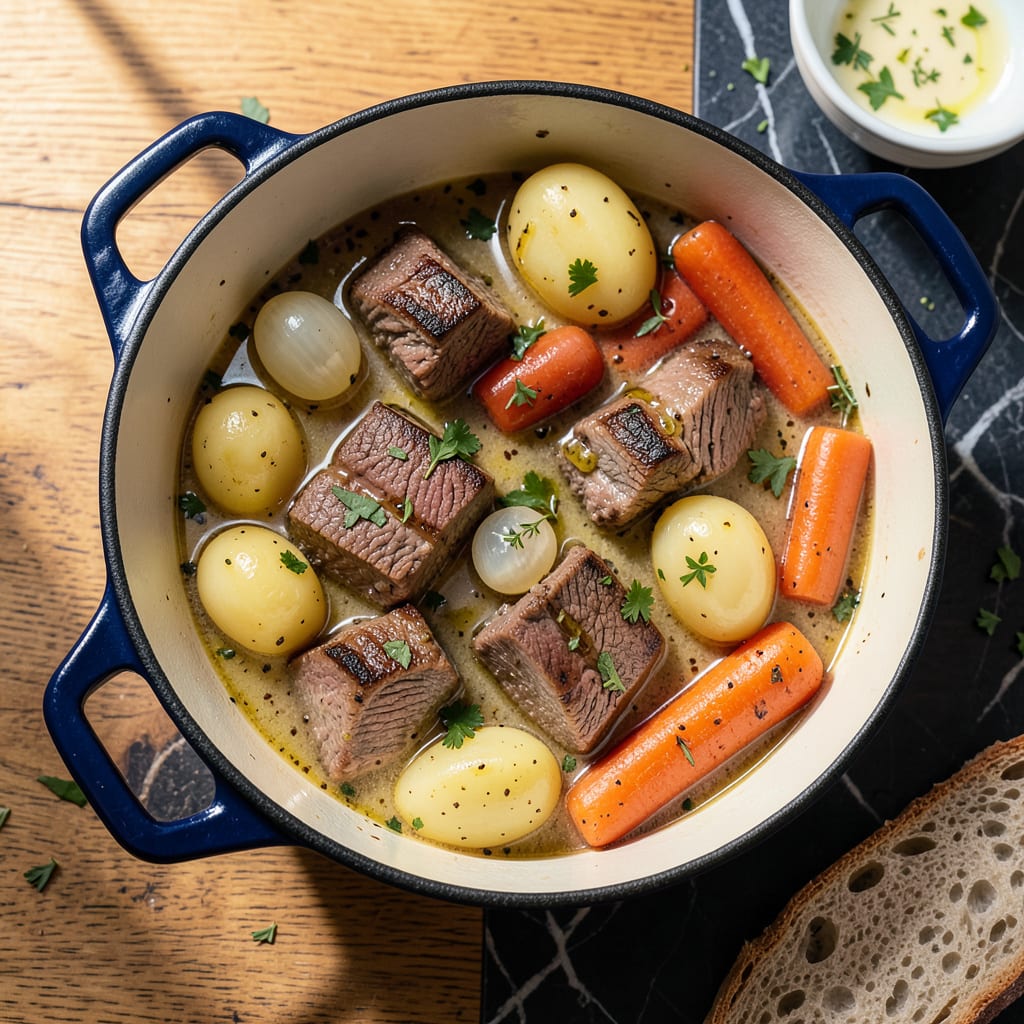
There’s something about a slow-simmered beef stew that turns a regular dinner into something extraordinary. I’ve been perfecting this white wine version for years, and let me tell you—it’s the secret to tender, fall-apart beef with layers of flavor that’ll make your kitchen smell like a French bistro.
Here’s the thing—white wine isn’t just for deglazing. It actually breaks down the meat fibers while adding bright, complex notes that balance the richness. I use a dry white (Sauvignon Blanc works great) and let it reduce properly—no shortcuts. The alcohol cooks off, leaving behind pure flavor that builds as everything simmers.
By the time this stew hits your bowl, you’ll have perfectly cooked beef in a velvety sauce packed with carrots, onions, and herbs. The wine gives it that special something—deep enough for cold nights, but with a brightness that keeps it from feeling heavy. Trust me, this isn’t your average beef stew.
Serve it with crusty bread to soak up every drop, or over mashed potatoes if you’re feeling extra. And here’s a pro tip: pour yourself a glass of the same wine you cooked with. The pairing is spot-on.
📚 In This Guide
- What You’ll Need
- Instructions
- Tips and Common Mistakes
What Youll Need
- ● Beef: 2 lbs (900g) chuck roast or stew meat, cut into 1.5-inch cubes 🥩
- ● White wine: 1.5 cups (360ml) dry variety (Sauvignon Blanc or Chardonnay work great) 🍷
- ● Vegetables: 2 medium carrots, chopped
- ● 1 large yellow onion, diced
- ● 3 garlic cloves, minced
- ○ 8 oz (225g) mushrooms (optional, cremini or baby bella)
- ● Broth: 2 cups (480ml) beef stock (low-sodium preferred)
- ● Tomato paste: 2 tbsp (30g)
- ● Herbs: 2 sprigs fresh thyme (or 1 tsp dried)
- ● 1 bay leaf
- ● Oil: 2 tbsp olive oil or butter for searing
- ● Seasonings: Salt & black pepper to taste
- ○ Optional: 1 tbsp flour (for thickening) or ½ cup pearl onions (for extra texture)
- ● Dutch oven (or heavy pot with lid)
- ● Wooden spoon (for stirring)
- ● Chef’s knife & cutting board
- ● Measuring cups/spoons
Instructions
Let me walk you through the process of creating this rich, flavorful stew—each step builds on the last for perfect results.
Sear the Beef for Maximum Flavor
Start by patting the beef dry with paper towels—this is crucial for getting a good sear. Heat a large Dutch oven over medium-high heat until it’s properly hot (you should see a faint wisp of smoke). Add the oil and let it shimmer for 30 seconds before adding the beef in a single layer.
Don’t overcrowd the pan; work in batches if needed. Sear the beef for 3-4 minutes per side until you develop a deep brown crust. This isn’t just for color—it creates the flavor foundation through the Maillard reaction. Transfer the seared beef to a plate and set aside.
Build the Aromatic Base
In the same pot, reduce the heat to medium and add the diced onions, carrots, and celery. Cook for 6-8 minutes, stirring occasionally, until the vegetables soften and develop light golden edges. This is where the stew’s depth begins to develop.
Add the minced garlic and cook for 1 minute until fragrant—don’t let it brown or it will turn bitter. Sprinkle in the tomato paste and stir constantly for 2 minutes until it darkens slightly. This step intensifies the tomato flavor and helps thicken the stew naturally.
Deglaze with White Wine
Pour in the white wine and increase the heat to medium-high. Use a wooden spoon to scrape up all those browned bits from the bottom of the pot—these are packed with flavor. Let the wine simmer for 3-4 minutes until it reduces by about half.
You’ll know it’s ready when the sharp alcohol smell dissipates and you’re left with a rich, aromatic base. The wine’s acidity will tenderize the beef and balance the richness of the stew. This is where the magic happens—don’t rush this step.
Simmer to Perfection
Return the seared beef to the pot along with any accumulated juices. Add enough broth to just cover the meat and vegetables. Bring everything to a gentle boil, then reduce the heat to low so the stew maintains a slow simmer.
Cover the pot and let it cook for 2-2.5 hours, stirring occasionally, until the beef becomes fork-tender. You’ll know it’s done when a piece of beef easily pulls apart with gentle pressure. This slow cooking time allows the flavors to meld and the meat to become meltingly tender.
Finish and Serve
Once the beef is tender, stir in any fresh herbs and adjust the seasoning with salt and pepper. Let the stew rest for 10 minutes off the heat before serving—this allows the flavors to settle and the broth to thicken slightly.
Ladle the stew into deep bowls, making sure each serving has plenty of tender beef, vegetables, and that rich, wine-infused broth. The white wine should have mellowed into a subtle complexity that enhances rather than overpowers the dish. Serve with crusty bread to soak up every last drop.
Tips and Common Mistakes
Let me share what I’ve learned from years of making this stew—these small details make all the difference between good and extraordinary.
The Searing Secret: In Step 1, don’t rush the searing process. Those 3-4 minutes per side at medium-high heat create the Maillard reaction that builds your flavor foundation. I always wait until I see that faint wisp of smoke before adding the oil—this ensures your pan is properly hot. If your beef sticks when you try to turn it, give it another 30 seconds; it will release naturally when properly seared.
Tomato Paste Technique: When you reach Step 2 and add the tomato paste, those 2 minutes of constant stirring are crucial. This isn’t just about cooking—it’s about caramelizing the paste to develop its natural sweetness and deepen the stew’s color. Watch for the paste to darken slightly and become fragrant. This step transforms raw tomato flavor into something rich and complex.
Wine Reduction Wisdom: During Step 3, when reducing the white wine, pay attention to the aroma. After 3-4 minutes of simmering, you’ll notice the sharp alcohol smell mellows into something richer. This is your signal that the wine has reduced properly. Use a wooden spoon to scrape every browned bit from the pot—these fond particles are pure flavor gold that will elevate your entire stew.
Simmering Strategy: For the 2-2.5 hour simmer in Step 4, maintain the gentlest possible bubble. You want just enough movement to occasionally break the surface. If your simmer is too vigorous, you risk toughening the beef. I check the tenderness starting at 2 hours—when a fork slides in with almost no resistance, it’s perfect. The beef should pull apart easily but still hold its shape when served.
Pro Tips for White Wine In Beef Stew
- Let me share what I’ve learned from years of making this stew—these small details make all the difference between goo…
- The Searing Secret: In Step 1, don’t rush the searing process. Those 3-4 minutes per side at medium-high heat create …
- Tomato Paste Technique: When you reach Step 2 and add the tomato paste, those 2 minutes of constant stirring are cruc…
Frequently Asked Questions
Can I use any type of white wine for beef stew, or are some better than others?
Opt for dry white wines like Sauvignon Blanc, Pinot Grigio, or Chardonnay—they add acidity and depth without overpowering. Avoid sweet wines (like Moscato) or “cooking wine” (high in salt). A good rule: If you wouldn’t drink it, don’t cook with it!
How long should I simmer the stew after adding white wine?
Let the wine reduce for 5–7 minutes on medium-high heat before adding broth. This burns off the alcohol and concentrates flavors. Then, simmer the stew low and slow (2–3 hours) for tender beef.
What’s a good non-alcoholic substitute for white wine in beef stew?
Try white grape juice + 1 tbsp vinegar (apple cider or white wine vinegar) for acidity. Alternatively, use beef broth + a splash of lemon juice. Adjust to taste—you may need extra herbs for complexity.
Why does my stew taste bitter after adding white wine?
Over-reducing the wine or using a low-quality bottle can cause bitterness. Fix it by balancing with a pinch of sugar, extra broth, or a splash of cream. Next time, reduce gently and taste as you go!
Can I add white wine at the end of cooking instead of the beginning?
Nope! Adding wine late skips flavor development. It needs time to deglaze the pan and meld with ingredients. If you forgot, simmer it separately with aromatics (onion, garlic) for 10 minutes before stirring in.
Adding white wine to beef stew isn’t just a twist—it’s a game-changer! 🍷 With its bright acidity and subtle fruit notes, it tenderizes the meat while layering in complex flavors that red wine can’t match. Whether you’re a seasoned cook or just starting out, this technique is your ticket to a restaurant-worthy dish with minimal effort.
Ready to impress? Grab a bottle of dry white wine, pick your favorite cut of beef, and let the simmering begin. Your next cozy dinner—complete with crusty bread and good company—is just a stew pot away! 🥖✨

Trained in classic French technique but raised on slow-cooked ribs and spicy rubs, she blends culinary skill with smoke and soul.
- Recipe for Boneless Pork Chops in Cast Iron Skillet: Sear and Baste to Juicy Perfection - October 3, 2026
- Recipe for Boneless Cross Rib Roast: Slow-Roasted Beef with Herb Crust - October 3, 2026
- Hamburgers in Sauce Recipe Crock Pot: Slow-Cooked Savory Delight - October 3, 2026