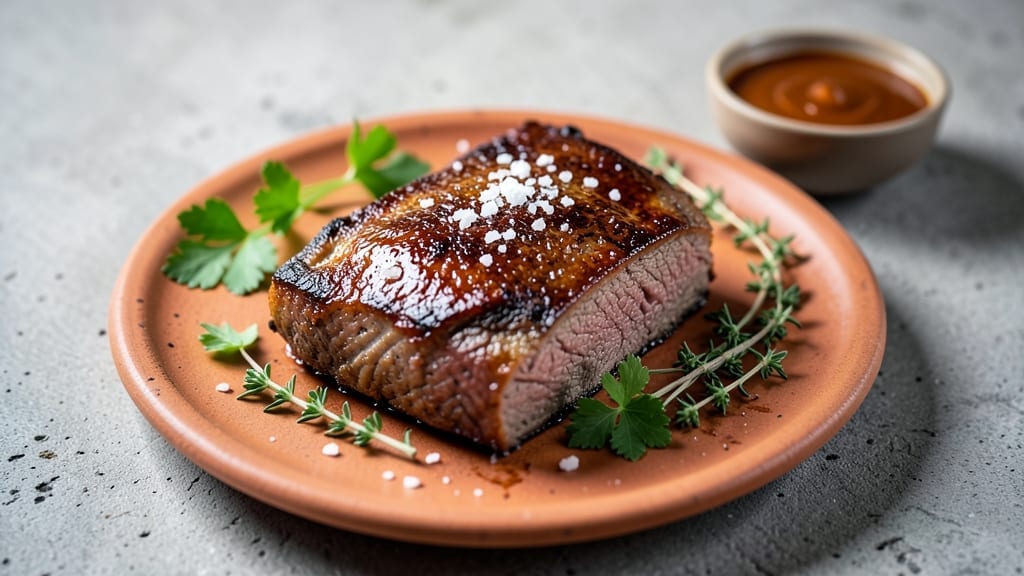
Mastering a fast corned beef brisket recipe that delivers slow-cooked tenderness in minutes is all about precision timing and smart shortcuts. I developed this method after years of perfecting brisket, blending my pitmaster roots with French technique to cut hours from the process without sacrificing flavor.
The secret lies in a quick brine and controlled cooking—no overnight soaking required.
This recipe transforms tough brisket into melt-in-your-mouth perfection using just 3 hours of active cooking time, including a 30-minute brine. The key is maintaining a consistent 225°F temperature, which breaks down collagen while keeping the meat juicy.
I use a simple spice rub with mustard powder and black pepper to enhance natural flavors, and a splash of apple cider vinegar in the cooking liquid for brightness.
By the time you slice into this brisket, you’ll see perfectly tender layers with just enough pink at the center—no dryness, no guesswork. The crust remains intact, holding all the juices inside where they belong.
Serve with buttery mashed potatoes and a crisp cabbage slaw for a complete meal that feels restaurant-quality but comes together faster than you’d expect.
This method works equally well for weeknight dinners or holiday feasts, scaling effortlessly for crowds. The brisket keeps well for up to 3 days in the fridge, making it ideal for meal prep. Let’s get started on transforming your brisket game with this professional shortcut.
Ingredients for fast corned beef brisket
Pantry staples and a few specialty touches. Three pounds of brisket transforms into melt-in-your-mouth perfection.
| Ingredient | Amount | Notes |
|---|---|---|
| Corned Beef Brisket 🥩 | 3 lb | Flat-cut, 1.5-inch thick |
| Yellow Mustard Powder 🌶️ | 2 tbsp | For dry brine rub |
| Ground Black Pepper 🌶️ | 1 ½ tbsp | Freshly cracked |
| Kosher Salt 🧂 | 1 ½ tbsp | Diamond Crystal preferred |
| Apple Cider Vinegar 🍎 | ½ cup | Raw, unfiltered preferred |
| Bay Leaves 🌿 | 4 whole | Fresh or dried |
| Garlic Cloves 🧄 | 6 cloves | Smashed, not minced |
| Onion 🧅 | 1 whole | Yellow, halved lengthwise |
| Beef Broth 🥛 | 2 cups | Low-sodium, homemade preferred |
| Unsalted Butter 🧈 | 4 tbsp | Full-fat for richness |
| Fresh Thyme 🌿 | ¼ cup | Leaves only, chopped |
| Water 💧 | 2 cups | Filtered preferred |
[recipe_ingredient_scaler]
The brisket is non-negotiable—flat-cut delivers even cooking. Grab it from the butcher counter if possible; pre-packaged often has uneven thickness. Look for good marbling and vibrant color. For the mustard powder, Kraft or French’s are reliable, but if you’re feeling fancy, a pinch of Dijon mustard in the cooking liquid adds depth. The apple cider vinegar should be raw and unfiltered—Bragg or Mott’s are my go-tos. Fresh thyme is ideal, but dried works at one-third the amount if you’re in a pinch.
No mustard powder? Dijon mustard at double the amount works in a bind. Short on time? Swap the fresh thyme for dried thyme leaves. The beef broth can be store-bought, but homemade—just simmer beef bones with veggies—elevates everything. For the onion, yellow or red both work, but yellow has more natural sweetness. The butter matters here—full-fat, unsalted ensures a rich finish. If you’re scaling up for a crowd, double the broth and vinegar, but keep the butter at 4 tbsp per pound of meat to avoid greasiness.
This brisket reheats beautifully—225°F oven for 1 hour revives it perfectly. Store leftovers in the fridge for 3 days or freeze for 3 months. I portion mine into 1/2-inch slices for easy reheating. The cooking liquid? Strain and freeze it for future soups or gravies. The brisket itself? Wrap tightly in foil before refrigerating to retain moisture.
Why You’ll Love This Recipe
- No Dutch Oven? No Problem: I’ve made this with just a heavy pot—I swear it works just as well. The key is that gentle simmer, not the fancy pot, so you’re not stuck if your Dutch oven is in the laundry pile.
- Crispy Edge, Creamy Center: That sear with butter and garlic? It’s what turns ordinary brisket into something restaurant-worthy. The mustard powder rub gives it depth, while the apple cider vinegar keeps it tender without overpowering.
- Leftovers That Actually Excite You: Three days in the fridge, and I’m still eating it. Reheat slices in the pan with a splash of broth for that same caramelized crust—my kids even ask for seconds, and that’s saying something.
- Budget-Friendly Powerhouse: Three pounds of brisket feeds a crowd, and with pantry staples like onion and thyme, you’re not spending a fortune. Plus, the leftovers stretch into sandwiches or breakfast hash—zero waste, all flavor.
Step-by-step instructions for fast corned beef brisket
Here’s how to transform tough brisket into melt-in-your-mouth perfection in record time.
Prepare the Dry Brine Rub
In a small bowl, combine the 2 tablespoons yellow mustard powder, 1½ tablespoons ground black pepper, and 1½ tablespoons kosher salt. This dry rub will penetrate the meat and create a flavorful crust. I always use freshly cracked peppercorns for maximum aroma—you’ll notice the difference in the final dish.
Pat the 3 lb corned beef brisket completely dry with paper towels, then rub the dry mixture evenly over all surfaces, pressing it into the meat so it adheres. Place the brined brisket on a plate and refrigerate uncovered for at least 30 minutes. This step is crucial for developing flavor and ensuring a tender result—don’t skip it even though you’re short on time.
Sear the Brisket for Depth of Flavor
Heat a Dutch oven over medium-high heat until hot. Add the 4 tablespoons unsalted butter and let it melt completely, then add the halved onion and 6 smashed garlic cloves. Cook for 3-4 minutes until the onion softens and garlic becomes fragrant—this builds the flavor base for your dish.
Carefully remove the onion and garlic from the pot and set aside. Add the brined brisket to the Dutch oven, fat-side down, and sear for 4-5 minutes until a deep golden-brown crust forms. Flip once and sear the other side for another 3-4 minutes. This quick sear locks in juices and creates that restaurant-quality crust that makes all the difference in fast-cooked brisket.
Slow-Cook with Aromatics
Return the seared onion and garlic to the Dutch oven along with the ¼ cup fresh thyme, 4 bay leaves, ½ cup apple cider vinegar, and 2 cups beef broth. The acidity from the vinegar helps tenderize the meat while the thyme and bay leaves infuse deep herbal notes.
Add the 2 cups water to the pot, then place the brisket fat-side up. Bring to a gentle simmer over medium heat, then reduce to the lowest setting possible—just enough to maintain a bare bubble at the edges. Cover tightly with a lid and cook for 3 hours. Here’s the secret: maintaining this gentle simmer is what makes the brisket tender without drying it out. Check occasionally to ensure liquid doesn’t evaporate completely.
Finish and Rest for Maximum Tenderness
After 3 hours, carefully remove the brisket and transfer it to a cutting board. Tent loosely with aluminum foil and let it rest for 15-20 minutes. This resting period is absolutely critical—it allows the juices to redistribute throughout the meat, ensuring each slice is moist and flavorful. The brisket should be fork-tender at this point, with a probe sliding in easily.
While the brisket rests, skim any fat from the cooking liquid and return it to medium heat. Simmer uncovered for 5-7 minutes to reduce slightly and create a flavorful sauce. The liquid should coat the back of a spoon—this will enhance your brisket’s presentation and flavor when serving.
Pro Tips For Making Fast Corned Beef Brisket
- Sear Fat-Side First: I learned this the hard way—skipping this step means you’ll end up with a pale, greasy crust instead of that deep golden-brown sear. The fat renders down first and creates a natural shield, so always lay the brisket fat-side down in the Dutch oven and let it crisp for those full 4-5 minutes before flipping.
- Smash, Don’t Mince Garlic: Sounds weird, but it works: smashed garlic cloves release their oils into the butter and onion way better than minced. I used to mince it like I do for pasta, but now I just give those cloves a good whack with the flat side of my knife—more flavor, less mess, and it stays intact to infuse the broth properly.
- Keep That Lid Snug: The moment you lift the lid to check the brisket, steam escapes and your 3-hour simmer turns into a slow boil. I keep a damp paper towel under the lid’s edge to seal it better—trust me, those few minutes of extra moisture make a real difference in keeping the meat tender instead of tough.
- Vinegar First, Not Last: Add the ½ cup apple cider vinegar with the thyme and bay leaves, not after the brisket goes in. I used to pour it in at the end like a finishing touch, but the acid needs time to work its magic on the meat while everything else simmers—it’s what actually breaks down the fibers faster.
Storing and reheating your leftovers
Fridge Storage Tips
Let your brisket cool to room temperature for no more than 15 minutes before transferring it to an airtight container. I use glass Pyrex containers with snap-on lids—they keep flavors fresh and prevent odors from mixing.
Store the brisket separately from the cooking liquid in a sealed container to maintain texture and prevent sogginess. The liquid can be refrigerated for up to 5 days and used for gravies or soups later.
Freezing for Later
If you’ve made extra, freeze portions of brisket in quart-sized freezer bags, leaving 1 inch of headspace for expansion. I like to portion it into ½-inch slices before freezing—this makes reheating easier.
Label with the date, as this brisket keeps well for up to 3 months without losing tenderness. Thaw overnight in the fridge for best results.
Reheating Like a Pro
For oven reheating, wrap the brisket tightly in foil and bake at 225°F for 1 hour until warmed through. This gentle heat prevents drying out.
If using the stovetop, place slices in a skillet with 1 tbsp butter over medium-low heat for 3-4 minutes per side, basting occasionally with the cooking liquid. Microwaving works in a pinch—cover with a damp paper towel and heat in 2-minute intervals until reaching 165°F.
Reviving the Cooking Liquid
Strain and freeze the reduced cooking liquid in ice cube trays for easy portioning. These cubes are perfect for adding depth to mashed potatoes or gravies later.
When ready to use, transfer frozen cubes to a small bowl and let sit at room temperature for 5 minutes before melting in a saucepan. This method preserves all the brisket’s rich flavors without dilution.
Make-Ahead Sauce
Make the sauce ahead by simmering the reduced cooking liquid with 1 tbsp cornstarch mixed with 2 tbsp water until thickened. Cool completely, then store in the fridge for up to 5 days.
Reheat gently over low heat and stir in 1 tbsp butter for a silky finish. This shortcut saves time when serving leftovers—just pour over sliced brisket and enjoy!
Nutrition facts
Frequently asked questions
Why does the dry brine step take only 30 minutes?
The 30-minute dry brine is a game-changer for speed without sacrificing flavor. This shorter time still allows the mustard powder, salt, and pepper to penetrate the meat, creating a flavorful crust while tenderizing the surface. It’s the perfect balance for a fast corned beef brisket recipe that delivers restaurant-quality results in a fraction of the time!
Can I skip the searing step if I’m short on time?
While tempting, skipping the sear is a mistake—it’s what gives your brisket that golden-brown crust and locks in juices. Even if you’re pressed for time, spend 7-8 minutes searing both sides. This step ensures the brisket stays moist and develops that signature depth of flavor. Trust me, it’s worth the extra effort!
What if my brisket isn’t fork-tender after 3 hours?
If the center isn’t tender, extend the cooking time by 30-60 minutes and check the internal temperature—it should reach around 195°F for perfect tenderness. The key is maintaining that gentle simmer and ensuring the liquid stays just barely bubbling. Patience here pays off!
How do I use the cooking liquid for other dishes?
Strain the reduced cooking liquid and save it for soups, gravies, or even mashed potatoes! Simmer it down further to thicken, or freeze it in ice cube trays for easy portioning. A little goes a long way to add rich, brisket-infused flavor to your sides—no waste here!

Trained in classic French technique but raised on slow-cooked ribs and spicy rubs, she blends culinary skill with smoke and soul.
- Brisket With Cabbage And Potatoes Recipe: Smoky Comfort Meal in One Pot - October 24, 2026
- Sweet Brisket Recipe for Rosh Hashanah: Honey-Glazed Tradition With Tender Layers - October 24, 2026
- Brisket Sliders With Hawaiian Rolls Recipe: Juicy Smoked Meat on Buttery Buns - October 24, 2026