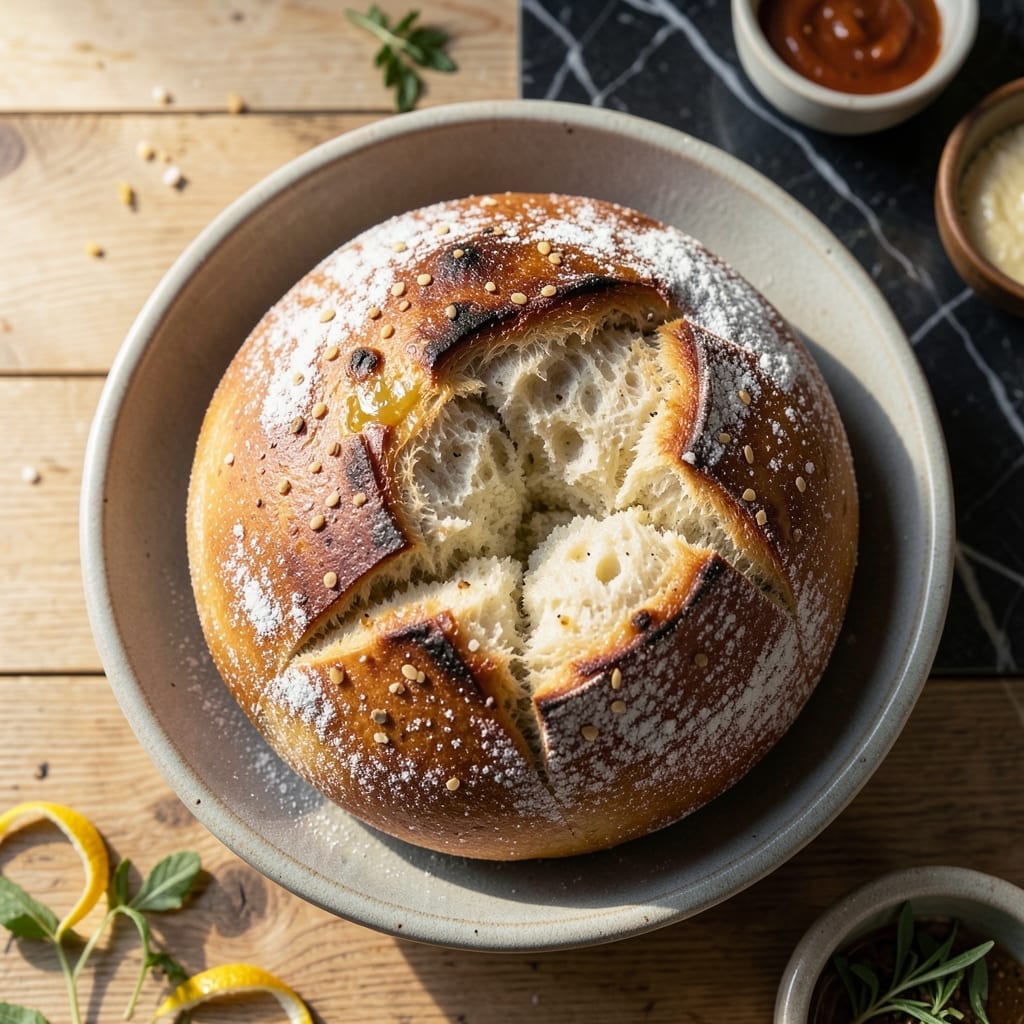
This traditional fasting bread from Medjugorje embodies the spirit of Lenten simplicity with its humble ingredients and deep cultural significance.
I developed this version to honor the original while making it accessible for modern kitchens. The recipe requires no eggs, dairy, or animal fats, staying true to its traditional roots.
What emerges from the oven is a dense, hearty loaf with a rustic crust and a tender crumb that pairs beautifully with olive oil or jam.
Perfect for fasting periods or anytime you want a fast, no-fuss bread that nourishes both body and spirit.
Ingredients for Fasting Bread Recipe Medjugorje
Humble ingredients create this traditional Lenten bread with rustic simplicity and depth.
| Ingredient | Amount | Notes |
|---|---|---|
| All-Purpose Flour 🌾 | 4 cups | Unbleached preferred for texture |
| Water 💧 | 1 ½ cups | Lukewarm for activation |
| Active Dry Yeast 🍞 | 2 ¼ tsp | One standard packet equivalent |
| Olive Oil 🫒 | ¼ cup | Extra-virgin for richness |
| Salt 🧂 | 1 ½ tsp | Fine sea salt preferred |
| Sugar 🍚 | 1 tsp | Granulated, to feed yeast |
| Cornmeal 🌽 | ¼ cup | For dusting and rustic texture |
| Dried Rosemary 🍃 | 1 tsp | Crushed to release oils |
| Dried Thyme 🌿 | 1 tsp | For earthy depth |
| Coarse Kosher Salt 🧂 | ½ tsp | For finishing crust |
[recipe_ingredient_scaler]
The flour is foundational here. King Arthur or Bob’s Red Mill unbleached all-purpose provides the ideal texture for this dense, hearty loaf. Yeast quality matters—fresh packets from the baking aisle work best. The olive oil should be extra-virgin; California Olive Ranch or Colavita are reliable. Cornmeal adds authenticity—look for medium grind at Whole Foods or bulk sections.
No yeast? Sourdough starter at one-third the amount can substitute but will require a longer rise. Swap rosemary and thyme for dried oregano or sage if preferred. Sugar can be replaced with maple syrup or agave (use same amount). For a gluten-free version, King Arthur’s measure-for-measure flour works, though texture will differ slightly. Always ensure water is lukewarm—not hot—to avoid killing the yeast.
Store flour in airtight containers for up to 6 months. Yeast keeps in the fridge for 4 months unopened. This bread stays fresh for 3-4 days wrapped in cloth, or freeze slices for 3 months. Revive day-old loaves by spritzing with water and warming in a 350°F oven for 10 minutes.
Why You’ll Love This Recipe
- Five Ingredient Simplicity: I love that this only needs flour, water, yeast, olive oil, and salt—no fancy ingredients or last-minute grocery runs.
- Warm Olive Oil Crust: The olive oil brushed on top bakes into this golden, fragrant layer that makes every bite feel special.
- Fasting Friendly: It’s simple enough for Lenten meals but hearty enough that my kids don’t complain about missing meat.
- Doubles Easily: One batch feeds us for dinner, and the leftovers toast up beautifully for breakfast the next day.
Step-by-Step Instructions for Fasting Bread Medjugorje
This traditional method ensures a rustic, flavorful loaf with minimal ingredients and effort.
Step 1: Activate the Yeast and Prepare the Dough
Begin by warming the 1.5 cups Water to lukewarm (around 110°F). In a large mixing bowl, combine it with the 1 tsp Sugar and 2.25 tsp Active Dry Yeast. Stir gently and let it sit for 5-10 minutes until the mixture becomes frothy—this confirms the yeast is active.
Next, add the 0.25 cup Olive Oil, 1.5 tsp Salt, 1 tsp Dried Rosemary, and 1 tsp Dried Thyme to the yeast mixture. Gradually incorporate the 4 cups All-Purpose Flour, stirring until a shaggy dough forms. The dough will be slightly sticky but should pull away from the sides of the bowl.
Step 2: Knead and First Rise
Turn the dough out onto a lightly floured surface and knead for 8-10 minutes until smooth and elastic. The dough should spring back when gently pressed with a finger—this indicates proper gluten development.
Place the dough in a lightly oiled bowl, cover with a damp cloth, and let it rise in a warm, draft-free place for 1 to 1.5 hours or until doubled in size. The ideal environment is 75-80°F; if your kitchen is cooler, extend the rise time accordingly.
Step 3: Shape and Second Rise
Once doubled, punch down the dough to release excess air. Shape it into a round loaf or oval, then place it on a baking sheet dusted with 0.25 cup Cornmeal. The cornmeal prevents sticking and adds a rustic texture to the crust.
Cover the loaf with a damp cloth and let it rise again for 30-45 minutes until it has puffed up noticeably. Preheat your oven to 425°F during the last 15 minutes of the second rise to ensure it’s fully heated when the bread goes in.
Step 4: Bake and Finish
Just before baking, use a sharp knife or razor to score the top of the loaf in a cross or decorative pattern. This allows the bread to expand properly in the oven. Sprinkle the 0.5 tsp Coarse Kosher Salt evenly over the top for a finishing touch.
Bake the loaf in the preheated oven for 25-30 minutes until the crust is deep golden brown and the bread sounds hollow when tapped on the bottom. Transfer it to a wire rack to cool completely before slicing—this ensures the interior sets properly and prevents a gummy texture.
Pro Tips For Making Fasting Bread Recipe Medjugorje
- Activate Yeast First: Always bloom your active dry yeast in warm water (about 105°F) with a pinch of sugar for 5-10 minutes until foamy. I learned this the hard way after making a few dense loaves with dead yeast.
- Use Quality Olive Oil: Splurge on good extra virgin olive oil—about 2 tablespoons—for the dough. My grandmother swore by this, and the flavor actually changes the outcome.
- Don’t Overwork the Dough: Knead just until smooth, about 8-10 minutes by hand. Sounds weird, but it works: over-kneading makes the bread tough, and nobody wants that.
- Let It Rise Twice: Give the dough a first rise (1-2 hours) until doubled, then shape and let rise again for 30-45 minutes. I skip this when I’m lazy, but the texture is noticeably better when I don’t.
Perfect Pairings for These Flavors
Simple Spreads
This bread shines with minimal accompaniments. I love it warm with a drizzle of extra-virgin olive oil and a sprinkle of flaky sea salt. The oil soaks into the dense crumb beautifully, enhancing its rustic character. 💛
Sweet Pairings
For breakfast or dessert, serve slices with fig jam or honey. The herbs in the bread complement fruit preserves wonderfully. A thin spread of almond butter adds protein for a more substantial snack.
Savory Companions
Pair with olive tapenade or hummus for a Mediterranean-inspired meal. The bread’s sturdy texture holds up well to dips. I often serve it with roasted red pepper spread from my local market.
Soup Sidekick
This loaf makes an excellent companion for hearty soups. Try it with lentil soup or minestrone—the bread soaks up broth without falling apart. It’s my go-to for weeknight comfort meals.
Cheese Pairings
For a simple lunch, serve with aged cheddar or goat cheese. The bread’s herbal notes pair especially well with tangy cheeses. Add a few walnuts for crunch and extra depth.
Herb-Infused Oils
Elevate the experience with herb-infused oils. I make a quick version by warming ½ cup olive oil with 2 crushed garlic cloves and 1 tsp rosemary for 5 minutes. Drizzle this over warm bread for an aromatic finish.
Nutrition Facts
Frequently Asked Questions
Can I use whole wheat flour instead?
Yes, but replace only 2 cups of all-purpose with whole wheat to avoid a dense texture. The bread may need 5-10 minutes longer to bake fully.
Why does the recipe include sugar if it’s for fasting?
The 1 tsp of sugar only activates the yeast and is fully consumed during fermentation. It doesn’t affect the bread’s fasting suitability.
How do I know when the bread is done?
Check for a deep golden crust and a hollow sound when tapped. The internal temperature should reach 190-200°F for perfect doneness.
Can I make this without herbs?
Omit rosemary and thyme for a plain version. The bread will still have great texture and flavor from the olive oil and cornmeal.

Trained in classic French technique but raised on slow-cooked ribs and spicy rubs, she blends culinary skill with smoke and soul.
- Recipe for Boneless Pork Chops in Cast Iron Skillet: Sear and Baste to Juicy Perfection - October 3, 2026
- Recipe for Boneless Cross Rib Roast: Slow-Roasted Beef with Herb Crust - October 3, 2026
- Hamburgers in Sauce Recipe Crock Pot: Slow-Cooked Savory Delight - October 3, 2026